
- Release Year: 2003
- Platforms: Windows
- Publisher: ak tronic Software & Services GmbH, Alawar Entertainment, Inc.
- Developer: No Way Games
- Genre: Action
- Perspective: 3rd-person
- Game Mode: Single-player
- Gameplay: Arcade, Paddle, Pong
Description
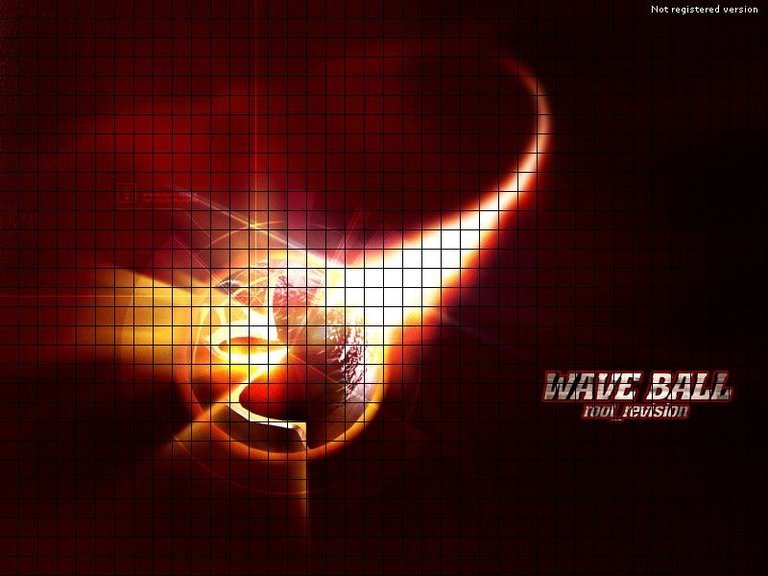
Wave Ball: root_revision is an Arkanoid-style game where players control a paddle to bounce a ball and clear colored blocks from the screen. The game features 16 different bonus items that enhance or alter gameplay, such as narrowing the paddle or adding extra balls. Despite its classic mechanics, the game has received mixed reviews, with critics noting its lack of innovation and technical issues.
Wave Ball: root_revision: Review
Introduction
In the crowded pantheon of Breakout clones, Wave Ball: root_revision (2003) stands as a cautionary tale—a game that exemplifies how even a timeless formula can falter without innovation or polish. Developed by No Way Games and published by Alawar Entertainment and ak tronic, this Windows-era arcade title arrived at a time when the indie scene was burgeoning, yet it failed to distinguish itself. This review argues that Wave Ball: root_revision is a relic of missed opportunities, marred by technical flaws, uninspired design, and a lack of identity that left it buried beneath its predecessors.
Development History & Context
The Studio and Vision
No Way Games, a lesser-known developer, comprised a skeletal team: programmer Albert R. Khakimov (credited as “Arkon”), designers Konstantin A. Kochanov (“Kane”) and Said R. Kadirov (“Xide”). Their vision seemed modest—to iterate on the Arkanoid template—but without a clear creative direction. The publishers, Alawar and ak tronic, were known for distributing budget and casual titles, suggesting Wave Ball was intended as a low-risk product for the bargain bin.
Technological Constraints and Gaming Landscape
By 2003, PC gaming was embracing 3D acceleration and complex physics engines, yet Wave Ball clung to 2D simplicity. This wasn’t inherently a flaw—retro-styled games could thrive—but the execution lacked the charm or technical finesse of contemporaries like Ricochet Xtreme. The game’s failure to run on multiple systems (as reported by PC Action) hinted at poor optimization, a critical misstep in an era where plug-and-play accessibility was paramount.
Narrative & Thematic Deep Dive
As a brick-breaker, Wave Ball eschews narrative depth. Unlike Arkanoid, which framed its gameplay within a loose sci-fi conflict, Wave Ball offers no context for its block-bashing. The absence of even minimalist world-building—no enemy ships, no escalating stakes—renders the experience sterile. Thematic cohesion is limited to its bonus items, which introduce fleeting chaos (e.g., darkened screens or multi-ball mayhem), but these feel like mechanical afterthoughts rather than parts of a unified vision.
Gameplay Mechanics & Systems
Core Loop and Controls
The gameplay is Breakout 101: move a paddle horizontally to deflect a ball and destroy colored blocks. The controls are functional but unremarkable, lacking the pixel-perfect responsiveness of classics like Super Breakout.
Bonuses and Progression
The game’s sole innovation is its 16 bonus items, including paddle resizing and extra balls. While these momentarily disrupt monotony, their implementation is shallow. For example, the “narrowed paddle” bonus punishes players arbitrarily, exacerbating frustration rather than deepening strategy. Levels drag without dynamic scaling—early stages feel as grueling as later ones, with no ramp in complexity or pacing.
UI and Technical Flaws
The UI is barebones, devoid of personality or usability flourishes. Worse, PC Action’s review noted pervasive technical issues: the game frequently failed to launch, even after troubleshooting drivers and hardware. Such bugs undermined its core appeal as a casual diversion.
World-Building, Art & Sound
Visual Design
Wave Ball’s graphics are “detail-arm” (GameStar), featuring flat, uninspired block textures and a sterile backdrop. Compared to the vibrant palettes of DX-Ball 2 or the psychedelic visuals of Shatter, its art direction feels anemic.
Sound Design
Said R. Kadirov’s sound work is utilitarian—bland percussion and generic boops accompany ball collisions. There’s no memorable soundtrack or audio feedback to elevate the experience, making the auditory landscape forgettable.
Reception & Legacy
Critical and Commercial Reception
Wave Ball was panned upon release, earning a dismal 28% from GameStar, which derided it as “nicht noch ein Breakout-Klon!” (“yet another Breakout clone”). Critics lambasted its lack of originality and technical instability, while players rated it 1.5/5. Its commercial footprint was negligible; even among budget titles, it failed to carve a niche.
Influence on the Industry
The game’s legacy is one of caution. It underscored the risks of repackaging nostalgia without refinement—a lesson heeded by later indie successes like Brick Breaker Legend (2019), which married retro mechanics with modern rogue-lite progression. Wave Ball serves only as a footnote, a reminder that even simple concepts demand care.
Conclusion
Wave Ball: root_revision is not merely bad—it is unremarkable. Its failures are instructive: a lack of polish, imagination, and technical competence doomed it in a market increasingly intolerant of half-hearted clones. While brick-breaker enthusiasts might mine curiosity from its obscurity, most will find little here worth salvaging. In the annals of arcade history, Wave Ball is a flicker—a brief, forgettable spark in Breakout’s long shadow. Avoid it.