
- Release Year: 2007
- Platforms: Browser, Macintosh, Windows
- Publisher: Lassie Games
- Developer: Lassie Games
- Genre: Adventure
- Perspective: 3rd-person
- Game Mode: Single-player
- Gameplay: Graphic adventure, Puzzle elements
- Average Score: 88/100
Description
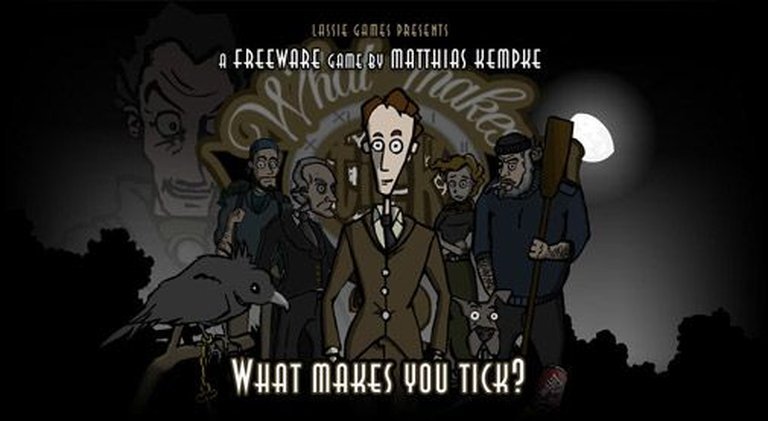
In ‘What Makes You Tick?’, players follow Nathan, a young man sent to investigate the mysterious disappearance of Dr. Coppelius, inspired by E.T.A. Hoffmann’s 1817 tale ‘The Sandman’. This freeware point-and-click adventure, built on the LASSIE engine, features a nostalgic interface reminiscent of ‘The Curse of Monkey Island’, with mouse-driven exploration, puzzle-solving, and an inventory system at the bottom of the screen. Set in a whimsical yet eerie world, the game blends literary inspiration with charming art and animations, offering a short but engaging experience.
What Makes You Tick? Guides & Walkthroughs
What Makes You Tick?: A Forgotten Gem of Indie Adventure Gaming
Introduction
In 2007, amidst a gaming landscape dominated by sprawling RPGs and first-person shooters, a small freeware adventure game emerged as a love letter to the genre’s golden age. What Makes You Tick?, crafted almost entirely by German developer Matthias Kempke using the LASSIE engine, quietly revitalized the point-and-click formula with its clockpunk mystery, literary sophistication, and hand-drawn charm. This review argues that Tick is not merely a nostalgic throwback but a vital bridge between classic LucasArts design and the indie resurgence that followed—a game whose thematic ambition and craftsmanship far outweigh its modest origins.
Development History & Context
A Solo Vision in a Shifting Landscape
Developed by Kempke under the banner of Lassie Games (a nod to the LASSIE engine created by Greg MacWilliam), What Makes You Tick? was a passion project birthed from frustration and reverence. As Kempke revealed in a 2009 interview, his inspiration struck after playing The Curse of Monkey Island (1997), which he described as “an interactive cartoon […] a painting to walk around in.” The LASSIE engine, built by MacWilliam to emulate LucasArts’ SCUMM system, provided Kempke the tools to realize his vision despite limited resources.
Released on May 5, 2007, for Windows and Mac, Tick arrived during a fallow period for commercial graphic adventures. With studios like Sierra and LucasArts pivoting to 3D action games, Kempke’s project joined a grassroots movement of indie creators (e.g., Wadjet Eye Games) preserving the genre. Developed over 18 months primarily by Kempke—who handled story, art, animation, and sound editing—the game embraced its constraints: Flash-based visuals, mouse-only controls, and a runtime under three hours. Yet these limitations became strengths, distilling the adventure formula into a focused, atmospheric experience.
Technological Ingenuity
The LASSIE engine’s interface—featuring verb coins (“Examine,” “Use,” “Talk”) and an inventory bar—directly echoed Monkey Island, while its understated animations (e.g., rippling water by John Green) added depth. Kempke’s resourcefulness extended to sound design: licensed tracks from Anouar Brahem’s Le Pas Du Chat Noir and Louis Armstrong’s “St. James Infirmary” established mood, while freesound.org provided ambient textures. This DIY approach crystallized in a playful in-joke: The scene where backpacker “Greg” gifts protagonist Nathan a Dr. Pepper can recreated MacWilliam’s real-life visit to Kempke in Germany, complete with a photographed soda exchange.
Narrative & Thematic Deep Dive
Gothic Roots, Modern Twists
Loosely adapted from E.T.A. Hoffmann’s 1817 horror tale The Sandman, Tick reimagines its source material with cinematic flair. Players navigate Nathan, a university envoy sent to investigate the disappearance of Dr. Coppelius—a retired professor rumored to dabble in mechanical marvels. Kempke subverts Hoffmann’s original villain, transforming Coppelius into a tragic hero who implants a mechanical heart into his granddaughter Nora to save her life. The real antagonist, Vincent—a former colleague—seeks to harvest the invention, culminating in a brutal kidnapping cliffhanger that sets up 2010’s sequel, A Stitch in Time.
Characters as Philosophical Vessels
Nathan, the everyman protagonist, serves as the player’s conduit into a world where technology blurs with morality. His exchanges with Coppelius probe themes of creation and ethics (“Is a machine heart worth more than a human soul?”), while Nora embodies the game’s central conflict: Is she “alive,” or a feat of engineering? Vincent’s villainy—driven by cold pragmatism—mirrors Hoffmann’s original Coppola but gains pathos through reveals of professional jealousy. Even minor characters, like the sea captain with his mushroom-sniffing dog, enrich the lore, suggesting a world where the mundane coexists with the fantastical.
Thematic Threads
Tick wrestles with humanity’s relationship to machinery long before contemporaries like BioShock popularized such debates. The mechanical heart—hidden within Nora—becomes a metaphor for vulnerability and resilience, while the titular question (“What makes you tick?”) is delivered with chilling literalism by Vincent in the finale. Clockpunk aesthetics (gears, pendulums, steam-driven labs) reinforce this tension, contrasting rustic coastal settings with imposing, brass-lined interiors. Kempke’s script balances wit and gravity, nodding to genre conventions (e.g., a Grim Fandango-inspired “Adventure Plate”) while maintaining emotional stakes.
Gameplay Mechanics & Systems
Classic Design, Modern Refinement
As a point-and-click adventure, Tick adheres to genre fundamentals: Players explore pre-rendered scenes, collect items, and solve puzzles through logic and dialogue. The LASSIE engine’s verb-coin interface streamlined interactions, though some critics noted occasional pixel-hunting (e.g., finding a key hidden under a doormat). Sequences like crafting a fishing rod—combining a stick, string, hook, and worm—echo Monkey Island’s inventory puzzles but with clearer cause-and-effect logic.
Pacing and Difficulty
Spanning 10-15 hand-drawn environments (from a decaying mansion to foggy docks), the game’s compact runtime ensures minimal filler. Reviews praised its puzzle balance: Czech outlet Hrej! called it “spojení zapeklitých hádanek a gradujícího příběhu” (“a union of tricky puzzles and escalating story”), though PlnéHry.cz noted some solutions might frustrate newcomers. Standout moments—like sedating a key-bearing crow with drugged seeds or activating a steam-powered escape pod—blend whimsy with mechanical coherence. The absence of “dead ends” (a scourge of ’90s adventures) reflects Kempke’s player-friendly design.
World-Building, Art & Sound
Visual Storytelling
Kempke’s painterly backgrounds—reminiscent of Monkey Island’s 2D heyday—imbue Ravenhollow with melancholic beauty. Crumbling stonework, swaying wheat fields, and rain-lashed cliffs evoke a coastal Gothic atmosphere, while character sprites exhibit exaggerated expressions (Vincent’s manic grin; Nora’s wide-eyed innocence). The cursor, a monkey’s paw homage to LucasArts, signals the game’s inspirations without mere imitation.
Sonic Atmosphere
The soundtrack—anchored by Brahem’s oud-driven jazz and Armstrong’s smoky blues—elevates modest production values. Environmental audio (lapping waves, crow caws, ticking clocks) deepens immersion, particularly in Coppelius’ workshop, where machinery hums beneath dialogue. Kempke’s use of silence in tense moments (e.g., Vincent’s ambush) proves equally masterful, proving sound design’s narrative potency.
Reception & Legacy
Critical and Cult Success
Upon release, Tick earned an 87% average critic score on MobyGames, with praise for its “lovely” visuals (Abandonia Reloaded) and “brilliant” storytelling (Freehare). The BBC Collective and PC Gamer spotlighted its indie charm, while its freeware model drove 50,000+ downloads within months. Yet the divisive cliffhanger ending—leaving Nora’s fate unresolved—rankled some, foreshadowing modern debates around narrative payoff.
Industry Impact
Tick’s influence rippled beyond its size. Kempke’s success propelled him to Daedalic Entertainment, where he designed The Night of the Rabbit (2013), while the LASSIE engine inspired other indies. It also signaled a sea change: Tick proved that small teams could honor classic adventures while innovating, paving the way for gems like Gemini Rue and Thimbleweed Park. A 2014 “talkie” re-release—adding voice acting—extended its lifespan, cementing its cult status.
Conclusion
What Makes You Tick? is a testament to artistry over budget—a game that transmutes literary ambition and technical constraints into a poignant, playful experience. While its short length and niche appeal may deter some, its fusion of Gothic storytelling, thoughtful puzzles, and audiovisual craftsmanship secures its place as a pioneering indie adventure. Two decades later, it remains essential for genre devotees: proof that great games aren’t defined by scale but by the heart—mechanical or otherwise—that makes them tick.