
- Release Year: 2004
- Platforms: Windows
- Publisher: Tivola Verlag GmbH
- Developer: Trickreich GmbH
- Genre: Adventure
- Perspective: 3rd-person
- Game Mode: Single-player
- Gameplay: Graphic adventure, Point and select, Puzzle elements
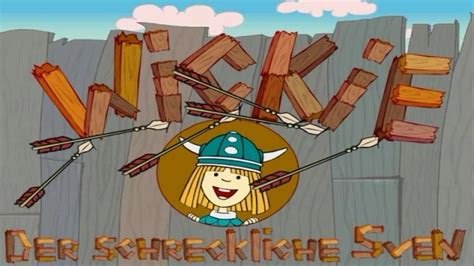
Description
Wickie und die starken Männer: Der schreckliche Sven is a child-friendly point-and-click adventure game based on the animated TV series and children’s book Vicky the Viking. The story follows Wickie, Halvar, and their crew as they flee from the fearsome Sven, only to become shipwrecked on a mysterious island. Players must guide Wickie through puzzles and exploration to find a way back home, with simple gameplay designed for young children aged four and up.
Gameplay Videos
Wickie und die starken Männer: Der schreckliche Sven – A Deep Dive into a Forgotten Children’s Adventure
Introduction: A Nostalgic Voyage into Early 2000s Edutainment
Wickie und die starken Männer: Der schreckliche Sven (2004) is a relic of a bygone era in children’s gaming—a time when point-and-click adventures were adapted from beloved animated series to create interactive experiences for young audiences. Based on the iconic Vicky the Viking (Wickie und die starken Männer) franchise, which originated from Runer Jonsson’s 1960s children’s books and was immortalized in the 1970s anime series, this game is a fascinating case study in early 2000s edutainment. Developed by Trickreich GmbH and published by Tivola Verlag, it targeted children aged four and up, blending simple adventure mechanics with the charm of its source material.
This review will dissect the game’s development, narrative, gameplay, and legacy, arguing that while Der schreckliche Sven is a modest title by modern standards, it represents a pivotal moment in the evolution of licensed children’s games—one that prioritized accessibility, storytelling, and gentle problem-solving over flashy mechanics.
Development History & Context: The Golden Age of German Edutainment
The Studio and Creative Vision
Trickreich GmbH, the developer behind Der schreckliche Sven, was a German studio specializing in children’s software during the early 2000s. Their collaboration with Tivola Verlag—a publisher renowned for high-quality educational and entertainment software—resulted in a game that stayed faithful to the Wickie franchise’s ethos. The creative team, led by Susanne Ruf and Wolfgang Ruf, sought to translate the show’s emphasis on cleverness over brute strength into an interactive format.
Key figures included:
– Susanne Ruf (Game Idea, Script): A veteran of children’s media, Ruf ensured the game’s narrative aligned with the series’ themes of teamwork and ingenuity.
– Wolfgang Ruf (Art Direction): His work maintained the show’s distinctive visual style, adapting its hand-drawn animation into a digital environment.
– Frank Glatt (Programming): Tasked with building a game engine accessible to preschoolers, Glatt’s design choices reflected the technological constraints of the era.
Technological Constraints and Design Philosophy
Released in 2004, Der schreckliche Sven was constrained by the hardware of its time. The game ran on Windows PCs with modest requirements (e.g., 64 MB RAM, 60 MB storage), reflecting its target audience’s likely access to family computers. The point-and-click interface, a staple of adventure games, was simplified for young players, with no complex inventory systems or pixel-hunting.
The game’s development coincided with a shift in children’s software:
– The Decline of Pure Edutainment: By the mid-2000s, the market was moving away from overtly educational titles (e.g., Reader Rabbit) toward narrative-driven experiences.
– The Rise of Licensed Games: Franchises like Wickie were leveraged to create familiar, low-risk products for parents.
– The German Market’s Influence: Germany’s strong tradition of children’s media (e.g., Die Sendung mit der Maus) shaped the game’s emphasis on gentle learning through play.
The Gaming Landscape of 2004
In 2004, the gaming industry was dominated by:
– Console Transition: The PlayStation 2 and GameCube were at their peak, while PC gaming was fragmenting between AAA titles and casual experiences.
– Adventure Games in Decline: Classic point-and-click adventures (e.g., Monkey Island) were waning, replaced by action-adventure hybrids.
– Children’s Software Niche: Titles like Putt-Putt and Freddi Fish were fading, making way for more interactive storytelling.
Der schreckliche Sven occupied a unique space: a licensed adventure game that avoided the pitfalls of shovelware by focusing on its source material’s strengths.
Narrative & Thematic Deep Dive: A Viking’s Cleverness in the Face of Adversity
Plot Summary and Structure
The game’s story is a direct adaptation of the Wickie episode Der schreckliche Sven, in which:
1. The Failed Raid: Wickie, his father Halvar, and the Viking crew return from an unsuccessful plundering expedition with little to show for their efforts.
2. The Pursuit: The dreaded pirate Sven, a recurring antagonist, ambushes them. Wickie’s quick thinking—setting their sails ablaze to create a distraction—allows them to escape into a fog bank.
3. Shipwreck and Survival: The Vikings crash onto a reef and are stranded on a seemingly deserted island. Wickie must explore the island, solve puzzles, and repair the ship to escape.
The narrative is linear but punctuated by optional interactions, encouraging exploration without overwhelming young players.
Character Analysis
- Wickie: The protagonist embodies the franchise’s core theme: intelligence triumphs over strength. His iconic nose-rubbing gesture (a precursor to his “Eureka!” moments) is a gameplay mechanic—players must click his nose to trigger ideas.
- Halvar: The burly Viking chief represents traditional masculinity, contrasting with Wickie’s cerebral approach. His dialogue reinforces the game’s message that teamwork is essential.
- Sven: The pirate antagonist is a looming but distant threat, appearing only in cutscenes. His role is to motivate the player’s actions rather than serve as a direct obstacle.
Themes and Educational Value
- Problem-Solving Over Violence: The game eschews combat, instead requiring players to use items creatively (e.g., using a drum to coordinate rowing).
- Resourcefulness: Players must scavenge the island for tools, teaching basic inventory management.
- Teamwork: The Vikings’ survival depends on collaboration, mirroring the show’s emphasis on community.
The dialogue, fully voiced in German, retains the series’ humor and warmth, making it accessible to its target audience.
Gameplay Mechanics & Systems: Simplicity as a Virtue
Core Gameplay Loop
Der schreckliche Sven is a point-and-click adventure with light puzzle elements. The gameplay revolves around:
1. Exploration: Players navigate the island and ship, clicking on interactive objects.
2. Inventory Management: Items are collected and used in context-sensitive ways (e.g., a rope to climb, a net to catch fish).
3. Mini-Games: Simple challenges, such as rhythm-based drumming or memory games, break up the adventure.
Combat and Progression
- No Combat: The game avoids violence, aligning with its educational goals.
- Puzzle Difficulty: Three difficulty settings adjust the complexity of item combinations, making it accessible to ages 4–8.
- Save System: The game auto-saves progress, allowing young players to resume without frustration.
UI and Accessibility
- Intuitive Controls: The mouse-driven interface is designed for children, with large clickable areas.
- Visual Feedback: Wickie’s facial expressions and animations guide players when they’re on the right track.
- Limited Text: Most instructions are visual or auditory, reducing reading requirements.
Innovations and Flaws
- Strengths:
- Seamless Integration of Source Material: The game feels like an interactive episode of the show.
- Gentle Learning Curve: The puzzles are forgiving, ensuring young players don’t get stuck.
- Weaknesses:
- Limited Replayability: Once solved, puzzles offer little incentive to revisit.
- Technical Limitations: The fixed camera angles and static backgrounds feel dated even for 2004.
World-Building, Art & Sound: Crafting a Viking Adventure for Kids
Setting and Atmosphere
The game’s island is a vibrant, cartoonish environment filled with:
– Lush Forests: Home to animals like bears (which must be scared away with noise).
– Beaches: Where players gather resources like driftwood.
– The Shipwreck: A hub for repairing the vessel, with mini-games for fixing sails and rudders.
The art style mimics the anime’s aesthetic, with bright colors and exaggerated character designs.
Visual Direction
- Hand-Drawn Aesthetic: The backgrounds and character sprites are faithful to the show’s animation.
- Limited Animation: Due to technical constraints, character movements are stiff, but key actions (e.g., Wickie’s nose-rub) are fluid.
Sound Design and Music
- Voice Acting: The German cast reprised their roles from the TV series, adding authenticity.
- Ambient Sounds: Waves, bird calls, and wind create immersion.
- Music: The score, composed in the style of the show’s theme, reinforces the adventurous tone.
Reception & Legacy: A Forgotten Gem in Children’s Gaming
Critical and Commercial Reception
- Contemporary Reviews: The game received little critical attention, likely due to its niche audience. However, parents and educators praised its educational value.
- Commercial Performance: As part of Tivola’s Wickie series, it sold modestly, benefiting from the franchise’s popularity in German-speaking regions.
Evolution of Its Reputation
- Cult Following: Among fans of the Wickie series, the game is remembered fondly as a faithful adaptation.
- Preservation Status: The game is now obscure, with no modern re-releases. It survives through archives like the Internet Archive.
Influence on Later Games
While Der schreckliche Sven didn’t spawn direct sequels, its design philosophy influenced later children’s games:
– Narrative-Driven Edutainment: Titles like Paw Patrol: On a Roll! (2018) adopted similar structures.
– Accessibility in Adventure Games: Modern kids’ games (e.g., SpongeBob SquarePants: Battle for Bikini Bottom – Rehydrated) prioritize simple controls and visual storytelling.
Conclusion: A Modest Masterpiece of Its Time
Wickie und die starken Männer: Der schreckliche Sven is a time capsule of early 2000s children’s gaming—a title that succeeded by embracing its limitations. It is:
– A Faithful Adaptation: Capturing the spirit of its source material.
– An Educational Tool: Teaching problem-solving without sacrificing fun.
– A Historical Artifact: Reflecting the transition from edutainment to narrative-driven kids’ games.
Final Verdict: While not a technical marvel, Der schreckliche Sven is a charming, well-crafted adventure that deserves recognition as a pivotal title in the Wickie franchise and the broader landscape of children’s software. For historians and nostalgic fans, it remains a delightful relic of a simpler era in gaming.
Rating: ★★★★☆ (4/5) – A near-perfect execution of its goals, limited only by the technology of its time.