
- Release Year: 2006
- Platforms: Windows
- Publisher: ak tronic Software & Services GmbH, B-Alive GmbH, Koch Media GmbH (Austria), Noviy Disk
- Developer: B-Alive GmbH
- Genre: Simulation, Wildlife Park, Zoo
- Perspective: Diagonal-down
- Game Mode: Single-player
- Gameplay: Business simulation, Managerial
- Average Score: 67/100
Description
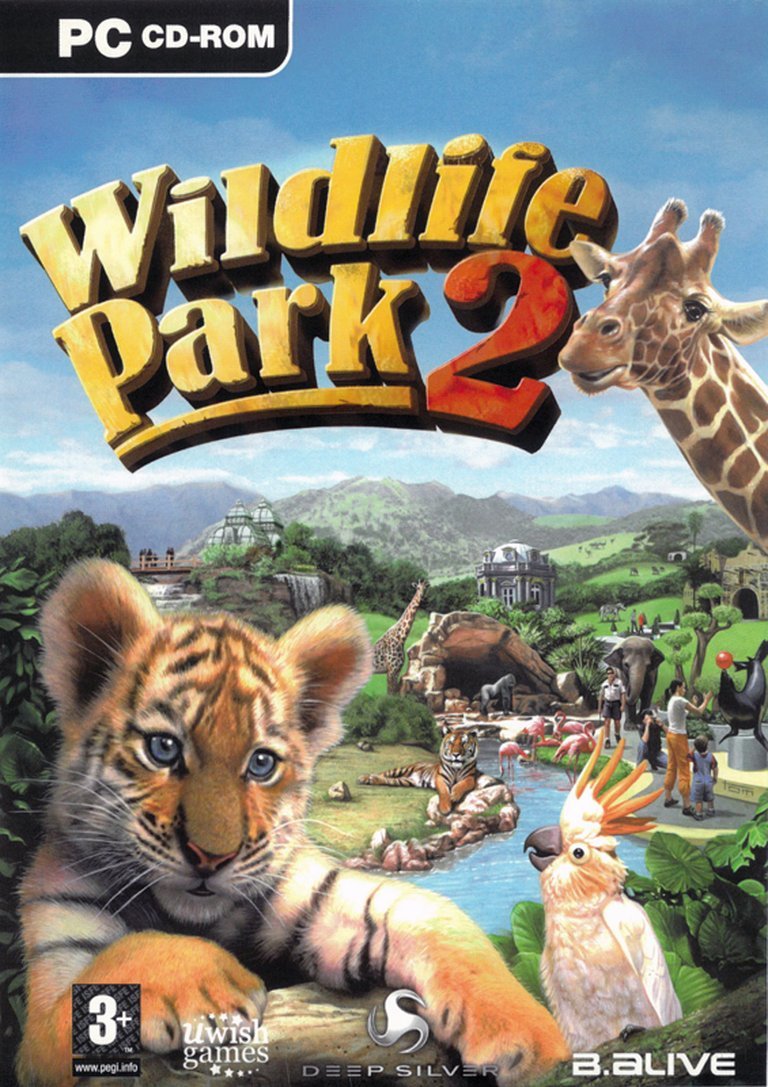
In Wildlife Park 2 you take on the role of a zoo director, building the zoo like you want and looking after all the animals you choose. The game is centered on the animals’ interaction with the players themselves, the landscape, and with the visitors to the park. Observe the realistic animations of more than eighty different plant and animal species. Pay attention to every need of your animals. You also need to manage your team of keepers, gardeners, trainers, veterinarians and scientists.
Gameplay Videos
Wildlife Zoo Free Download
Wildlife Zoo Cracks & Fixes
Wildlife Zoo Mods
Wildlife Zoo Guides & Walkthroughs
Wildlife Zoo Reviews & Reception
metacritic.com (65/100): Overall, there isn’t anything to get excited about here. If you’ve played one zoo tycoon game, then you’ve played them all, and there isn’t any reason to buy Wildlife Zoo unless you really like the genre or unless you haven’t played anything in the genre yet.
ign.com : Overall it’s a solid game, though it’s got a clunky interface and some gameplay elements are awkwardly implemented.
gamepressure.com (65/100): A zoo manager’s job today is a difficult tightrope act between keeping his animals happy, attracting visitors and economizing.
Wildlife Zoo: Review
In the pantheon of simulation games, few sub-genres capture the imagination quite like the zoo tycoon. It is a delicate dance of compassion and commerce, a microcosm of humanity’s complex relationship with the natural world. It is into this established arena that Wildlife Zoo, known to the rest of the world as Wildlife Park 2, strode in 2006. Promising the chance to build the zoo of your dreams, to meticulously care for over 80 species, and to manage a sprawling park infrastructure, it arrived with a weight of expectation both from fans of the burgeoning genre and from the legacy of its predecessor. Yet, for all its ambition, Wildlife Zoo would become a game defined by a fascinating paradox: it was a title both lauded for its depth and criticized for its frustrating execution, a title that offered immense creative freedom yet was frequently hamstrung by its own mechanics. This review will undertake a comprehensive journey through the game’s history, its thematic underpinnings, its intricate and flawed gameplay systems, its world-building, and its enduring legacy, to determine its true place in video game history.
1. Introduction
There exists a primal satisfaction in creating order from chaos, in shaping a world according to one’s own vision. The zoo management simulation taps directly into this core desire, placing the player in the role of a benevolent god, a zoo director tasked with the monumental responsibility of balancing the needs of hundreds of unique creatures with the whims of thousands of paying visitors. In 2006, the genre was dominated by Microsoft’s Zoo Tycoon series, a benchmark of accessible, family-friendly design. Into this competitive landscape emerged Wildlife Zoo from German developer B-Alive GmbH, a title that sought to differentiate itself not through radical innovation, but through a promise of greater realism, deeper systems, and a more granular level of control. The game’s central thesis, as presented in its marketing and description, was one of total immersion: you are not just building an attraction; you are cultivating a living, breathing ecosystem. From the African elephant to the great white shark, every animal would have its own needs, from preferred food types to specific environmental demands, and your success as a director would be measured not just by your balance sheet, but by the well-being of your inhabitants. This review posits that Wildlife Zoo is a quintessential title of the mid-2000s simulation boom—a game of significant ambition and admirable detail that is ultimately held back by a user interface plagued by practicality issues and a gameplay loop that often prioritizes tedious micromanagement over the creative joy it promises to deliver. It is a flawed masterpiece of its niche, a historical artifact that perfectly captures the strengths and limitations of its era.
2. Development History & Context
To understand Wildlife Zoo, one must first understand its origins and the technological environment that birthed it. The game was developed by B-Alive GmbH, a German studio with a clear focus on the simulation market, as evidenced by their work on the Wildlife Park series. The project was led by Arndt Schlichtig, who served as both Project Lead and Graphical Lead, with Matthias Koranda acting as Game Design and Technical Lead. This dual-leadership structure suggests a development process where artistic vision and technical feasibility were kept in constant, direct dialogue. The core team of around 75 individuals was a significant undertaking for a mid-2000s European developer, reflecting the game’s ambition. The game was built upon a middleware stack that was both cutting-edge for its time and a source of its characteristic look and feel. The Gamebryo/Lightspeed engine, also known as NetImmerse, was a powerhouse for its era, having been used in major titles like The Elder Scrolls III: Morrowind. This engine provided the foundation for the game’s 3D world, while the integration of SpeedTree for vegetation and PathEngine for character movement promised a level of environmental realism and fluidity that was crucial to the game’s selling point.
The game was published across Europe by a consortium of companies, including Koch Media GmbH, ak tronic, and B-Alive itself, with DreamCatcher Interactive handling its North American release—a common practice for European titles seeking to break into the lucrative US market. This release in May 2006 places it firmly in the middle of a period of intense growth for the PC simulation genre. It was a time when players were increasingly sophisticated, having been weaned on classics like Theme Park and RollerCoaster Tycoon, and were ready for deeper, more complex experiences. The game’s ESRB rating of “Everyone 10+” and its official descriptions highlight its intended broad appeal, aiming to capture both the young, animal-loving audience and the more strategy-focused player who enjoyed the intricate business simulations of the time. This dual-target audience is a key element of the game’s identity, a tension between its accessible premise and its complex mechanics that would define much of its reception.
3. Narrative & Thematic Deep Dive
At first glance, Wildlife Zoo appears devoid of traditional narrative. There are no overarching plots, no characters with backstories, and no cinematic cutscenes. The “story” is not told, but built. The true narrative of Wildlife Zoo is the emergent story of your park, the chronicle of its successes and failures. This narrative is framed primarily through two modes: Campaign and Freeform.
The Campaign mode serves as the game’s tutorial and structured narrative. It presents the player with a series of 20 scenarios across the globe, each with a distinct setting and a specific set of objectives. These objectives provide a loose narrative framework. One task might be to “revitalize an impoverished park,” casting you as a savior figure tasked with turning a failing venture into a thriving one. Another mission could be to “raise and train a certain number of a species,” framing you as a dedicated conservationist and educator. A particularly interesting mission, “rescuing abused animals,” introduces a simple moral dimension, positioning you as a force for good in a world that can be cruel to animals. These scenarios, while providing clear goals, lack any significant depth in terms of storytelling. The narratives are functional, serving to introduce new game mechanics and challenges rather than to engage the player on an emotional level. The dialogue is almost non-existent, limited to the occasional text box from a visitor or staff member making a request, which further emphasizes the game’s focus on systems over story.
The deeper thematic layers, however, are far more compelling. The game’s central theme is the stewardship of nature. You are not a simple park owner; you are a custodian of life. This is powerfully conveyed through the game’s mechanics. An animal’s happiness is not an abstract number; it is reflected in its behavior. A well-cared-for panda will be seen playing with enrichment objects, eating bamboo, and even rearing its young. A neglected animal, however, will become “listless or aggressive, [and] fall ill easily, and may even die.” This creates a powerful emotional hook. The player is not just managing pixels; they are directly responsible for the virtual well-being of a creature. The theme of conservation is also subtly present. The breeding mechanics encourage the expansion of species populations, and the research elements (though not deeply explored) suggest a scientific mission to understand and protect these animals.
Another, more complex theme is the balancing act between commerce and compassion. You must build shops, restaurants, and attractions to generate revenue, yet these very structures can detract from the natural, tranquil habitat your animals require. Visitors can complain about long walks to bathrooms or a lack of food, forcing you to expand your commercial footprint. This creates a constant tension: do you prioritize the pristine, spacious enclosure that your elephants need, or do you cram in a few more hot dog stands to meet your monthly profit target? This duality is the heart of the game’s simulation, forcing the player to grapple with the real-world ethical questions of running a modern zoo. In essence, the narrative of Wildlife Zoo is one of ongoing negotiation—with nature, with your visitors, and with your own financial conscience.
4. Gameplay Mechanics & Systems
The core gameplay loop of Wildlife Zoo is a complex, multi-layered machine, and its quality is entirely dependent on how well these interlocking parts function. The experience can be broken down into several key systems: Park Construction, Animal Management, Staff & Visitor Handling, and Finance, each of which contributes to the game’s unique feel.
Park Construction & Terraforming
The game encourages creativity from the outset. In Freeform mode, you select a plot of land, each with different biomes (tropical rainforest, mountains, deserts) and sizes, and the true work begins. The terraforming tools are a double-edged sword. On one hand, they are extensive, allowing you to create hills, valleys, cliffs, and ditches to craft a visually diverse landscape. Building waterfalls and creating rivers with “simulated water spread and realistic depth” is a satisfying feature that allows for the creation of truly immersive enclosures. However, as noted in several reviews, the implementation is flawed. The camera, which never offers a true top-down view, makes precise terraforming a trial-and-error process. As IGN’s review pointed out, “trying to dig a hole turns out to be an annoyance since the bottom is often obscured by the sides,” a problem that becomes infuriating when trying to place fountains. This lack of precision mars an otherwise creative and powerful system.
Animal Management
This is undeniably the game’s centerpiece and its greatest strength. With over 70 animals at launch, including a staggering variety from African elephants and Bengal tigers to great white sharks, woolly mammoths, and even dinosaurs (in later expansions), the game offers a bestiary that rivals any competitor. Each animal is a complex entity with a suite of needs. They require specific foods (meat, hay, fish, bamboo), appropriate shelters, and environmental conditions that match their natural habitat. A tiger will be unhappy in a barren concrete pen but thrive in a rainforest environment. The most remarkable feature is the simulation of animal behavior. They form herds, hunt in packs, have individual social lives, age, and can be trained. The sight of a herd of zebras moving as one unit or a mother nursing her young is genuinely rewarding. This depth creates a compelling “life-sim” aspect, where success is measured by observing these natural behaviors.
Staff & Visitors
A well-run zoo is nothing without its people, and Wildlife Zoo simulates a small city’s worth of them. You are responsible for hiring and managing ten different staff types, from keepers and veterinarians to trainers and gardeners. Each has a specific role, and their AI, while occasionally glitchy, is generally competent. Keepers will restock food, vets will treat sick animals, and trainers will work to increase an animal’s value. Visitors, however, are less sophisticated. They have basic needs—food, restrooms, entertainment—and their happiness is key to your park’s success. They will request new facilities and leave if their needs aren’t met. While they add to the bustling atmosphere of your park, their AI can be frustrating, with reviewers noting instances where visitors would complain about a lack of a facility that was, in fact, right next to them.
Financial & Economic Systems
This is where the game’s most significant flaw lies. The core principle is simple: earn more than you spend. However, the system for managing this is archaic. The financial panel provides a basic breakdown of costs versus income, but it offers no ability to make changes. To adjust prices for food stands, bathrooms, or souvenirs, you must physically visit each one and open a separate pop-up menu. As IGN astutely criticized, “you’re not able to simultaneously view both the overall financial pane and the individual structure’s pricing menu simultaneously.” This makes financial management a tedious, repetitive chore rather than a strategic challenge. You cannot, for instance, see the impact of a 10% price hike across all your food stands in one go; you must do it one by one. This single design choice cripples what could have been a deep and engaging economic simulation, turning late-game management into a slog.
5. World-Building, Art & Sound
The world of Wildlife Zoo is one of its most charming aspects, built on a foundation of simple but effective art direction and a soundscape designed to evoke a sense of place and tranquility.
Visuals & Art Direction
The game’s visual style is a product of its time and its middleware budget. Built on the Gamebryo engine, the graphics are serviceable but dated. Animal models, while varied, possess a certain “wooden” quality, with animations that are realistic in their intent but can appear stiff or slightly unnatural, a point noted by several critics. The environments, however, are where the art direction shines. The use of the SpeedTree middleware allows for a lush and varied plant life, and the ability to create different biomes—from arid deserts to frozen tundras—provides a strong sense of place. The architectural style of the buildings is generic but functional, with a clean, modern look that fits the theme. The overall aesthetic is one of a clean, well-maintained park, a place of order and natural beauty. The visual clutter is kept to a minimum, allowing the player to focus on the animals and the layout of their enclosures.
Sound Design
Sound in Wildlife Zoo is used to great effect to build atmosphere. The most prominent audio element is the background music, which IGN described as “decent musical tracks consisting of tribal drums, strings, wind instruments, and the occasional chant.” This score successfully creates a mood of adventure and discovery, evoking the feeling of being on a safari or exploring a far-off land. It is ambient and non-intrusive, perfect for long management sessions. Sound effects are more subtle but equally important. The roar of a lion, the trumpeting of an elephant, the squawk of a parrot—these sounds bring the world to life. As noted in the source material, you only hear these effects when you zoom in close, which cleverly encourages you to occasionally inspect your animals up close, rewarding you with a more intimate experience. The chatter of visitors, the barks of keepers, and the general ambient noise of the park combine to create a living, breathing soundscape that reinforces the game’s central theme.
6. Reception & Legacy
Wildlife Zoo arrived to a mixed but generally positive reception from critics, a perfectly encapsulated by its 71% average score on MobyGames and a “Mixed or Average” 65 Metascore. The praise was almost universally directed at its depth and ambition. GameWatcher/Strategy Informer awarded it a glowing 85%, calling it “a recommended play for fans of ‘control-freak’ games like Theme Park, Theme Hospital, The Sims and Red Alert-genre programs.” This sentiment was echoed by Worth Playing, which noted that “behind Wildlife Park 2’s somewhat childish demeanor is a strong tycoon management sim.” Critics appreciated the sheer number of animals, the detailed behaviors, and the freedom of the Freeform mode. The game was seen as a worthy successor to its predecessor and a solid entry in the genre.
However, this praise was consistently tempered by significant criticisms. The recurring complaints centered on the clunky interface, the frustratingly imprecise camera and terraforming tools, and the tedious economic systems. IGN’s 6.1/10 review was representative of this mixed sentiment, calling it “a solid, if unremarkable, zoo themed business simulation” that was “hampered by an inconvenient interface.” GamingExcellence was even harsher, stating that “by being too focused on producing a realistic zoo simulation game, Wildlife Zoo really isn’t much fun.” The consensus was that Wildlife Zoo was a game for a very specific type of player: one who is deeply passionate about animals and willing to overlook significant usability issues for the sake of its detailed simulation.
Commercially, the game found its niche. As a budget title, it was an accessible entry point for aspiring zoo directors. Its longevity, however, is best demonstrated by its sprawling list of official expansions: Crazy Zoo, Dino World, Marine World, Farm World, Fantasy, and Horses, among others. This sustained support over nearly a decade, with the final expansion released in 2014, indicates a dedicated player base and a profitable business model. The game was also bundled into several “Gold” and “Deluxe Editions,” cementing its status as a perennial value title.
Its legacy is twofold. First, it stands as a prime example of the mid-2000s European simulation game—ambitious, detailed, and technically competent, yet often rough around the edges. Second, it served as a crucial stepping stone for its own series. The lessons learned from Wildlife Park 2, both its successes and its failures, were clearly applied to its sequel, 2011’s Wildlife Park 3. While it did not revolutionize the genre like Zoo Tycoon or RollerCoaster Tycoon, it carved out its own niche as a more “hardcore” alternative, praised for its animal simulation and criticized for its interface, a duality that defines its historical footprint.
7. Conclusion
Wildlife Zoo is a fascinating case study in game design ambition versus execution. It is a title that aims for the stars and achieves a respectable orbit, a game of immense passion and detail that is simultaneously bogged down by its own technical and design limitations. It succeeds in creating a compelling simulation of animal life, offering a level of depth and creativity that is deeply satisfying for the committed player. The joy of seeing your first elephant calf take its first steps, of watching a pride of lions interact, or of successfully breeding a rare species is a genuine and powerful reward.
Yet, this core experience is constantly interrupted by the game’s significant flaws. The clunky financial management system transforms what should be a strategic challenge into a mind-numbing chore. The imprecise camera and terraforming tools undermine the creative freedom the game otherwise provides. These are not minor quibbles; they are fundamental flaws that actively fight against the player’s enjoyment, especially in the later game when park management becomes most complex.
Ultimately, Wildlife Zoo‘s place in video game history is assured. It is not a classic in the same vein as Zoo Tycoon, nor is it a genre-redefining masterpiece. Instead, it is a cult classic, a title remembered fondly by a dedicated community for what it almost was. It represents the peak of a specific kind of simulation—one that prioritizes granular detail and emergent storytelling over streamlined user experience. It is a flawed, often frustrating, but ultimately rewarding experience that perfectly captures the specific charm and challenges of its era. For the patient player willing to look past its rough edges, Wildlife Zoo offers one of the most detailed and heartfelt zoo simulations ever created, a testament to the enduring appeal of creating and caring for a world of your own making.