
- Release Year: 2020
- Platforms: Nintendo Switch, Windows
- Publisher: Leonardo Interactive Srl, VLG Publishing, WhisperGames
- Developer: imaginarylab
- Genre: Adventure
- Perspective: 3rd-person
- Game Mode: Single-player
- Gameplay: Graphic adventure, Point and select, Puzzle elements
- Setting: Detective, Fantasy, Mystery
- Average Score: 80/100
Description
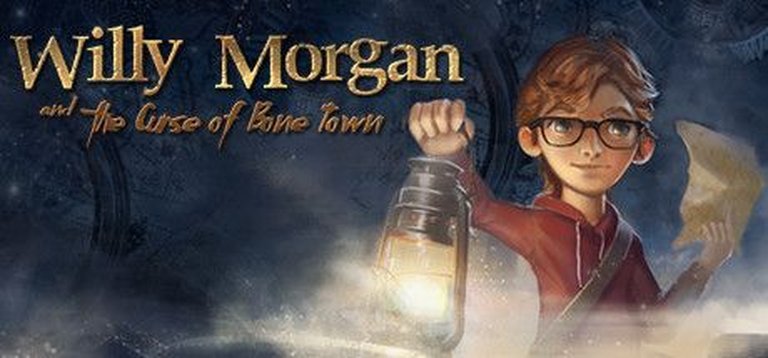
Set in the mysterious fantasy town of Bone Town, Willy Morgan and the Curse of Bone Town is a point-and-click adventure game where players take on the role of Willy Morgan, a detective on a quest to lift the town’s curse. Packed with captivating puzzle elements, charming visuals, and an engaging narrative filled with twists and turns, the game offers a perfect blend of mystery and fantasy.
Gameplay Videos
Where to Buy Willy Morgan and the Curse of Bone Town
Willy Morgan and the Curse of Bone Town Free Download
Willy Morgan and the Curse of Bone Town Guides & Walkthroughs
Willy Morgan and the Curse of Bone Town Reviews & Reception
metacritic.com (80/100): A really nice, sweet, entertaining game that, however, cannot tie in with the point and click milestones to which it alludes over and over again.
thegamer.com : Despite its surprisingly short length that left me wanting more, Willy Morgan and the Curse of Bone Town is an absolute delight with its stunning visuals, enchanting audio design, and challenging yet accessible puzzles.
thirdcoastreview.com : Willy Morgan and the Curse of Bone Town is a fine game; adequate for its genre but ultimately unremarkable.
sirusgaming.com : The game is fun, humorous, and well-crafted, though its story remains mediocre and predictable.
Willy Morgan and the Curse of Bone Town: Review
Introduction
Willy Morgan and the Curse of Bone Town opens with a tantalizing premise: a 15-year-old boy receives a decade-old letter from his vanished archaeologist father, urging him to investigate the mystery in a pirate-themed purgatory called Bone Town. This indie adventure, crafted by Italian developer imaginarylab, arrives as a love letter to the golden age of point-and-click games—think Monkey Island meets The Goonies—but filtered through a modern lens. At its core, Willy Morgan is a charming, accessible, and visually enchanting experience that excels in homage but stumbles in originality. Its thesis lies in a delicate balance: it masterfully revives classic adventure mechanics with contemporary polish, yet fails to elevate beyond nostalgia, offering a journey that’s delightful but ultimately fleeting.
Development History & Context
The Studio and Vision
Imaginarylab, a boutique Italian studio helmed by director Ciro Camera, conceived Willy Morgan as a passion project. With a team of just 79 developers (including modelers, animators, and programmers), they aimed to resurrect the “dreamy atmosphere and freedom to explore” of 1990s LucasArts adventures. Camera served as the creative linchpin—writing the story, directing, and designing art—while Massimo Origano handled programming. Their vision was clear: blend traditional point-and-click gameplay with a vibrant 3D cartoon aesthetic, using Unity to streamline development and ensure cross-platform viability (PC, Switch, PS4, Xbox One).
Technological Constraints and Landscape
Released in August 2020, Willy Morgan emerged amid a indie resurgence for the adventure genre. Unity’s flexibility allowed the team to achieve Full HD visuals and cinematic cutscenes without prohibitive costs. Yet, the engine’s ubiquity meant competing against a saturated market of retro-inspired titles. The game’s pirate-modern hybrid setting—where pirates coexist with computers—was a deliberate nod to genre conventions, though its non-linear design (90% of the map unlocked early) reflected contemporary player expectations. As a debut effort, it demonstrated technical competence but couldn’t escape the shadow of its influences.
Narrative & Thematic Deep Dive
Plot and Characters
The narrative follows Willy Morgan, a wry protagonist shaped by his father’s disappearance, as he unravels Bone Town’s secrets. His quest for Henry Morgan’s fate blends treasure hunting with personal revelation, intersecting with a “cursed” pirate legacy. While the plot drives the adventure, it’s predictably structured: a linear progression from clue to revelation, with twists that seasoned players will see coming. Supporting characters—15 NPCs including a sardonic innkeeper and a tech-savvy pirate—offer intrigue but lack depth. Their interactions, rife with irony and Easter eggs (e.g., a Monkey Island-inspired “Mighty Pirate” wink), entertain without fleshing out subplots. Dialogue balances humor and exposition, leaning on “dad jokes” and snarky commentary that, while occasionally clever, often feels sparse.
Thematic Undercurrents
At its heart, the game explores legacy and the passage of time. Bone Town, frozen in a pirate fantasy, symbolizes Willy’s journey into his father’s past. Themes of trust are literalized in the warning “don’t trust anyone,” while the treasure hunt critiques obsession—Henry’s archaeological pursuit mirrors Willy’s dogged search. Yet, these themes remain underdeveloped, overshadowed by the game’s focus on puzzle-solving. The modern-pirate dichotomy (e.g., pirates using laptops) is whimsical but superficial, never interrogating its own premise.
Gameplay Mechanics & Systems
Core Loop and Controls
Willy Morgan sticks rigidly to point-and-click orthodoxy: left-click to interact/pick up, right-click to examine/observe. The interface is intuitive, aided by a “hotspot” toggle (spacebar) that highlights interactive objects—an anti-frustration measure praised by reviewers. Inventory management is central, requiring players to combine items logically (e.g., using a plunger to drain a bathtub). This system, however, is double-edged: it eliminates pixel hunting but occasionally oversimplifies puzzles.
Puzzles and Progression
Puzzles form the game’s backbone, praised for their logic and lateral thinking. Early challenges—like reassembling Willy’s dismantled bicycle—establish an iterative rhythm, while later quests involve multi-step solutions spanning Bone Town’s interconnected locations. The game’s non-linear structure rewards thorough exploration, though fast-travel via map minimizes backtracking. Critically, puzzles are accessible, never resorting to obtuse logic—a boon for newcomers but a letdown for veterans seeking complexity. The lack of combat or character progression confines depth to environmental discovery.
UI and Polish
The interface is clean, with a minimalist inventory and a map for navigation. Small touches—like location labels and contextual animations—enhance immersion. Yet, occasional bugs (e.g., voice-acting drops in previews) and a UI that feels dated betray the game’s indie roots. Ultimately, the mechanics are functional, if unremarkable, prioritizing accessibility over innovation.
World-Building, Art & Sound
Setting and Atmosphere
Bone Town is a triumph of atmospheric design. A shanty village steeped in pirate lore, it merges anachronistic elements—sailing ships next to modern arcades—into a cohesive, dreamlike space. Over 50 locations, from the eerie “Bone Town Library” to the run-down carnival, are meticulously detailed, encouraging exploration. The town’s history, uncovered through lore scraps, hints at a richer backstory, though it remains largely unexplored.
Visual Direction
The art style is the game’s crowning achievement. A deformed 3D cartoon aesthetic—with exaggerated proportions and vibrant colors—evokes classic Monkey Island while feeling fresh. Characters, like Willy’s lanky frame and the rotund innkeeper, brim with personality. Lighting and textures enhance the whimsy, with a “bubble lens” effect lending a surreal, storybook quality. Even minor details, like cluttered backgrounds, are animated with care, creating a living world.
Sound Design
Marta Ascari’s original soundtrack—over 2 hours of music—elevates the experience. Tracks shift dynamically: sea shanties in town squares give way to ominous melodies in hidden passages. Voice acting, while competent, is uneven; Willy’s wry narration shines, but some NPCs deliver lines with flat delivery. Sound effects (e.g., creaking ships, crunching candy) add texture, though repetition in tracks occasionally grates.
Reception & Legacy
Launch and Critical Response
Upon release, Willy Morgan garnered mixed-to-positive reviews. Metacritic scored it 71 (PC), with critics lauding its visuals and puzzles but criticizing its brevity and rushed ending. TheGamer (90%) hailed it as “a great adventure for newcomers and veterans,” while Hooked Gamers (80%) praised its “classic point-and-click feel.” Conversely, Jump Dash Roll (40%) deemed it a dated throwback, and Adventure Gamers (70%) lamented its “fizzled mystery.”
Player Feedback and Evolution
Steam users embraced it (“Very Positive,” 87%), celebrating its accessibility and charm. Parenting outlets like Parenting Patch noted its E10+ rating (mild language/drug references) as suitable for teens, though Story Rich and Mystery tags attracted adventure purists. Over time, its reputation solidified as a “competent tribute”—nostalgic but not revolutionary.
Influence and Legacy
Willy Morgan’s legacy lies in its role as a genre gateway. It showcased indie viability for adventures, influencing developers like imaginarylab’s follow-up, Whirlight: No Time to Trip. While it didn’t redefine the genre, its fast-travel and hotspot systems became models for accessibility. For fans, it’s a fond artifact of the 2020s revival; for the industry, it’s a testament to classic mechanics’ enduring appeal.
Conclusion
Willy Morgan and the Curse of Bone Town is a paradox: a masterclass in atmospheric world-building and puzzle design yet a cautionary tale of imitation over innovation. Its strengths—the enchanting art, logical puzzles, and nostalgic charm—create an undeniably pleasant experience, while its weaknesses—a rushed narrative, short runtime (4-5 hours), and lack of depth—prevent it from transcending its influences. As a debut, it signals imaginarylab’s potential but feels like a prologue rather than a standalone triumph. For newcomers to point-and-click adventures, it’s a perfect entry; for veterans, it’s a charming but forgettable interlude. Ultimately, Willy Morgan earns its place in history—not as a classic, but as a heartfelt homage that reminds us why we fell in love with adventure games in the first place: to explore, to puzzle, and to believe, even for a few hours, that treasure awaits just around the corner.