
- Release Year: 2008
- Platforms: Windows
- Publisher: Akella, dtp entertainment AG
- Developer: Chimera Entertainment GmbH
- Genre: Role-playing, Strategy
- Perspective: Diagonal-down
- Game Mode: Single-player
- Gameplay: Character progression, Party management, Real-time strategy, Story-driven, Tactical Combat
- Setting: Fantasy, Unique fantasy world
- Average Score: 73/100
Description
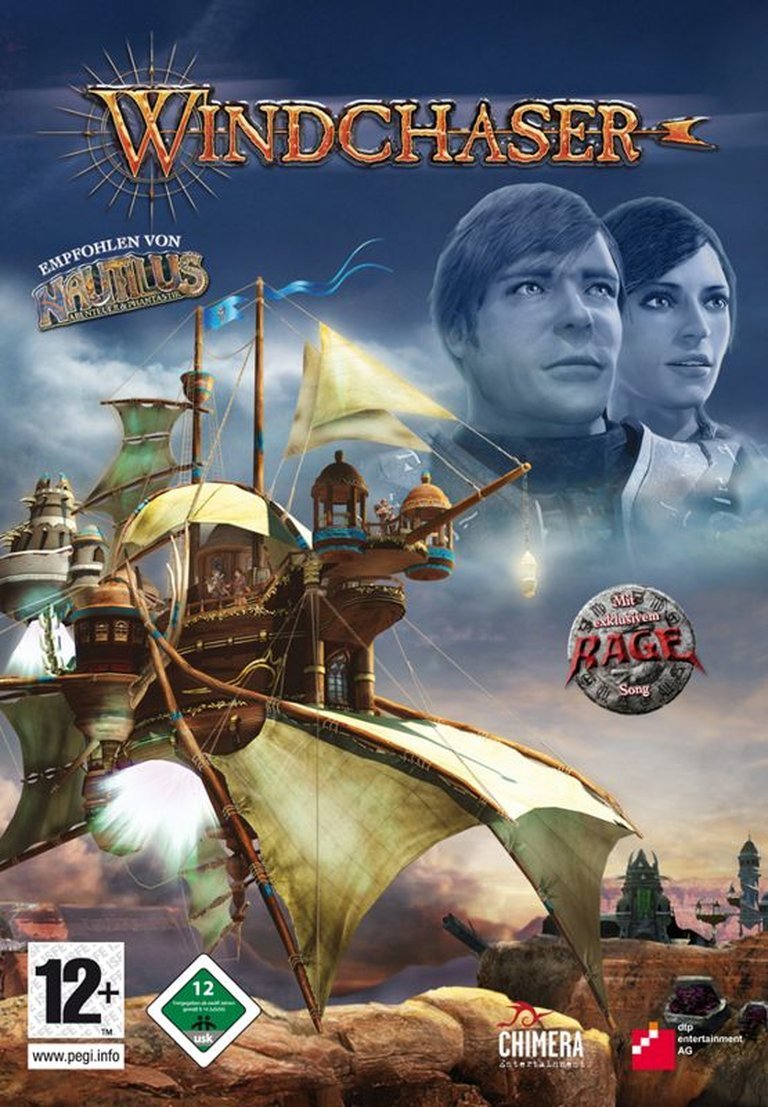
Windchaser is a story-driven real-time strategy (RTS) game set in the unique fantasy world of Ensai, where vast windy plains replace oceans and sailing ships traverse grassy seas. Following an ancient war that devastated civilizations and left water scarce, players control a freelance guild headquartered on a mobile plainship, recruiting and training diverse characters who gain experience and specialize into unique classes. Through strategic missions accessed via a world map, players navigate dangers like wild beasts, pirates, and ancient war machines while unfolding an immersive storyline.
Where to Buy Windchaser
PC
Windchaser Cracks & Fixes
Windchaser Reviews & Reception
metacritic.com (80/100): Windchaser truly amazed me! Those who don’t mind small faults and count themselves fans of genre-mixes like Spellforce, should definitely visit the world Ensai.
Windchaser: A Forgiven Zephyr of Ambition—Rediscovering 2008’s Genre-Defying Cult Classic
Introduction
In the pantheon of underappreciated genre hybrids, Windchaser (2008) stands as a testament to bold experimentation. Developed by fledgling studio Chimera Entertainment and born from a Munich design school thesis, this real-time strategy (RTS) and role-playing game (RPG) hybrid dared to blend Jagged Alliance’s tactical grit, Baldur’s Gate’s narrative depth, and SpellForce’s world-building into a singular vision. Set against the hauntingly beautiful, post-apocalyptic plains of Ensai—where water is currency and ancient war machines stalk the grasslands—Windchaser promised a fresh breeze in a crowded market. Yet, its journey from academic project to commercial release was fraught with turbulence. This review argues that while Windchaser stumbled under the weight of its ambitions, it remains a fascinating artifact of studio Chimera’s nascent potential and a poignant case study in genre fusion.
Development History & Context
From Classroom to Commerce
Windchaser began life as a thesis project by design students at Munich’s University of Applied Sciences. Spearheaded by Alexander Kehr (Creative Director) and Christian Kluckner (Technical Director), the prototype caught the eye of German publisher dtp entertainment, which greenlit a full commercial release. Studio Chimera Entertainment—founded by Hendrik Lesser—expanded the team to 74 members, leveraging the Shark 3D engine to realize their vision. The year 2008 was a fraught time for RTS-RPG hybrids; titles like World in Conflict and Dawn of War dominated, yet Windchaser’s mobile base mechanic and class-driven tactics offered a fresh angle.
Technological Constraints
Budget limitations and engine rigidity shackled ambition. Developer interviews reveal struggles with camera controls, AI pathfinding, and UI responsiveness—compromises born from scaling a student project into a commercial product. The absence of multiplayer, noted by critics, was a casualty of scope. Still, Chimera’s scrappy ingenuity shone through: dynamic weather systems and a modular class system were squeezed into the framework, hinting at the studio’s future prowess (later honed in The Dark Eye: Drakensang).
Narrative & Thematic Deep Dive
The Winds of Ensai
Set centuries after the cataclysmic War of the Ancients—a conflict that scorched civilizations and left water as a sacred resource—the game follows Ioan, a guild leader navigating political strife, piratical skirmishes, and resurrected war machines. His mobile stronghold, the Windchaser plainship, serves as both narrative hub and strategic pivot. Companions like the fiery Shara and grizzled mercenary Caine join via recruitable guild contracts, their arcs weaving themes of scarce resources, spiritual decay, and the ethics of rediscovered technology.
Subtext and Symbolism
The plainship is more than a base—it’s a metaphor for transience in a fractured world. Missions often pit Ioan against zealots clinging to pre-war dogma (“Order of the Iron Wind”) or pirates exploiting chaos, reflecting the game’s central tension: progress versus preservation. Dialogue, while occasionally stilted, grapples with moral ambiguity—e.g., restoring an ancient aqueduct risks unleashing forgotten horrors. Critics praised the “surprising twists” (GamingXP), though some noted underdeveloped faction lore (Absolute Games).
Gameplay Mechanics & Systems
The Three-Styled Combat Core
Windchaser’s defining innovation is its rock-paper-scissors combat triad:
– Chaos (Red): Overwhelms Discipline (Green) but falters against Concentration (Blue)
– Concentration (Blue): Counters Chaos but loses to Discipline
– Discipline (Green): Breaks Concentration but is vulnerable to Chaos
This system demanded tactical foresight: assembling parties of Scouts, Siege Engineers, and Mystics to exploit enemy weaknesses. However, the learning curve was punishing. Gamezone lamented the “fummelig” (clumsy) UI, while 4Players.de praised its depth once mastered.
Progression and Pain Points
Character progression offered meaningful choices: skill trees allowed hybridization (e.g., a Chaos-aligned healer), and the plainship’s modular upgrades impacted mission readiness. Yet, water management—critical for healing and upgrades—often felt punitive. Missions devolved into repetition (Sector), though the 25-hour campaign’s “branched choices” (Bonusweb) added replayability. The absence of mid-mission saves exacerbated frustration, especially during grueling boss fights against Ancient War Golems.
World-Building, Art & Sound
Aesthetics of Desolation
Ensai’s grassy oceans, animated by wind-swept particle effects and ruined aqueducts, evoked a melancholic beauty. The art direction blended realism with stylization—Harald Oestreicher’s team used subdued palettes to emphasize desolation, though textures and character models showed their age (PC Games: “noch nicht auf der Höhe der Zeit”). Cutscenes, rendered in-engine, suffered from stiff animations but effectively conveyed scale.
Soundscapes and Silence
Composer Alexander Röder’s score mingled haunting strings with percussive urgency, elevating tense naval skirmishes. However, sparse voice acting and repetitive combat barks (Computer Bild Spiele: “schlechten Sprachausgabe”) undercut immersion. Ambient sounds—creaking plainship wood, distant beast roars—were highlights, crafting an aura of eerie isolation.
Reception & Legacy
Launch and Critical Divide
Windchaser earned a 69% MobyScore (18 critics), epitomizing divisiveness. German outlets lauded its ambition:
– GamingXP (86%): “A mix of Jagged Alliance, Baldur’s Gate, and Universe at War!”
– GameStar (72%): “Fresh ideas, but overcomplicated combat.”
Detractors fixated on technical flaws:
– PC Games (40%): “Frustrating UI and uneven difficulty.”
– Absolute Games (55%): “Routine combat with no innovation.”
Player scores (2.9/5) echoed critiques of the steep curve, though niche audiences praised its narrative depth.
Lasting Influence
Commercially, Windchaser faded quickly, but its DNA resurfaced in Chimera’s later works:
– Venetica (2009): Refined narrative-driven design
– Drakensang (2008): Expanded class systems
The game’s mobile HQ concept presaged Frostpunk’s nomadic survival, while its faction-based tensions echoed in Endless Legend. Though Windchaser never spawned a sequel, its cult following—and Chimera’s subsequent success—cemented it as a flawed but foundational text in RTS-RPG evolution.
Conclusion
Windchaser is a game of audacious contrasts: a student project turned commercial gamble, a narrative triumph shackled to uneven systems, and a technical artifact that nevertheless breathes life into its windswept world. Its combat triad, class customization, and mobile base mechanics remain commendably inventive, even as UX flaws and repetitive missions tarnish the experience. For genre historians and patient tacticians, Windchaser offers a rewarding—if rough—voyage into a world where ambition outpaces execution. It stands not as a masterpiece, but as a poignant milestone in Chimera Entertainment’s ascent—a gust of creativity in an industry too often becalmed by convention.
Verdict: A 7/10 curio—best appreciated as a historical document of German game development’s scrappy indie roots and a blueprint for what might have been.