
- Release Year: 1994
- Platforms: DOS, Macintosh, Windows
- Publisher: Electronic Arts, Inc., ORIGIN Systems, Inc.
- Developer: ORIGIN Systems, Inc.
- Genre: Simulation, Space trading and combat
- Game Mode: Single-player
- Gameplay: Combat, Sandbox, Trading
- Setting: Space
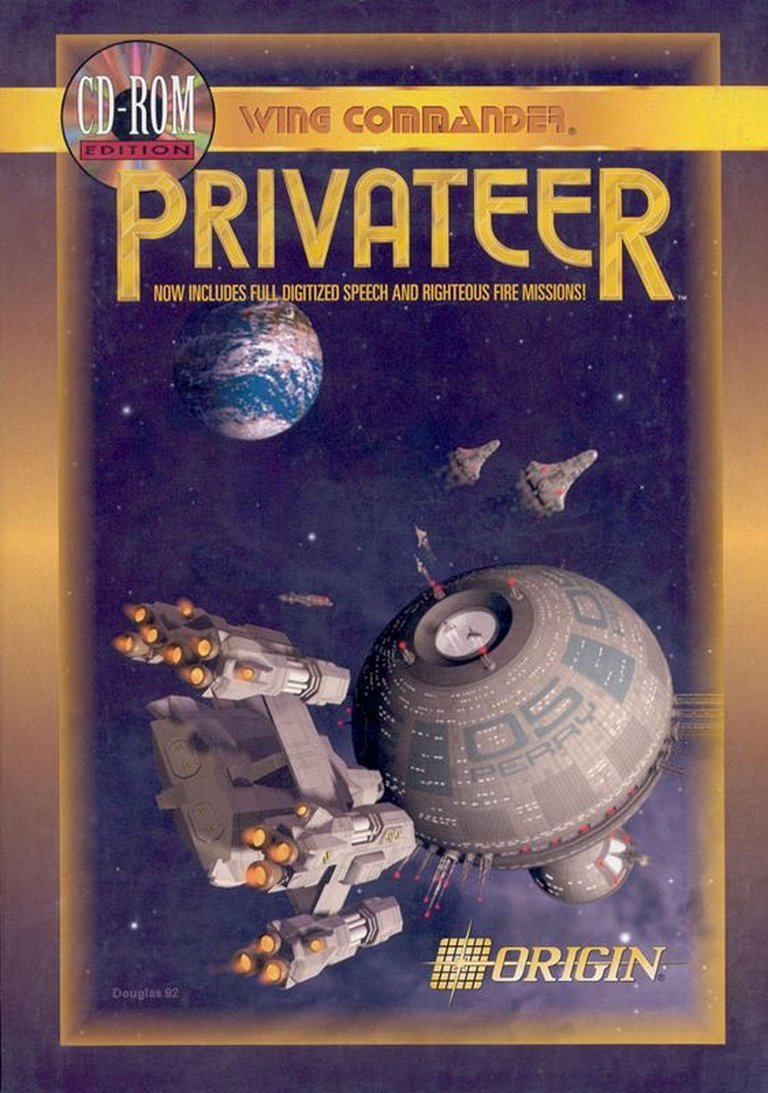
Description
Set in the expansive Wing Commander universe, Wing Commander: Privateer – CD-ROM Edition is a space simulation game that casts players as a freelance pilot, or ‘privateer,’ navigating the lawless frontier sectors. This CD-ROM compilation enhances the original 1993 release by including its Righteous Fire expansion and implementing full digitized voice acting for every character, offering a deep, open-ended experience focused on space trading, exploration, and combat with significant player freedom.
Wing Commander: Privateer – CD-ROM Edition Reviews & Reception
mobygames.com : A fine “Elite” derivative, with all the WC flavor intact
Wing Commander: Privateer – CD-ROM Edition: Review
Introduction: The Frontier Awaits
In the pantheon of 1990s space simulators, few titles evoke the raw, unfiltered romance of the cosmic frontier like Wing Commander: Privateer. Released at the zenith of Origin Systems’ creative power and the Wing Commander franchise’s cultural cachet, the CD-ROM Edition—bundling the original 1993 game, its Righteous Fire expansion, and full digitized speech—stands not merely as a repackaging, but as the definitive, canonical version of a landmark experiment. This review argues that Privateer’s enduring genius lies in itsmasterful synthesis of narrative-driven cinematic spectacle with the emergent, player-authored freedom of the “Elite” template, creating a living, breathing sector of space where one could be a hero, a hustler, or a heel. The CD-ROM release, by consolidating all content and crucially providing pervasive voice-acting, finally delivered the immersive, seamless experience the developers envisioned, cementing the game’s status as a foundational text in the evolution of open-world game design.
Development History & Context: From Linear Epic to Open Frontier
Studio & Vision: Developed by Origin Systems under the executive production of Chris Roberts (fresh from the Wing Commander II juggernaut) with lead design by Joel Manners, Privateer represented a conscious pivot. While the mainline Wing Commander series perfected scripted, cinematic space combat, Privateer asked: “What if you weren’t a hero in a war, but a nobody trying to survive on the fringe?” The vision was a gritty, morally ambiguous sandbox inspired by Elite and the roguish charm of Han Solo, set within the established lore of the Kilrathi war. This was Warren Spector’s “immersive simulation” ethos meeting Chris Roberts’ flair for presentation.
Technological Constraints & The CD-ROM Pivot: The original 1993 floppy release (spanning six 1.44MB disks) was a feat of compression, but its lack of full speech was a noticeable gap in the cinematic Wing Commander language. The CD-ROM Edition (1994) was more than a convenience; it was an enhancement. By moving to a single CD, it bundled the base game, the Righteous Fire expansion (which added new missions, weapons, and the dangerous Retro faction), and—most importantly—digitized speech for every interaction, far exceeding the separate Speech Pack. This eliminated disk-swapping and created a consistently voiced world, a major leap in atmospheric immersion for the era. However, some contemporary reviews (like Power Play) noted it ran slightly slower than the optimized floppy version, a common trade-off for CD-based games of the time.
Gaming Landscape: Privateer launched into a space sim market dominated by Wing Commander II (linear narrative) and X-Wing (mission-based sim). Its direct competitor was the legendary Elite, but Privateer differentiated itself with a strong central plot, superior graphics utilizing an enhanced Wing Commander II bitmap engine (320×200, 256-color VGA), and the unmistakable polish of Origin’s user interface and sound design. It captured the moment when PC gaming was transitioning from pure simulation to narrative-sandbox hybrids.
Narrative & Thematic Deep Dive: The Price of a Credit
The Steltek Enigma (Base Game): The plot is deceptively simple: protagonist Grayson “Brownhair” Burrows (his name obscured for years, now canon) inherits a ship and enters the lawless Gemini Sector. A routine skirmish uncovers a dormant Steltek drone—a relic of a vanished, hyper-advanced race. This artifact, half a map, pulls Burrows into a conspiracy involving xenoarchaeologist Dr. Monkhouse, greedy fixers, and the paranoid Terran Confederation. The narrative is a classic sci-fi mystery: an ancient, uncontrollable power (the drone) is a MacGuffin that draws Burrows into a web of betrayal. The theme is autonomy vs. exploitation; Burrows is a tool for every faction (Confed, criminals, the mysterious Steltek scout), and his ultimate act of agency is destroying the drone on his own terms. The writing, while occasionally criticized as “sophomoric” (Computer Gaming World), effectively blends pulp action with moments of genuine intrigue, particularly in the shady dealings of fixers on planets like Palan and Oxford.
Righteous Fire & The Retro Threat: The expansion shifts focus to a different existential threat: the Retros, a Luddite cult led by the fanatical Mordecai Jones, who seek to purge all advanced technology—including privateer ships. Thematically, this contrasts the Steltek’s cold, removed power with a very human, ideological evil. The plot is tighter, a direct vendetta after the theft of Burrows’ Steltek weapon. It explores extremism and consequences; Burrows must hunt down copies of a weapon he himself recovered, recognizing the danger of technology in the wrong hands. The expansion’s design—allowing mission retries—reduced frustration but also slightly lowered stakes compared to the base game’s permadeath-style tension.
Moral Ambiguity & Player Agency: The core thematic triumph is the erasure of a fixed morality. Faction reputations (Confed, Kilrathi, Pirates, Militia, Retros, Merchants, Bounty Hunters) are fluid based on your actions. Kill a Confed patrol? Militia and Pirates respect you, Confed hunts you. Transport slaves for profit? You’re a pariah to moralists, a kingpin to pirates. The game posits a sector where ethics are a currency, and the “plot” is just one of many paths. This was revolutionary: a Wing Commander game where you could be a Kilrathi ally or a slave-trading scourge. The ending, where Burrows breaks the fourth wall with the “Admiral” (a Roberts stand-in), cheekily acknowledges the player’s authorship over the narrative.
Gameplay Mechanics & Systems: The Loop of Liberty
Core Loop & Professions: The gameplay is a virtuous cycle: Fly → Complete Mission/Trade → Earn Credits → Upgrade Ship → Repeat. Three primary “careers” emerge organically:
1. Mercenary: Take combat contracts (bounty hunting, destroy patrols) from guilds or fixers. High risk, high reward.
2. Merchant: Buy low, sell high across planets. Requires navigation of market fluctuations and safe routes. Lower risk, requires capital to be profitable.
3. Pirate/Smuggler: Attack ships for cargo or transport illegal goods (drugs, slaves). Highest risk from law enforcement (Militia/Confed), but potential for massive, quick profits.
The brilliant design is that these are not discrete classes but spectra. You can be a merchant who occasionally pirates, or a merc who smuggles on the side. The game’s economy and faction system reward and punish these hybrid identities dynamically.
Combat &飞船 Customization: Combat uses the familiar Wing Commander control scheme: throttle, afterburner, shield/energy balancing (a key innovation from X-Wing), and weapon groups. The ship upgrade system is the mechanical heart. You start with the pathetic Tarsus scout. Earnings fund:
* Weapons: Laser cannons (various types), mass drivers, missiles.
* Systems: Shields (regenerative vs. capacitor-based), engines (speed/maneuverability), armor, cargo space, ECM.
* Ships: The Galaxy (cargo mule), Orion (tank), Centurion (dogfighter). The consensus among players and critics is that the Centurion is objectively superior for plot completion due to its balance, making the choice somewhat illusory for endgame—a noted flaw.
Faction Reputation & Mission Structure: Faction reputations are a hidden, numerical value modified by your actions. This affects who attacks you, who offers missions, and mission availability. The mission computer offers generic, infinite jobs. Fixers (the narrative glue) offer plot-specific and high-paying missions, often with branching dialogue based on your reputation. The criticism of repetitiveness is valid; many missions are “destroy X ships” or “deliver Y.” However, the context (the ship type, location, and faction you’re working for) infuses them with narrative flavor.
UI & Interface: The interface is classic Origin: cockpit HUD with multi-function displays for targets, navigation, and comms. Planetside, a static, pre-rendered first-person view shows rooms where you interact with bartenders, guild reps, and merchants via a point-and-click menu system. It’s intuitive for its time, though modern players may find the lack of a radial menu or hotkeys for common actions cumbersome. The CD-ROM’s full speech makes these interactions vastly more engaging than the text-only original.
Flaws & Innovations: Privateer innovated by marrying a persistent, open-ended galaxy with a serious, multi-mission narrative path—a precursor to modern open-world design. Its flaws are of its era: limited ship selection (only 4 flyable), a tedious trading system (requiring manual price checking and hopping), a steep initial difficulty curve (the early game is brutally hard with the Tarsus), and a final boss notorious for its extreme challenge. The Righteous Fire expansion addressed some difficulty but introduced even more formidable enemies.
World-Building, Art & Sound: The Feel of the Frontier
The Gemini Sector: The setting is the star. Not a galaxy, but a single, dense frontier sector bordering Kilrathi space. It’s divided into quadrants with dozens of star systems, each with 1-3 planets or stations. The lore is woven into the environment: a Confed carrier patrolling the border, a mining base surrounded by asteroids, a lush agricultural world, a retro-controlled junkheap, a pirate haven hidden off the nav-map. This density creates a lived-in feel. The writing (via in-game text logs, bar chatter, and mission briefings) paints a picture of a gritty, corporate-military dystopia where life is cheap and credits are king—a darker, more complex vision of the Wing Commander universe than the noble Confederation narratives.
Visuals & Atmosphere: Using an enhanced WCII engine, Privateer features crisper sprites, more detailed ship models, and spectacularly rendered space station interiors and planetary cities (like New Detroit’s layered metropolis). The cockpit view is cluttered and functional, selling the “you are there” feeling. The color palette is dark and moody, fitting the noir themes. While not 3D, the pseudo-3D engine was state-of-the-art for a 1993 VGA title, and the attention to detail in cargo pods, weapon effects, and explosion sprites is impressive.
Sound & Music: This is where the CD-ROM Edition supremely delivers. Nenad Vugrinec’s soundtrack is iconic—a blend of synth-orchestral tension for combat and ambient, mysterious tracks for exploration. The MIDI implementation is top-tier. The digitized speech for every character (fixers, bar patrons, wingmen, enemies) transforms the experience. The growls of Kilrathi, the weary drawl of a merchant, the manic preaching of a Retro—all are performed with B-movie conviction. It provides constant context and personality, making the sector feel populated. Sound cues (alert klaxons, engine hums) are crisp and informative. The audio design is not just accompaniment; it’s a core pillar of the simulation.
Reception & Legacy: The Benchmark for Freedom
Contemporary Reception (1993-1994): The original floppy version was a massive commercial hit, hitting #1 in Computer Gaming World‘s “Playing Lately?” survey. Critics praised its unprecedented freedom (“Ultima-like real moral choices”) and immersive atmosphere but knocked its “sophomoric” writing and technical bugs (“incompatibilities with sound cards and joysticks”). Righteous Fire was seen as a solid, if easier, extension. The CD-ROM Edition was particularly praised for its value and convenience: White Wolf highlighted its “2 MBs of HD space vs. 24 MBs” footprint and the inclusion of both expansions and full speech as a “superior package.”
Modern Reappraisal: Player sentiment is overwhelmingly fond, often elevating it to “top 5 all-time” status. The common refrain is the unmatched sense of agency and discovery. The formula—”fly, fight, trade, upgrade”—remains deeply compelling. Its flaws (limited ships, repetitive missions) are now seen as acceptable trade-offs for its profound systemic depth. The CD-ROM version is universally regarded as the way to play, with the speech integration being a make-or-break feature for authenticity.
Industry Influence & Legacy: Privateer’s legacy is profound but subtle.
1. The “Freelancer” Prototype: It directly inspired Chris Roberts’ later work. After EA shut down Origin, Roberts’ Freelancer (2003) was essentially a spiritual successor, attempting to recreate Privateer‘s freedom in a 3D universe. The design lineage is clear to Star Citizen.
2. Open-World Space Sim Template: It proved a narrative-heavy studio could make a compelling sandbox. Its faction reputation system and emergent storytelling influenced later RPGs and sims.
3. Cultural Footprint: The names “Gemini Sector,” “Tarsus,” “Centurion” are hallowed among space sim fans. The game’s aesthetic (dark, industrial, lived-in) influenced the “gritty space” genre. It also spawned a passionate fan community that produced the excellent fan remake Gemini Gold (2005) using the Vega Strike engine.
4. The Cautionary Tale of Privateer II: The 1996 sequel, Privateer 2: The Darkening, despite live-action cutscenes and a star-studded cast, was criticized for losing the open-ended freedom and opting for a more linear, story-heavy approach—a stark contrast that retroactively validated the original’s design. It serves as a lesson in preserving core gameplay pillars.
5. Preservation: Its GOG.com re-release (2011/2012) with DOSBox support ensured its accessibility, introducing it to new generations.
Conclusion: A Timeless Beacon on the Frontier
Wing Commander: Privateer – CD-ROM Edition is more than the sum of its parts. It is the culmination of Origin’s ambition to fuse Hollywood production values with deep, systemic gameplay. The CD-ROM version is the definitive artifact, resolving the original’s lack of voice and fragmentation of content. Its strengths—a brilliantly reactive faction system, an absorbing “find your own fate” ethos, a phenomenal soundtrack, and the sheer joy of upgrading your ship from a floating tin can to a deadly war machine—remain potent. Its weaknesses—limited ship variety, a sometimes-grindy economy, and a punishing late game—are the scars of its ambition and era.
As a historical document, it marks the apex of 2D sprite-based space sims and a pivotal step toward the open-world genre. As a playable experience, it remains a uniquely addictive loop of risk, reward, and discovery. It asks not for loyalty to a cause, but for the cunning to survive and thrive on your own terms. In doing so, Wing Commander: Privateer didn’t just carve out a niche in the Wing Commander universe; it defined the fantasy of the spacefaring rogue for a generation. The CD-ROM Edition, with its full voice and bundled expansions, is the perfect vessel for that timeless fantasy. A classic, flawed, and essential piece of gaming history.