
- Release Year: 2006
- Platforms: Windows
- Publisher: rondomedia Marketing & Vertriebs GmbH
- Developer: Independent Arts Software GmbH
- Genre: Sports
- Perspective: 3rd-person
- Game Mode: Single-player
- Gameplay: Freestyle skiing, Ski jumping
- Setting: Sports, Winter
- Average Score: 83/100
Description
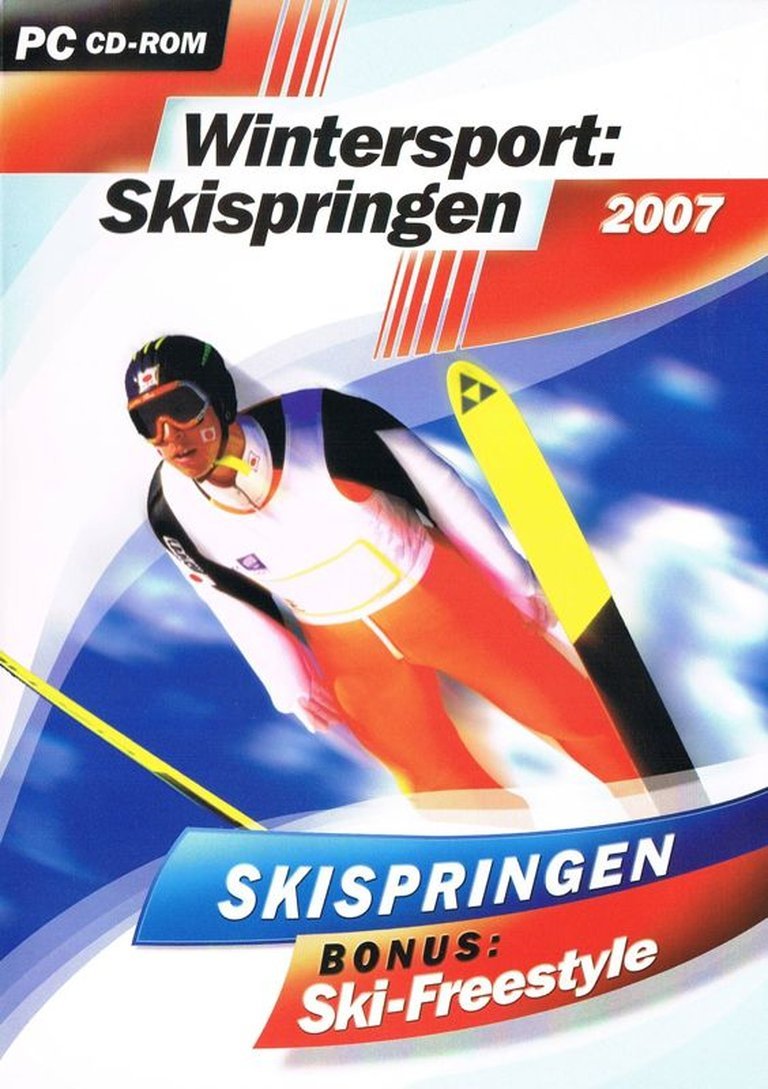
Wintersport: Skispringen 2007 is a sports simulation game focused on winter disciplines, specifically ski jumping and freestyle skiing. Released in 2006 for Windows, it is a streamlined version of the broader Winterspiele game, offering players the chance to experience the thrill of competitive ski jumping with realistic mechanics and a third-person perspective. The game features a free camera for dynamic viewing angles and is designed for both casual and competitive play, catering to fans of winter sports.
Wintersport: Skispringen 2007 Reviews & Reception
gamearchives.net (83/100): for PC will surely generate interest among the enthusiasts of ski jumping.
Wintersport: Skispringen 2007 Cheats & Codes
PC
Create a new jumper and name him ‘Petsi Petsi’.
| Code | Effect |
|---|---|
| Petsi Petsi | All skills on maximum level. |
Wintersport: Skispringen 2007 – A Deep Dive into a Niche Winter Sports Classic
Introduction: The Forgotten Gem of Ski Jumping Simulations
In the mid-2000s, winter sports video games were a burgeoning subgenre, with titles like RTL Ski Jumping and Winter Sports: The Ultimate Challenge dominating the market. Amidst this competitive landscape, Wintersport: Skispringen 2007 emerged as a stripped-down yet focused entry, offering a distilled experience centered solely on ski jumping and freestyle skiing. Developed by Independent Arts Software GmbH and published by rondomedia Marketing & Vertriebs GmbH, this game was a spin-off of Winterspiele, a broader winter sports compilation. While it lacked the breadth of its predecessor, Skispringen 2007 carved out a niche for itself by refining its mechanics and delivering a no-frills, simulation-heavy experience.
This review explores the game’s development context, its mechanical depth, its reception, and its lasting (or lack thereof) impact on the sports simulation genre. Was it a missed opportunity, or did its narrow focus make it a hidden gem for ski jumping enthusiasts?
Development History & Context: A Spin-Off in a Crowded Market
The Studio Behind the Game
Independent Arts Software GmbH, a German developer known for simulation and strategy games, took the reins for Wintersport: Skispringen 2007. Unlike the more commercially successful RTL Ski Jumping series (developed by 49Games GmbH), Independent Arts opted for a more simulation-oriented approach, emphasizing realism over accessibility. This decision placed Skispringen 2007 in direct competition with established franchises, but its narrower scope—focusing only on ski jumping and freestyle—allowed it to cater to a specific audience.
Technological Constraints & Design Philosophy
Released in December 2006, the game was built for Windows PCs with modest system requirements (1.0 GHz CPU, 256 MB RAM, DirectX 9.0c). The development team faced the challenge of creating a visually appealing yet mechanically deep ski jumping simulator within these limitations. The result was a game that prioritized physics-based gameplay over graphical fidelity, a choice that would later define its reception.
The Winter Sports Gaming Landscape in 2006
The mid-2000s saw a surge in winter sports games, with titles like:
– RTL Ski Jumping 2007 (49Games) – A more arcade-like, licensed competitor.
– Winter Sports: The Ultimate Challenge (2007) – A multi-discipline Olympic-style game.
– Skispringen Winter 2006 (Metropolis Software) – A Polish-developed simulation with managerial elements.
Skispringen 2007 entered this market as a budget-friendly alternative, lacking the polish of RTL Ski Jumping but offering a more hardcore simulation experience. Its decision to exclude other winter sports (unlike Winterspiele) was a gamble—one that ultimately limited its mainstream appeal but endeared it to purists.
Narrative & Thematic Deep Dive: The Loneliness of the Long Jump
The Absence of a Traditional Narrative
Unlike story-driven sports games (e.g., FIFA’s “The Journey”), Skispringen 2007 eschews narrative in favor of pure simulation. There are no cutscenes, no character arcs—just the player, the slope, and the relentless pursuit of perfect form. This minimalist approach reinforces the game’s thematic focus on discipline, precision, and mastery.
Themes of Isolation & Perfectionism
Ski jumping is a solitary sport, and the game captures this through:
– Repetitive yet rewarding gameplay loops – Each jump is a test of timing, balance, and adaptability.
– The pressure of competition – While there’s no overarching story, the career mode simulates the grind of professional athletics, where incremental improvements lead to success.
– The beauty of failure – A mistimed landing or a wobbly descent isn’t just a lost points opportunity; it’s a lesson in the fragility of human performance.
The Unspoken Story of the Athlete
Though the game lacks explicit storytelling, the progression system tells its own tale:
– Starting as an unknown jumper, the player climbs the ranks through training, equipment upgrades, and strategic risk-taking.
– The freestyle mode adds a layer of artistic expression, contrasting with the rigid scoring of traditional ski jumping.
– The lack of commentary or dynamic reactions from NPCs reinforces the athlete’s isolation, making victories feel earned rather than handed down by a script.
Gameplay Mechanics & Systems: A Study in Precision
Core Gameplay Loop: The Anatomy of a Jump
Skispringen 2007 breaks down ski jumping into three critical phases, each requiring distinct player input:
-
The Approach & Takeoff
- Players must time their jump perfectly, balancing speed and angle.
- Too early? You lose distance. Too late? You risk a unstable flight.
- The mouse-controlled mechanics demand precision, with no room for error.
-
Mid-Air Control & Aerodynamics
- Once airborne, players adjust their body position to maximize lift.
- Wind conditions and hill geometry affect trajectory, forcing real-time adaptations.
- The freestyle mode introduces tricks, adding a layer of risk vs. reward.
-
Landing & Stability
- The most punishing phase—a poor landing can ruin an otherwise perfect jump.
- Players must brace for impact, adjusting their stance to avoid penalties.
- The game’s physics engine is unforgiving, rewarding only the most disciplined players.
Progression & Career Mode
- Training Sessions – Players refine their skills in isolated drills.
- Equipment Upgrades – Better skis, suits, and bindings provide marginal but crucial advantages.
- Tournament Structure – From local hills to the Four Hills Tournament, the career mode simulates a real athlete’s journey.
Flaws in the System
While the mechanics are deep, they suffer from:
– Repetitive gameplay – Without variety in disciplines, the experience can feel monotonous.
– Lack of feedback – The game provides no technique analysis (unlike RTL Ski Jumping 2007), making improvement feel trial-and-error.
– Clunky UI – Menus and controls are functional but lack the polish of competitors.
World-Building, Art & Sound: The Illusion of the Alps
Visual Design: Functional Over Flashy
- The game’s 3D-rendered hills are based on real-world locations, but textures and animations are dated even for 2006.
- The free camera allows players to admire jumps from multiple angles, but the lack of spectator detail makes stadiums feel empty.
- Weather effects (snow, wind) are present but underutilized—they affect gameplay more than aesthetics.
Sound Design: The Silence of the Slopes
- Ambient wind and snow crunching create immersion, but the lack of dynamic commentary makes the experience feel sterile.
- The menu music is forgettable, failing to build excitement.
- Sound cues for jumps (e.g., the whoosh of air resistance) are well-implemented but repetitive.
Atmosphere: The Loneliness of the Jumper
The game’s minimalist presentation reinforces its themes:
– There are no cheering crowds, no dramatic announcements—just the player and the mountain.
– This austere approach may alienate casual players but resonates with those seeking a pure simulation.
Reception & Legacy: The Game That Time Forgot
Critical & Commercial Reception
- No recorded critic reviews on MobyGames, suggesting limited mainstream attention.
- Player reception is similarly scarce, with only 2 recorded collectors on the platform.
- Likely overshadowed by RTL Ski Jumping 2007, which released a month earlier with superior polish and licensing.
Legacy: A Footnote in Ski Jumping Games
- Unlike Skispringen Winter 2006 (which developed a cult following in Poland), Skispringen 2007 faded into obscurity.
- Its focus on simulation over accessibility may have limited its appeal, but it remains a fascinating time capsule of mid-2000s sports games.
- Later titles like Steep (2016) and Ski Jumping Pro VR (2020) would refine the genre, but Skispringen 2007 deserves credit for its uncompromising mechanical depth.
Conclusion: A Flawed but Fascinating Relic
Wintersport: Skispringen 2007 is not a great game by modern standards, but it is a fascinating one. Its narrow focus, punishing physics, and minimalist presentation make it a niche product—one that likely appealed more to ski jumping purists than casual gamers. While it lacks the polish of RTL Ski Jumping or the managerial depth of Skispringen Winter 2006, its unwavering commitment to simulation gives it a unique identity.
Final Verdict: 6.5/10 – “A Cult Classic Waiting to Be Rediscovered”
- For hardcore ski jumping fans: A must-try for its mechanical depth.
- For casual players: Too repetitive and unforgiving to recommend.
- For historians: A valuable artifact of mid-2000s sports simulations.
Skispringen 2007 may not have soared to great heights, but like a well-executed jump, it deserves appreciation for its technical ambition—even if the landing was a little shaky.
Would you take the leap? Share your thoughts in the comments below! ⛷️