
- Release Year: 2008
- Platforms: Windows
- Publisher: KingsIsle Entertainment, Inc.
- Developer: KingsIsle Entertainment, Inc.
- Genre: Action, Role-playing (RPG)
- Perspective: 3rd-person (Other)
- Game Mode: MMO, Online Co-op
- Gameplay: Cards, Interior decorating, Mini-games, Tiles
- Setting: Fantasy, School of magic
- Average Score: 85/100
Description
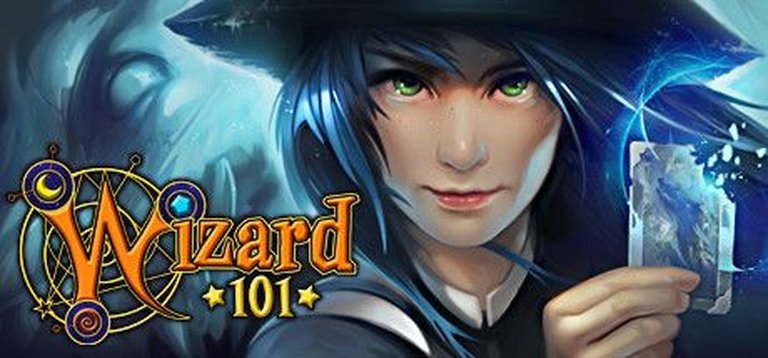
Wizard101 is a free-to-play MMORPG where players create wizard characters who attend a magical school to learn spells and uncover the history of the Spiral, an alternate universe filled with magic and mayhem. Combat is conducted through a collectible card-based system, allowing players to use learned spells to defeat creatures without killing them, as the once peaceful worlds are being taken over. The game emphasizes online safety and provides parental controls, making it a family-friendly experience.
Gameplay Videos
Where to Buy Wizard101
PC
Wizard101 Free Download
Wizard101 Mods
Wizard101 Guides & Walkthroughs
Wizard101 Reviews & Reception
metacritic.com (85/100): Parents of younger kids and tweens will definitely want to check out Wizard101 if they haven’t already. It’s a wonderful game to use to introduce kids into the wider world of MMOs.
wired.com : Wizard101 is a massively multiplayer game that really deserves the moniker of being ‘fun for the whole family.’
Wizard101 Cheats & Codes
PC
Redeem promotional codes in the ‘Redeem Card or Code’ section on the Wizard101 website. Use button sequences in-game as described.
| Code | Effect |
|---|---|
| APRILFOOLS24 | Helm of Ultimate Protection |
| HOLIDAYMYSTERY2023 | 10% to 50% off your order |
| MERRYCROWNS | 250 to 60,000 Crowns |
| HOMEFORHOLIDAYS | Holiday furniture |
| KINGCAKE | Carnival King Cake housing item |
| RAVENWOODLEGACY | Gear, weapon, pet, 7-day mount, card pack, 10,000 gold, and Major XP Boost Elixir |
| CAKEKING | Carnival King Cake housing item |
| HOLIDAYMYSTERY2024 | 10% to 50% off your total purchase |
| COZYCROWNS | 500 to 60,000 Crowns |
| FROSTYFURNISHINGS | Holiday-themed housing items |
| SPOOKYSPIDERS1024 | Spider Rider Mount (1-Day) and Giant Spider Mount (1-Day) |
| frog | 500 gold |
| summerdragon | Summer dragon |
| spell | Necklace |
| gamma | Necklace |
| wizard | Necklace |
| land | Housing item |
| casle | Housing item |
| house | Housing item |
| 74847-19125-65912-68821 | Free crowns |
| 6979D-3L8W5-39PLM-4L82Q | Tiger Dragon and 1250 non-transfer Crowns (requires $6+ purchase) |
| Click buddy, Go to location, Yes, Trade (fast), Cancel | Become invisible temporarily |
| Teleport, then before sparks appear, move | Become invisible for 1-20 seconds |
Wizard101: A Decade of Duels and Digital Derring-Do
Introduction
In the sprawling landscape of 2008’s massively multiplayer online role-playing games (MMORPGs), dominated by gritty fantasy epics and complex systems catering primarily to seasoned veterans, Wizard101 emerged as an unexpected beacon of accessibility and charm. Developed by the then-fledgling KingsIsle Entertainment, this free-to-play title dared to reimagine the genre through a lens of family-friendly wonder, strategic card-based combat, and a vibrant, whimsical universe. Its premise was simple yet potent: players are student wizards attending the Ravenwood School of Magical Arts, learning spells and venturing across the fantastical “Spiral” to save its worlds from encroaching darkness. This review delves deeply into the legacy, design, narrative, mechanics, artistry, and enduring impact of Wizard101, arguing that its true historical significance lies not just in its commercial success, but in its pioneering role as a thoughtfully crafted, sustainable, and genuinely fun MMORPG that successfully bridged the generational gap, proving that complex strategy and broad appeal could coexist within a single, accessible digital world.
Development History & Context
The genesis of Wizard101 is rooted in a clear market gap identified by founder Elie Akilian and creative director J. Todd Coleman. In 2005, amidst the dominance of titles like World of Warcraft – games often featuring mature themes, complex interfaces, and steep learning curves – KingsIsle envisioned a space where parents and children could genuinely enjoy an MMORPG together. The core mandate was safety, accessibility, and fun for all ages. Development, utilizing the Gamebryo engine, was remarkably swift – a mere three years from inception to launch in September 2008 – achieved by focusing on a compact, polished core experience rather than overwhelming scale. A critical design philosophy, explicitly stated by the developers, was “Built with Grandma’s computer in mind.” Recognizing that many families lacked high-end rigs, Wizard101 was meticulously optimized to run smoothly on modest hardware, prioritizing broad accessibility over cutting-edge visuals.
This focus was revolutionary. At a time when MMOs often felt exclusionary, KingsIsle actively designed for inclusivity. The team employed a “Lego pieces” methodology for constructing early worlds like Krokotopia and Marleybone, using modular map segments to speed development and ensure consistency. They even drew inspiration from Pixar’s approach, aiming to create a world engaging for children yet layered enough to captivate adults. The game’s defining innovation, the turn-based combat system utilizing a “deck” of learned spells activated by accumulating “Pips,” wasn’t a digital card game initially. The team physically prototyped the core mechanics using real cards, dice, and beads to refine the strategic depth before translating it into the digital realm. This focus on accessible, fun gameplay over rote mechanics was the bedrock upon which Wizard101 was built, directly challenging the prevailing MMO conventions of the late 2000s.
Narrative & Thematic Deep Dive
The narrative tapestry of Wizard101 unfolds across five distinct arcs, chronicling the player wizard’s journey from novice savior to pivotal figure in the cosmic balance of the Spiral. It’s a sprawling saga of ambition, loss, betrayal, and redemption, far richer than its initial “school of magic” premise suggests.
-
Arc 1: The Fall of Malistaire: The story begins in Wizard City, where Headmaster Merle Ambrose recruits the player to thwart his former colleague, the Death School professor Malistaire Drake. Driven to madness by the death of his wife Sylvia, Malistaire seeks forbidden knowledge and artifacts – the Krokonomicon in Krokotopia, later pursued through Marleybone and Mooshu – to resurrect her. This arc establishes the core themes of loss and the dangerous extremes of grief. The player confronts Malistaire in Dragonspyre, where he plans to awaken the Dragon Titan, inadvertently causing Sylvia’s ghost to intervene. His defeat is tragic, his spirit finally reuniting with Sylvia, setting a somber but compelling tone.
-
Arc 2: The Shadow of Morganthe: The threat escalates with Morganthe, a powerful and ambitious former student of Ambrose exiled for dabbling in dangerous Astral magic. She resurfaces in Celestia, wielding the “Deck of Shadows” and prophesying the Spiral’s ruin. Her schemes span Zafaria (rescuing students to uncover weaknesses), Avalon (seeking the Sword of Kings), and Azteca (resurrecting Malistaire as a Shadowy lieutenant and unleashing the meteor Xibalba). This arc introduces complex themes of power, legacy, and the consequences of unchecked ambition. Morganthe’s defeat in Khrysalis is pivotal, but her fall into space is not the end; it reveals a deeper, more ancient conflict.
-
Arc 3: The Spider and the Raven: The true scope of the Spiral’s mythology is unveiled. Morganthe was a pawn of Grandfather Spider (Old Cob), a primordial entity and former lover of Grandmother Raven, the creator of the Spiral. Spider, spurned by Raven’s choice to use his heart to create worlds, seeks to reclaim it and unmake existence. His sons, Rasputin (Polaris) and Overlord Xerxes (Mirage), sow chaos. The quest moves to Empyrea, Raven’s sealed refuge. Here, themes of cosmic love, jealousy, and sacrifice come to a head. The player, aided by Spider’s conflicted son the Bat and Raven’s daughter Mellori, confronts Spider and Raven’s conflicting hatred, which manifests as the insane Aethyr Titan. Resolution requires convincing the primordial lovers to forgive each other and exile themselves, saving the Spiral but introducing the enigmatic warning from Sybil about “Nothing.”
-
Arc 4: The Void and the New World: The aftermath sees the mysterious “Nothing” manifesting as destructive “Cavities” that consume worlds like Karamelle. Allied with the entity (now named Dasein), the player discovers it seeks understanding, not destruction. The narrative explores themes of identity, purpose, and the nature of existence. Dasein sacrifices itself to prevent the destructive use of the World Synthesizer, creating the new world of Novus from its essence. However, Novus becomes a battleground for the Spiral’s factions seeking to exploit its power, leading to the rise of the Manticore and the Aeon of Atavus. Dasein’s disillusionment and rejection back into “Nothing” highlights the tragic cost of ambition and misunderstanding.
-
Arc 5: Darkmoor: The story delves into the dark heart of the Spiral’s past, exploring the origins of shadow magic and the cataclysmic events that shaped Dragonspyre. This arc deepens the lore surrounding Malistaire and the nature of the Spiral itself, confronting player wizards with ancient evils and the consequences of history repeating itself.
Throughout these arcs, recurring themes resonate: the corrupting influence of grief (Malistaire), the allure and danger of forbidden power (Morganthe), the fundamental conflicts of creation and destruction (Spider/Raven), the search for identity and purpose (Dasein, the player wizard), and the constant struggle between order and chaos. The dialogue, while sometimes simplistic for younger audiences, effectively conveys these complex ideas through character interactions and the sheer scale of the threats faced.
Gameplay Mechanics & Systems
Wizard101‘s core innovation lies in its brilliantly accessible yet strategically deep turn-based combat system, distinct from the real-time action of most MMOs. The core loop involves players encountering foes and entering a circular duel arena. Combat proceeds in turns, with each player (or NPC) on a team acting sequentially. Success hinges on managing “Pips”: one Pip is gained per turn, acting as mana. Players can spend Pips to cast spells from their learned repertoire. Crucially, “Power Pips” (worth two regular Pips) can appear based on the player’s gear and class affinity, allowing for more powerful spells. Later, “School Pips” (for secondary schools) and “Shadow Pips” (related to the Shadow Magic arc) add further layers. This system is reminiscent of collectible card games (CCGs) like Magic: The Gathering, translating deck-building and resource management into an MMO context. Players must consider spell types (damage, healing, shields, blades, traps), pip management, enemy weaknesses, and team composition, demanding significant tactical thought rather than reflexes.
Character Progression & Schools: Players choose one of seven primary Schools of Magic at character creation, each with a distinct identity:
* Fire: Damage-over-time (DoT) effects, balanced damage.
* Ice: High health, strong shields, low damage – the tank.
* Storm: High burst damage, low health – glass cannon.
* Myth: Summons minions to fight alongside them.
* Life: Powerful healing and high-accuracy damage support.
* Death: Steals health from enemies, debuffs, balanced damage.
* Balance: Hybrid, uses all schools’ spells, versatile but complex.
Progression involves leveling up (currently to 180 in Darkmoor), gaining new spells, increasing base stats (Health, Mana, Energy), and acquiring gear with level restrictions. Training Points allow investing in spells from other schools, encouraging build diversity. Hobbies like Training Pets, Fishing, and Gardening consume Energy, while Crafting requires reagents, offering non-combat progression.
UI & Monetization: The user interface is clean and designed for clarity, especially the pip display and spell selection. However, the monetization model is a double-edged sword and a frequent point of contention. The “Free-to-Play” (F2P) model allows access to a portion of Wizard City, but progression requires either a monthly subscription (unlocking all worlds, ranked PvP, increased storage, etc.) or purchasing access to specific areas using premium “Crowns” (earned via in-game purchases or SuperRewards). Critics (as seen on Metacritic and Reddit) argue this creates a significant paywall, making the game feel restrictive for F2P players beyond the initial zones. The Crown Shop offers housing items, pets, and gear, which some players feel leans towards “pay-to-convenience” or even “pay-to-win” in certain contexts. Parental controls are robust, featuring chat filters (ranging from restrictive “Menu Chat” for under-13s to more permissive options for verified adults), name presets (chosen from first/surname lists), and Master Account management, directly addressing the game’s family focus.
Strengths & Flaws: The combat system is universally praised for its accessibility and strategic depth. The lack of “kill stealing” due to shared quest rewards/XP in group battles encourages cooperative play. However, the quest design can become repetitive (“kill X enemies,” “collect Y items”). The turn-based nature, while innovative, can feel slow during lengthy boss battles or against numerous enemies. The grind for high-level gear and training points is significant, and the F2P/paywall model remains the most criticized aspect of the long-term experience.
World-Building, Art & Sound
The Spiral is a triumph of imaginative world-building, a universe of diverse, visually distinct realms suspended in cosmic voids. Each world, from the initial tutorial hub of Wizard City to the ancient depths of Dragonspyre, the celestial wonders of Celestia, the jungles of Zafaria, the Arthurian realms of Avalon, the Aztec-inspired pyramids of Azteca, the crystalline beauty of Polaris, the desolate Mirage, and the ethereal Empyrea, offers a unique aesthetic and cultural identity. Wizard City itself, a floating metropolis centered around Ravenwood School and the colossal Golem, perfectly blends university life with magical wonder, its design drawing from multiple artist concepts into a cohesive whole. The “Lego pieces” methodology gave early worlds a modular charm, though later expansions like the underwater zones of Celestia pushed the engine’s boundaries with custom-built maps and complex tech.
The art direction is characterized by bright, saturated colors, rounded character designs, and a distinct “cartoon” or “storybook” aesthetic heavily inspired by Pixar films (Finding Nemo, Toy Story) and classic fantasy illustration. This style is intentional, designed to be non-threatening and appealing to children while retaining visual appeal for adults. Environments are rich with detail, from the clockwork streets of Marleybone to the serene pagodas of Mooshu, creating a sense of place and wonder. The character designs, while sometimes simplistic, are expressive and memorable, from the stern Death Professor Cyrus Drake to the quirky Meowiarty.
The sound design complements the art beautifully. Composer Nelson Everhart crafted a memorable and varied score, moving from the whimsical, Harry Potter-esque themes of Wizard City and Marleybone to the more adventurous and mystical tones of later worlds. Notably, the score incorporated pop culture crossovers, with quests featuring Selena Gomez and contributions from Nick Jonas for the Wintertusk expansion, adding a unique contemporary layer. Sound effects are clear and distinct – the crackle of a fire spell, the chime of an ice shield, the thud of a weapon – enhancing the tactile feel of combat. Voice acting, primarily for key NPCs, is generally solid, conveying personality and moving the narrative forward, though the sheer volume of text dialogue can sometimes feel overwhelming. The overall audio-visual package creates an immersive, cohesive, and undeniably charming atmosphere that is central to Wizard101‘s identity and enduring appeal.
Reception & Legacy
Wizard101 enjoyed a strong critical reception at launch and solidified its position over time, though its long-term reputation is nuanced by the monetization model. On Metacritic, while limited by few early reviews, the scores were positive (MMORPG.com: 85, GameShark: 75). Common Sense Media praised its suitability for children and its potential as a family bonding activity. MMORPG.com lauded it as “fun for the whole family” and “the best game on the market today” for its niche. GameShark highlighted its status as an “ideal starter MMO for children, but challenging enough for adults,” appreciating the combat and safety features. However, MMOhut gave it a more mixed 60%, noting the “hit or miss” nature of its cartoony style and card-based system.
Commercially, Wizard101 was an undeniable success. KingsIsle reported staggering growth: 2 million accounts by April 2009, 5 million by September 2009, 10 million by June 2010, 15 million by January 2011, 20 million by July 2011, and 30 million by July 2013, reaching approximately 50 million accounts by 2014. This sustained player base is a testament to its engaging core loop and regular content updates.
Its legacy is multifaceted:
* Pioneering Family-Friendly MMOs: Wizard101 carved out a crucial niche, proving a commercially viable and critically acclaimed MMORPG could be built explicitly for a broad, family audience, prioritizing safety, accessibility, and co-op play over hardcore competition or mature themes. It directly addressed the gap identified during its development.
* Innovative Combat System: The pip-based, turn, card-like combat system remains its most significant design contribution. It offered a strategic alternative to real-time action, lowering the barrier to entry while retaining depth, influencing other games attempting similar accessible strategic combat.
* Sustainable Free-to-Play Model (Debated): While the F2P/paywall model is controversial, Wizard101 demonstrated a path for long-term MMO sustainability outside the traditional subscription-only model, even if its implementation proved divisive. Its longevity (active for over 15 years, with expansions like Darkmoor in 2025 and a console launch in 2025/2026) is a testament to the effectiveness of this approach in retaining a dedicated player base.
* Community & Cultural Impact: The game fostered a large and dedicated community, particularly among younger players and those seeking a less toxic MMO environment. Its lore, while sometimes complex, inspired extensive fan documentation and analysis (as seen on Reddit and the “Spiral Compendium”). The cross-promotions with pop culture figures (Selena Gomez, Nick Jonas) were notable at the time.
* Spiral Universe: The success of Wizard101 spawned Pirate101 (2012), set in the same universe but with distinct lore and mechanics, expanding the world-building and demonstrating the strength of the IP.
However, criticisms persist, primarily regarding the grind, repetitive quest design in later zones, and the restrictive nature of the F2P model beyond the initial areas. The game’s graphics, charming for its time, are now dated compared to modern MMOs, though the art style remains distinctive.
Conclusion
Wizard101 stands as a unique and significant pillar in the history of MMORPGs. It was born from a clear vision to create a digital space for families to connect and adventure together, a vision it has faithfully executed for over 15 years. Its genius lies in the seamless fusion of accessibility and depth. The turn-based, pip-based combat system is a masterclass in translating complex strategic thinking into intuitive, enjoyable mechanics suitable for all ages. The vibrant, Pixar-inspired art and evocative sound design crafted a welcoming and enchanting world that remains compelling. While the narrative arcs, spanning cosmic conflicts to personal tragedies, provide sufficient depth and intrigue for dedicated players.
Critically, Wizard101 succeeded in its core mission: it is an exceptionally well-designed, genuinely fun MMORPG that parents and children can enjoy side-by-side. Its robust safety features and inclusive design were revolutionary in 2008 and remain relevant. The commercial success, evidenced by tens of millions of accounts and sustained development, proves there is a massive audience for this style of game. The controversial monetization model, while a barrier for some, has undeniably allowed the game to evolve and endure far longer than many subscription-based titles of its era.
Its historical significance is undeniable. Wizard101 pioneered the family-friendly MMO space, demonstrating that commercial viability and broad appeal did not necessitate sacrificing engaging gameplay or strategic complexity. It proved that a whimsical aesthetic and a thoughtful approach to accessibility could coexist with deep systems. While not without flaws – the grind and paywall are real – its core strengths shine brightly. As Wizard101 continues to expand onto new platforms and into new chapters of its epic saga, it solidifies its place not just as a successful game, but as a landmark title that expanded the very definition of who could enjoy and thrive within the world of massively multiplayer online role-playing. It remains a testament to the power of accessible, charming, and well-crafted digital worlds.