
- Release Year: 2005
- Platforms: GameCube, PlayStation 2, PSP, Windows, Xbox
- Publisher: Activision Publishing, Inc.
- Developer: Left Field Productions, Inc.
- Genre: Gambling, Strategy, Tactics
- Perspective: 3rd-person
- Game Mode: Online PVP, Single-player
- Gameplay: Cards, Tiles
- Setting: Contemporary
- Average Score: 58/100
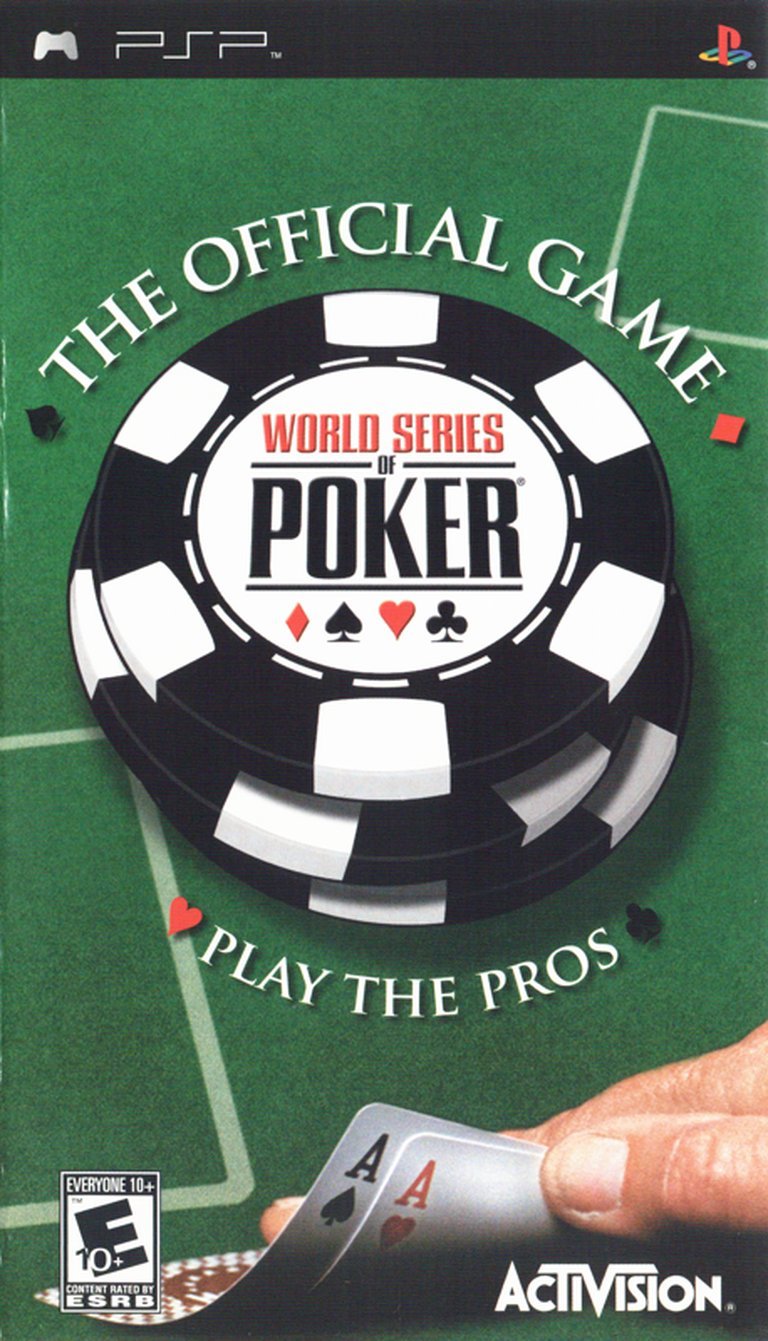
Description
World Series of Poker is the official game of the premier poker tournament, allowing players to challenge top poker legends in 26 different poker games. Compete in tournaments progressing through multiple tables of eight players each, advancing to the featured table and ultimately the final table to earn WSOP bracelets and secure a place in the prestigious WSOP Hall of Fame.
Gameplay Videos
Where to Buy World Series of Poker
World Series of Poker Cracks & Fixes
World Series of Poker Guides & Walkthroughs
World Series of Poker Reviews & Reception
metacritic.com (46/100): Another attempt to cash in on poker’s current online renaissance. But with no cash and terrible graphics it’s a bum-deal.
imdb.com (70/100): However, a fun way to sharpen your poker skills, although i prefer downloading a Partypoker game or pokerstars. it’s easy, and best of all, free.
World Series of Poker Cheats & Codes
PC
Press ‘k’ during a hand at the table.
| Code | Effect |
|---|---|
| k | Allows you to stay in a hand without betting any money. |
World Series of Poker: Review
Introduction
In the mid-2000s, poker exploded from smoky backrooms into the global spotlight, fueled by Chris Moneymaker’s improbable 2003 World Series of Poker (WSOP) victory and ESPN’s hole-card coverage. Against this backdrop, Activision’s World Series of Poker (2005) arrived as the first officially licensed video game adaptation of the storied tournament. Developed by Left Field Productions, it promised to bridge the gap between televised poker and interactive gameplay, inviting players to forge their own path to poker glory. However, while the game tapped into the cultural zeitgeist of its era, it ultimately reveals a cautionary tale of licensing over ambition—a technically competent but profoundly flawed experience that struggled to capture the electrifying drama of the felt.
Development History & Context
World Series of Poker emerged from a perfect storm of cultural and market forces. Left Field Productions, known for arcade-style sports titles like NHL Hitz, was tasked with translating the nuanced world of high-stakes poker into a multiplatform experience. Activision, sensing the poker boom’s momentum, aimed to dominate the nascent console gambling genre. The development faced significant constraints: 2005’s hardware limitations—especially on handhelds like the PSP—made realistic graphics and AI complex. Technologically, the game pioneered cross-platform online play via GameSpy, a notable achievement that enabled PlayStation 2, Xbox, and PSP players to compete globally. Yet, this ambition was undercut by rushed production cycles. The 2005 WSOP had just moved from Binion’s Horseshoe to the Rio All-Suite Hotel and Casino, a historic shift the game mirrored but failed to capitalize on visually. Released across GameCube, PlayStation 2, Xbox, PSP, and Windows in late 2005/early 2006, the game arrived alongside competitors like World Championship Poker and World Poker Tour, leaving it to justify its “official” status through mechanics alone.
Narrative & Thematic Deep Dive
World Series of Poker eschews traditional narrative in favor of a simulation-driven ascent. Players create a customizable avatar starting with a $10,000 bankroll, embarking on a career to earn WSOP bracelets and induction into the “WSOP Hall of Fame.” This framework echoes the real-world poker dream—a rags-to-riches journey—but lacks meaningful storytelling. The “plot” is a loop of tournaments, with no overarching narrative or character development beyond win/loss statistics. The game’s licensed pros (e.g., Chris “Jesus” Ferguson, Jennifer Tilly) appear as static opponents, their likenesses digitized but their personalities reduced to generic taunts like “Just like my last date: money’s all gone and I got nothing to show for it.” This absence of depth robs the experience of the psychological tension that defines real poker. The core theme—amateur triumph—is potent but underdeveloped, reduced to menu navigation and AI encounters that fail to evoke the high-stakes tension of the Rio’s Amazon Ballroom.
Gameplay Mechanics & Systems
The game’s core strength lies in its faithful recreation of poker mechanics. It offers 26 variations, including Texas Hold ’em, Omaha, Seven-Card Stud, Razz, and Hi-Lo Split, all adhering to official WSOP rules. The tournament structure—progressing through tables to reach a “featured table” and final 8—mirrors the real event’s prestige. Controls are serviceable: players bet, raise, or fold via button combinations, with a “Quick Call” option for fast-paced play. The AI, however, is divisive. Some reviews praised its strategic depth, while others condemned it for erratic decision-making, where opponents would inexplicably fold strong hands or chase impossible draws. Online multiplayer was a highlight, leveraging GameSpy for seamless cross-platform play, but it suffered from stability issues and disconnections. A robust “Create-a-Player” system allowed detailed customization, yet this was undermined by a clunky UI and a career mode that felt like a spreadsheet—tracking earnings and bracelets but lacking progression milestones or rivalries. The PSP version, in particular, was plagued by lag and simplified controls, making it the least polished iteration.
World-Building, Art & Sound
The game’s world-building is its most egregious failure. Despite the Rio license, environments are sterile and generic, lacking the vibrant chaos of a live tournament. Tables are identical, with no crowd noise or dealer animations to distinguish a $1,500 event from the Main Event. Art direction is functional but dated: character models are blocky, with stiff animations that fail to capture the subtle tells of real players. The PSP version’s graphics were particularly panned, described by Mobile Tech Review as “blurry” and “undetailed.” Sound design fares little better. Background music loops monotonously, and voice acting is sparse and repetitive, with canned lines that quickly grate. The audio cues—chip shuffling and card deals—are competent but lack the immersive weight of a casino floor. This aesthetic mediocrity starkly contrasts with the spectacle of ESPN’s broadcasts, reducing the WSOP to a series of static, soulless interfaces.
Reception & Legacy
World Series of Poker received a critical drubbing, with Metacritic scores reflecting “generally unfavorable” reviews across platforms (e.g., 46/100 for PS2, 37/100 for PSP). IGN infamously dismissed it with a 3.5/10, declaring, “There’s essentially no reason to pick this up.” While outlets like Next Level Gaming (84%) praised the online play and poker authenticity, the consensus emphasized flaws: poor AI, dated visuals, and a career mode that failed to engage. Commercial performance data is scarce, but its budget price point ($29.99 at launch) suggests modest sales. Player reviews on MobyGames averaged 3.3/5, with some lauding its “robust career mode” while others lamented its “unfair” AI. Its legacy is as a footnote in poker gaming history. It was succeeded by Tournament of Champions (2006) and Battle for the Bracelets (2008), which improved on its formula. Notably, the Xbox version’s online community endured beyond Microsoft’s server shutdown, preserved by fan-run initiatives like Insignia. Yet, the game remains a symbol of the poker boom’s untapped potential—a competent translation of rules that failed to translate the soul of the sport.
Conclusion
World Series of Poker is a study in missed opportunities. It nails the technicalities of poker—the rules, the variants, the tournament structure—yet fumbles the intangibles: drama, atmosphere, and personality. Its licensed pros and online play offered a tantalizing glimpse of authentic competition, but these were buried under dated visuals, an unengaging career mode, and AI that oscillated between brilliant and baffling. As a product of its time, it captures the fervor of the 2005 poker boom but fails to immortalize it. For historians, it’s a curious artifact—an early attempt to digitalize a cultural phenomenon that would soon be perfected by titles like Full House Poker. For players, it’s a niche curiosity: a functional poker simulator best experienced through rose-tinted nostalgia or as a historical footnote. Ultimately, World Series of Poker is not a great game, but it is an important one—a reminder that even the most prestigious licenses can’t substitute for vision and polish. In the pantheon of poker games, it’s a bluff that fails to win the pot.