
- Release Year: 2007
- Platforms: PlayStation 2, PlayStation 3, PSP, Windows, Xbox 360
- Publisher: Activision Publishing, Inc., Activision Value Publishing, Inc.
- Developer: Left Field Productions, Inc.
- Genre: Gambling, Strategy, Tactics
- Perspective: First-person
- Game Mode: Online PVP, Single-player
- Gameplay: Cards, Tiles
- Setting: Casino
- Average Score: 74/100
Description
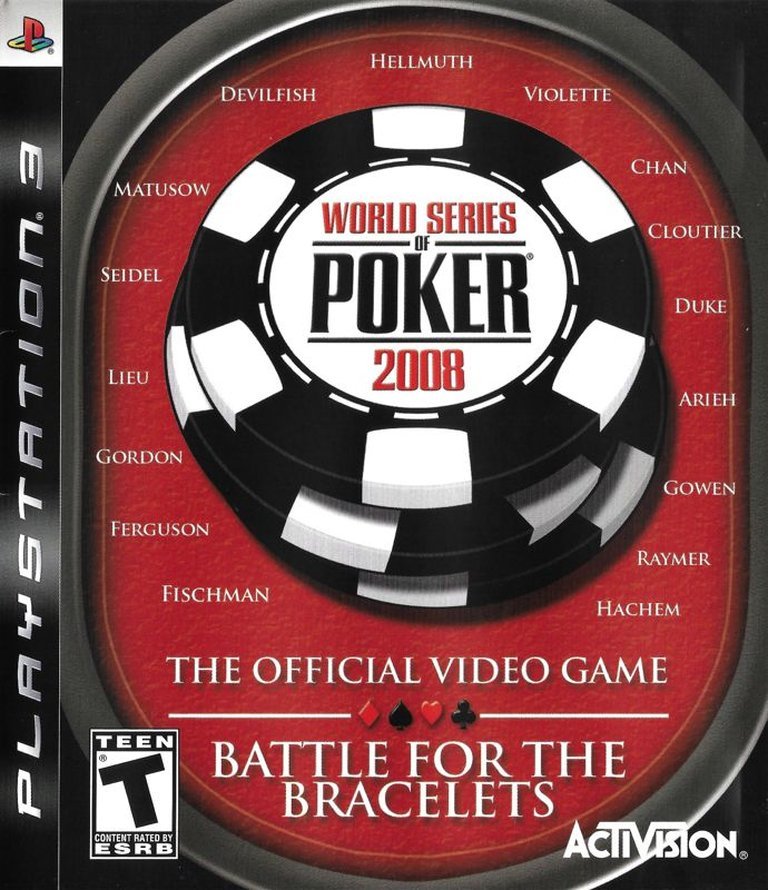
World Series of Poker 2008: Battle for the Bracelets invites players to the prestigious 2008 World Series of Poker, where they compete to win championship bracelets, the iconic $10,000 Main Event, and the coveted Player of the Year title alongside poker legends like Phil Hellmuth, Johnny Chan, Chris Ferguson, and others, with commentary from Lon McEachern and Norman Chad. The game features Texas Hold’em, Omaha, Seven Card Stud, and Razz in tournaments and cash games, plus create-a-player customization, interactive tutorials by Phil Hellmuth, and online multiplayer support across multiple platforms.
Gameplay Videos
World Series of Poker 2008: Battle for the Bracelets Free Download
World Series of Poker 2008: Battle for the Bracelets Reviews & Reception
en.wikipedia.org : The PC, PlayStation 2 and PlayStation 3 versions received “generally favorable reviews”, while the Nintendo DS and Xbox 360 versions received “mixed or average reviews”.
metacritic.com (74/100): Mixed or Average.
ign.com : The game has a hard time capturing the personality that makes the actual shows and competitions worth watching.
gamesradar.com : YOU CAN’T BLUFF A COMPUTER. Videogame poker against computer opposition is, by default, immediately pointless.
freezenet.ca : Whether it is some kind of limitation with the system or some other reason, the only game you’ll be able to play is Texas Hold’em from beginning to end.
World Series of Poker 2008: Battle for the Bracelets Cheats & Codes
Xbox 360
Enter “BEATTHEBRAT” as a name in Career mode. If entered correctly, you will hear a sound.
| Code | Effect |
|---|---|
| BEATTHEBRAT | Play as Phil Hellmuth with black eye |
PlayStation 3
Enter “BEATTHEBRAT” as a name in Career mode. If entered correctly, you will hear a sound.
| Code | Effect |
|---|---|
| BEATTHEBRAT | Play as Phil Hellmuth with black eye |
PC
Enter “BEATTHEBRAT” as a name in Career mode. If entered correctly, you will hear a sound.
| Code | Effect |
|---|---|
| BEATTHEBRAT | Play as Phil Hellmuth with black eye |
World Series of Poker 2008: Battle for the Bracelets: Review
Introduction
In the mid-2000s, poker exploded into the mainstream like a royal flush on steroids—fueled by Chris Moneymaker’s improbable 2003 World Series of Poker (WSOP) Main Event victory, televised spectacles on ESPN, and celebrities shuffling chips on Poker After Dark. Video games cashed in hard, with annual WSOP tie-ins becoming a staple for couch potatoes dreaming of bracelets and bankrolls. World Series of Poker 2008: Battle for the Bracelets, released in late 2007 across six platforms, stands as a pinnacle of this frenzy: a polished poker simulator headlined by trash-talking legend Phil Hellmuth and 32 real pros. Yet, as a historian of gaming’s gambling niche, I argue this title endures not as a revolutionary masterpiece, but as a competent, era-defining artifact—excelling in AI depth and accessibility while shackled by repetitive mechanics, dated visuals, and the inherent limits of simulating human bluffery in silicon.
Development History & Context
Left Field Productions, a now-defunct Activision subsidiary founded in the early 2000s, helmed development with a team of 199 credited contributors (172 developers, 27 thanks), including key figures like David Anderson, Richard Aronson, and voice maven Lani Minella (404-game veteran). Best known for shooters like Soldier of Fortune: Payback (2007), Left Field pivoted to poker with this sequel to their 2006 World Series of Poker: Tournament of Champions, leveraging middleware like Bink Video for cutscenes and DemonWare for online play. Publisher Activision Value (budget arm of Activision Publishing) targeted the poker boom’s tail end, releasing on September 25, 2007, for PS2/PS3, followed by Xbox 360 (Sept 26), PC (Oct 30), and ports for PSP/DS (Nov 6).
The 2007 landscape was transitional: PS3 and Xbox 360 were maturing after rocky launches, boasting HD capabilities, but poker—a low-poly, table-bound genre—didn’t demand them. Constraints included cross-platform parity (DVD-ROM for consoles, UMD for PSP), ESRB Teen rating (simulated gambling), and online support for up to 9 players. Visionaries aimed for authenticity, consulting pros for lifelike AI and Hellmuth’s interactive tutorials, amid a market flooded with rivals like World Championship Poker and Hoyle Poker Series. Composers like Randall Ryan scored it, capturing Vegas glitz, but budget limits showed in reused assets from priors. This era’s poker gold rush (post-2006 WSOP’s 8,773 entrants) made it timely, yet annual iterations risked staleness—Battle for the Bracelets refined, rather than reinvented.
Narrative & Thematic Deep Dive
Plot is poker minimalist: players craft a custom avatar to chase WSOP glory, from rookie satellites to the $10,000 Main Event, amassing Player of the Year (POY) points alongside bracelets. No overwrought storyline—just FMV invites from pros (e.g., Hellmuth calling for heads-up duels) and career progression unlocking cash games in Vegas casinos. Themes echo real WSOP ethos: ambition, psychological warfare, fortune’s grind. POY introduces meta-narrative tension—win bracelets and consistent cashes to claim supremacy, mirroring 2008’s actual race amid Hellmuth’s dominance.
Characters shine via licensing: Hellmuth “headlines” with tutorials dissecting hands (“Phil’s Poker School”); 32 pros like Johnny Chan (two-time Main champ), Chris Ferguson (“Jesus”), Annie Duke, Clonie Gowen, Mike Matusow, Scotty Nguyen, and Jennifer Harman populate tables. Commentary duo Lon McEachern and Norman Chad provide ESPN-style banter, though reviews lament recycled lines from priors (English-only, no expansion). Dialogue is sparse—pros “talk trash” via animations (e.g., Hellmuth tantrums), but lacks dynamism; AI mimics styles (aggressive Matusow, patient Ferguson) without voiced interplay. Sub-themes probe poker’s duality: skill vs. luck (tutorials stress odds), bravado vs. patience (Beat the Brat heads-up vs. Hellmuth). Critiques note absent “human component”—no tells like chin-rubbing bluffs—rendering pros as static photos, undermining immersion. Still, POY ladder evokes underdog ascent, thematic core of Moneymaker-era tales.
Gameplay Mechanics & Systems
Core loop: ante up, deal, decide—fold, check, call, raise/all-in—in variants Texas Hold’em, Omaha, Seven Card Stud, Razz across WSOP events, cash games, tournaments. Career mode spans POY pursuits: WSOP ladder (bracelets), cash invites, Heads-Up “Beat the Brat” (six pros to Hellmuth). Progression ties bankroll/POY points to placements (beat “bubble” for rewards); unlocks stats HUDs (pot odds, outs). Create-a-Player customizes avatar; tutorials (Hellmuth-led, Same Hand Jam for fixed-hole repetition, rankings/guides) aid noobs, three difficulties scale AI aggression.
Innovations: POY meta-layer adds replay; online “open tables” emulate PartyPoker; peak view (table-level cards). Flaws abound—repetitive Hold’em dominance (DS/PSP limit to it), no mid-tourney saves (PC/console gripe), input lag (PS3/PC), cluttered UI (tiny text, busy overlays). AI praised as “aggressive without cheating” (PGNx 85%), varying styles, but unbluffable (GamesRadar: “pointless”). Multiplayer: 1-9 offline/online, solid but no real-money. Quickplay tweaks blinds/chips/pro mixes. Exhaustive yet grindy—tourneys drag hours, swings brutal (chip leader to 3BB bustouts). Verdict: deep for veterans, newbie-friendly tools, but lacks variety/innovation.
Sub-Systems Breakdown
- Poker Tools: Real-time odds, hand histories—elevate strategy.
- Career Depth: 7-? tourneys (easy mode limits); cash unlocks post-milestones.
- Multiplayer: DemonWare shines; emulates live sites.
- Tutorials: Interactive Hellmuth FMVs teach gauging opponents.
World-Building, Art & Sound
Setting immerses in WSOP glamour: Vegas casinos (Bellagio vibes), purple final tables, bracelet ceremonies. Atmosphere builds via FMV intros, pro cameos, Chad/McEachern calls (“Let’s get it on!”). Visuals: functional 2007-standard—pro likenesses recognizable (Hellmuth’s ego glare), 3D tables with chip stacks/animations (peak cam innovative). HD ports (PS3/360) cleaner, but dated/cluttered (miniscule text, mannequin stiffness); PSP/DS ports suffer slowdowns, static portraits. Art direction apes TV poker: neon HUDs, crowd murmurs.
Sound design: Commentary anchors realism (repetitive gripes aside); chip shuffles, card snaps crisp. Score (Randall Ryan) mixes country rock menus, soft table tunes—repetitive single-track plagues tourneys. Pros voiceless beyond tutors; no banter depth. Contributes solidly to tension (music swells on all-ins), but lacks polish—German reviews decry English-only audio, unexpanded vocab. Overall: evokes casino haze without transcendent flair.
Reception & Legacy
Launched to solid acclaim: MobyGames 7.4/10 (75% critics), Metacritic highs PS2 (84), PC/PS3 (75-79), Xbox 360 (74), lows DS (55). IGN (7.9 across platforms) hailed “best poker franchise,” praising AI/POY/online; Game Chronicles PS2 (88%) lauded lifelike pros. Critiques: Jeuxvideo (11/20) called annual “risk-free,” Worth Playing (55%) urged free online alternatives; UI/lag/visuals common drags. Commercial: Budget $30, strong for niche (eBay now $5-15 used); 15 Moby collectors.
Reputation evolved: peak poker sim 2007, eclipsed by free sites/apps. Influenced genre—POY/tutor standards in Poker Night, Full House Poker; solidified Activision’s WSOP run (Full House Pro 2013). Legacy: historical snapshot of boom’s end, preserving pros pre-social media era; abandonware status (MyAbandonware) aids preservation. No industry shaker, but refined formula for tactics fans.
Conclusion
World Series of Poker 2008: Battle for the Bracelets masterfully distills WSOP essence—AI nuance, pro rosters, POY grind—into an accessible package, bolstered by tutorials and online. Yet repetition, bluff voids, dated tech cap its transcendence, mirroring poker’s luck-skill gamble. In history, it’s a worthy sequel (7.5/10)—essential for poker sim completists, nostalgic relic of 2000s mania, but skippable for modern players favoring PokerStars VR. Stack your chips: buy used for authenticity’s ante.