
- Release Year: 2004
- Platforms: Windows
- Publisher: Fantastic.TV
- Developer: Forces of Chaos Development Group
- Genre: Strategy, Tactics
- Perspective: 3rd-person
- Game Mode: Online Co-op, Single-player
- Gameplay: Real-time strategy
- Setting: Historical events, World War II
- Average Score: 44/100
Description
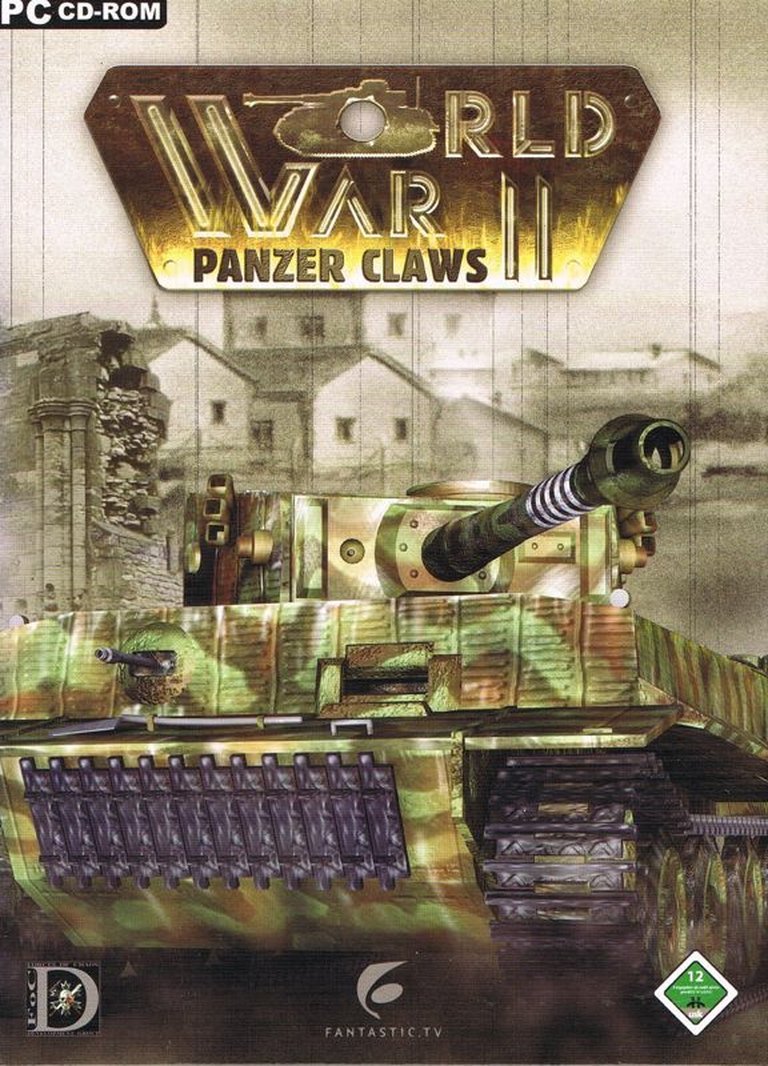
World War II: Panzer Claws II is a real-time strategy game set during World War II, where players command Allied, German, Russian forces, or the French Resistance in France, 1940. The game features four campaigns and fifteen multiplayer maps, offering tactical gameplay across historical events.
Gameplay Videos
Guides & Walkthroughs
Reviews & Reception
gamepressure.com (69/100): Panzer Claws II depicts the struggles of armoured and mechanized units in a World War II scenario.
World War II: Panzer Claws II: A Forgotten Gem or a Flawed Experiment?
In the crowded landscape of World War II real-time strategy (RTS) games, World War II: Panzer Claws II (2004) remains an obscure title, overshadowed by giants like Company of Heroes and Sudden Strike. Yet, beneath its unpolished surface lies an ambitious attempt to blend historical accuracy with dynamic real-time tactics. Developed by Forces of Chaos Development Group and published by Fantastic.TV, this sequel to World War II: Panzer Claws (2002) promised deeper gameplay, richer campaigns, and a more immersive World War II experience. But did it deliver? This review will dissect Panzer Claws II across its development, narrative, gameplay, and legacy to determine whether it was a missed opportunity or a forgotten curiosity.
Development History & Context
The Studio and Its Vision
World War II: Panzer Claws II was developed by Forces of Chaos Development Group, a small team with contributions from Reality Pump, a Polish studio known for titles like Earth 2160 and Two Worlds. The game was published by Fantastic.TV, a now-defunct German publisher, and later re-released under TopWare Interactive.
The developers aimed to refine the mechanics of the original Panzer Claws, expanding the scope with four campaigns (German, Russian, Allied, and French Resistance) and over 40 missions. The game was built on a custom engine, offering 3D-scaled maps with dynamic weather, day-night cycles, and seasonal changes—features that were innovative for its time but often underutilized.
Technological Constraints and the RTS Landscape
Released in 2004, Panzer Claws II arrived during a golden age for RTS games, competing with Command & Conquer: Generals (2003) and Rise of Nations (2003). However, its technical limitations were evident. The game required a modest Pentium 800 MHz processor and 128MB of RAM, reflecting the hardware constraints of early 2000s PC gaming. While its 3D environments were a step forward from isometric RTS titles, the engine struggled with pathfinding and unit management, leading to clunky gameplay.
The Gaming Landscape of 2004
The RTS genre was dominated by polished, large-scale productions, and Panzer Claws II lacked the marketing muscle of its competitors. Its niche focus on armored warfare and historical accuracy didn’t resonate with mainstream audiences, and its lack of innovation in core mechanics doomed it to obscurity.
Narrative & Thematic Deep Dive
Plot and Campaign Structure
The game spans key WWII battles from 1941 to 1944, covering the Eastern Front, the French Resistance, and the Battle of the Bulge. Each faction offers a distinct perspective:
- German Campaign: Focuses on Blitzkrieg tactics and the Eastern Front.
- Russian Campaign: Highlights Soviet resilience and counteroffensives.
- Allied Campaign: Centers on D-Day and the liberation of Europe.
- French Resistance: A guerrilla-focused campaign with sabotage and hit-and-run tactics.
The narrative is thin, relying on brief mission briefings rather than a deep story. The lack of character development or memorable dialogue means the campaigns feel more like historical simulations than dramatic retellings.
Themes and Historical Accuracy
The game attempts to capture the brutality and scale of WWII, with dynamic weather affecting visibility and mobility. However, its historical accuracy is superficial—unit compositions and strategies are simplified for gameplay balance rather than realism. The French Resistance campaign, in particular, feels anachronistic, blending historical events with exaggerated sabotage missions.
Gameplay Mechanics & Systems
Core Gameplay Loop
Panzer Claws II is a traditional RTS with base-building, resource management, and real-time combat. Players gather resources (fuel, ammunition, and manpower) to produce units and structures. The game introduces a “morale” system, where units perform worse when outnumbered or under heavy fire, adding a layer of realism.
Combat and Unit Management
- Armored Warfare Focus: The game emphasizes tank combat, with detailed vehicle models and damage systems. However, unit pathfinding is flawed, leading to tanks getting stuck or failing to engage enemies.
- Infantry and Buildings: Infantry can infiltrate buildings and abandoned vehicles, adding tactical depth, but AI behavior is often unpredictable.
- Dynamic Weather: Rain, snow, and fog affect visibility and movement, forcing players to adapt strategies—a clever mechanic that’s undermined by poor implementation.
UI and Accessibility
The user interface is dated, with cluttered menus and unclear unit selection. The lack of a fog of war in some missions reduces tension, and the camera controls feel sluggish compared to contemporaries like StarCraft.
Multiplayer and Modding
The game supports up to 8-player multiplayer over LAN or the internet, with 15 skirmish maps. A scenario editor allows players to create custom missions, though its complexity limits accessibility.
World-Building, Art & Sound
Visual Direction
The 3D environments are detailed but lack polish. Textures are low-resolution, and animations are stiff. The day-night cycle and seasonal changes are visually impressive but often feel like gimmicks due to their minimal impact on gameplay.
Sound Design
Voice acting is minimal, with generic radio chatter and orders. The soundtrack is forgettable, relying on orchestral WWII tropes without standing out. Sound effects for gunfire and explosions are adequate but lack the immersion of later titles.
Atmosphere
The game’s atmosphere is its strongest suit. The eerie silence of a fog-covered battlefield or the chaos of a tank battle captures the tension of war. However, technical limitations prevent it from fully realizing its potential.
Reception & Legacy
Critical and Commercial Reception
Panzer Claws II was met with indifference. The sole critic review on MobyGames gave it a 20%, calling it a “meaningless RTS” with “marketing gimmicks.” Its lack of innovation and technical flaws doomed it commercially.
Influence and Legacy
The game had little impact on the RTS genre. Its attempts at dynamic weather and morale systems were overshadowed by more polished titles. However, it remains a curiosity for WWII enthusiasts and modders, who appreciate its historical scope despite its flaws.
Conclusion: A Flawed but Fascinating Experiment
World War II: Panzer Claws II is a game of contradictions. It aspired to be a deep, historically grounded RTS but was held back by technical limitations and uninspired design. Its dynamic weather and morale systems were ahead of their time, but poor execution and stiff competition relegated it to obscurity.
In the grand tapestry of WWII RTS games, Panzer Claws II is a footnote—a forgotten experiment that hints at what could have been. It’s a title worth revisiting for its ambition, but not for its execution. For historians and modders, it offers a niche experience; for casual players, it’s a relic of a bygone era.
Final Verdict: A fascinating but flawed historical RTS that failed to leave a lasting mark.