
- Release Year: 2018
- Platforms: Linux, Windows
- Publisher: EGOSOFT GmbH
- Developer: EGOSOFT GmbH
- Genre: Action, Simulation
- Perspective: 1st-person
- Game Mode: Single-player
- Gameplay: Business simulation, Managerial, Space flight
- Setting: Futuristic, Sci-fi
- Average Score: 63/100
Description
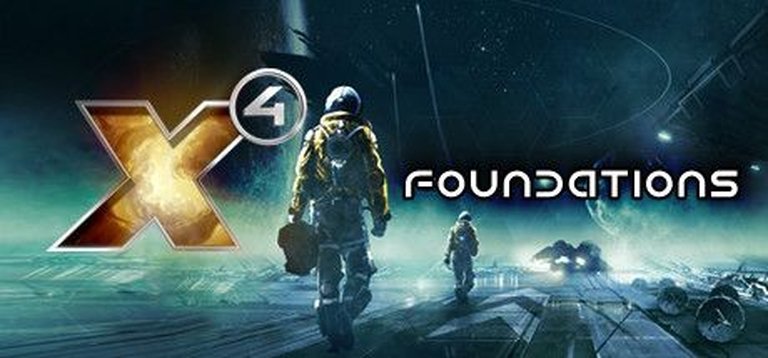
X⁴: Foundations is a sci-fi space simulation game set in the expansive X universe, where players pilot spacecraft in first-person, engaging in trading, combat, and managerial business simulation to build empires across dynamic sectors filled with factions, economies, and futuristic technologies.
Gameplay Videos
Where to Buy X⁴: Foundations
X⁴: Foundations Cracks & Fixes
X⁴: Foundations Mods
X⁴: Foundations Guides & Walkthroughs
X⁴: Foundations Reviews & Reception
metacritic.com (59/100): Mixed or Average
game8.co (64/100): X4: Foundations is certainly a lot—a lot to take in, understand, and handle, that is.
X⁴: Foundations: Review
Introduction
Imagine undocking from a sprawling modular space station you’ve personally architected, hopping into a nimble scout ship, and hurtling through a jump gate into a sector teeming with factional intrigue, pirate ambushes, and economic ripples from your own empire-building. This is the intoxicating promise of X⁴: Foundations, Egosoft’s ambitious return to form in the storied X series—a sandbox space simulation where player agency reshapes a living universe. As the seventh mainline entry following the divisive X: Rebirth, Foundations trades linear narratives for emergent plots and total freedom, positioning itself as the most dynamic iteration yet. My thesis: While its launch stumbles and steep learning curve alienated casual players, relentless post-release support has elevated X⁴: Foundations into a genre-defining masterpiece of procedural depth, economic simulation, and player-driven storytelling, cementing its place as essential for space sim aficionados.
Development History & Context
Egosoft GmbH, a modest German studio based in Würselen led by director Bernd Lehahn and producer Peter “Kulan” Kullgard, has nurtured the X series since 1999’s X: Beyond the Frontier. With a small team—programmers like Chris Burtt-Jones and Roger Boerdijk, artist Lino Thomas, writer Helge Kautz, and composer Alexei Zakharov—X⁴: Foundations emerged from the ashes of X: Rebirth (2013), a technical debacle criticized for its linearity and performance woes. Released on November 30, 2018, for Windows (Linux in 2019), Foundations ran on the proprietary X TECH 5 engine, emphasizing scalability for massive simulations.
The era’s gaming landscape was ripe for revival: Elite Dangerous (2014) and No Man’s Sky (2016) popularized procedural space exploration, while Eve Online‘s economy inspired sandbox empires. Egosoft’s vision countered Rebirth‘s single-ship focus with “freedom to fly all ships,” seamless transitions (walk from cockpit to station dock), and NPC factions dynamically expanding via supply/demand. Technological constraints like simulating thousands of ships and a fully resource-based economy (every weapon, station module produced in-game) pushed boundaries, but launch bugs and UI opacity reflected the small team’s ambition. Priced at $49.99 (PEGI 7), it launched amid high expectations, bolstered by Steam Workshop support and gamestarts offering varied entry points—from young gun to empire heir.
Post-launch, Egosoft’s diligence shone: patches addressed “Klebeband” (duct-tape) fragility, while DLCs like Split Vendetta (2020), Cradle of Humanity (2021, reintroducing Terrans/Earth), Tides of Avarice (2022), Kingdom End (2023, Borons), Timelines (2024), and mini-packs (Hyperion/Envoy, 2025) expanded the universe exponentially. By 2024, GameStar hailed it as “finally accessible,” transforming a “foundation” into a colossus.
Narrative & Thematic Deep Dive
X⁴: Foundations eschews a singular epic for interlocking plots—complex mission chains that unlock factions, sectors, and mechanics while letting player choices ripple galactically. No overarching “main storyline” exists; instead, the base game offers three vanilla arcs, blossoming via DLC into a web of intrigue.
The Player Headquarters Plot (PHQ) serves as tutorial and gateway, revolving around Boso Ta, the lone Boron pioneer. Players claim a mysterious installation, research teleportation, and build their HQ—prerequisite for most arcs. Shortened in Kingdom End DLC, it introduces empire management amid Boron mysteries.
Hatikvah Trade Revolution Plot delves into Argon faction Hatikvah Free League (HAT)’s shady Scale Plate Pact (SCA) dealings, pushing independence. Dal Busta emerges as a roguish ally, blending trade espionage with moral choices.
Paranid Civil War Plot, split into early/late phases, dissects Paranid society’s zealotry: Holy Order of the Pontifex (HOP) vs. Godrealm of the Paranid (PAR). Players tip scales via reputation (-9 docking with both, +10 with one), exploring themes of religious schism and power vacuums.
DLC plots amplify: Split Vendetta‘s Free Families Conflict unravels Split patriarchy (Zyarth Patriarchy/ZYA vs. Free Families/FRF), demanding late-game resources and binary decisions. Cradle of Humanity splits Terran arcs—Solborn Militia/Yaki Investigation/Covert Operations (neutral TER rep)—juxtaposing Terran isolationism against Argon tensions, plus Segaris Terraforming (PIO secret project). Tides of Avarice offers pirate tales: Northriver (Protectyon intrigue) and Empyrean Curs (smuggling life). Kingdom End‘s Boron Reunification unlocks Boron sectors/ships. Timelines innovates with “Graphs” (Nodus/Terminus missions reliving historical events like “Incursion of the False Pontifex”). Mini-DLCs add Hyperion (lost legend’s fate) and Envoy distress signals.
Thematically, Foundations probes emergence over linearity: isolationism (Terrans), revolution (Hatikvah), fanaticism (Paranid), patriarchy (Split), piracy (Avarice), reunification (Boron). Player agency—siding with factions, triggering wars—embodies free will in a deterministic universe, where plots feel organic amid simulated chaos. Dialogue is functional, voice acting uneven (monotonous AI-like), but comms/logs flesh characters like Dal Busta. No “hero’s journey”; you’re a catalyst in a sandbox odyssey.
Gameplay Mechanics & Systems
X⁴‘s core loop—trade, fight, build, think—is a managerial sim par excellence, blending 1st-person flight with macro-strategy.
Core Loops: Start in gamestarts (e.g., “Stranded” for smuggling), amass credits via trading/mining/piracy. Fly all ships personally (scouts to carriers), with inertia-realistic physics, travel mode, highways/jump gates. Combat is fast-paced: dogfights demand rolls/strafe, capital engagements require fleet tactics. UI, initially labyrinthine, improves via map (drag-drop routes, hierarchies); teleportation (post-PHQ research) enables seamless hopping.
Progression: Reputation gates plots/factions; build modular stations (dock/production/hab modules, visible upgrades). Economy is revolutionary—all wares (ships, ammo) simulated from ores, NPCs trade autonomously. Manage fleets via subordinates, assign crews/pilots. Innovative: EVA walking, ladder-climbing between vessels; research tree unlocks tech.
Flaws/Innovations: Steep curve (20+ tutorials inadequate), launch bugs (economy imbalances, pathing). Strengths: dynamic factions auto-expand; player actions (e.g., blockading) cascade. Combat shines in scale—solo fighters to fleet annihilations—but UI opacity hampers newbies. Post-updates: polished, with war missions/guilds adding structure.
| Mechanic | Strengths | Weaknesses |
|---|---|---|
| Flight/Combat | Immersive 6DOF, scalable (fighter to admiral) | Input lag early-game |
| Economy/Build | Fully simulated, modular freedom | Tedious micro-management |
| Map/UI | Powerful drag-drop empire tools | Overwhelming menus |
| Plots | Branching, universe-altering | Trigger-dependent |
A time-sink rewarding optimization obsessives.
World-Building, Art & Sound
The X universe—a post-30th-century cluster of sectors (base: Argon/Paranid/Teladi around The Ring; DLCs add Split/Terrans/pirates/Borons)—pulses with life. Factions (ANT, ARG, SCA, HAT, HOP, PAR, ZYA, FRF, TER, PIO, VIG, RIP, BOR) feud dynamically, building stations per economy. Atmosphere: vast emptiness punctuated by megastructures, nebulae, stellar phenomena; scale awes (city-sized stations traversable).
Visuals: Realistic sci-fi—modular ships/stations gleam with upgrades; cockpits immersive. Scale impresses (planets distant, highways bustling), but assets generic, lacking stylistic flair. Engine handles thousands of entities admirably.
Sound: Alexei Zakharov’s synth soundtrack evokes bubbly exploration (Rock Paper Shotgun: “stirs something inside”). SFX realistic (engine hums, laser pew-pews); voice acting inconsistent (robotic NPCs). Contributes isolation-to-epic tension, though unmemorable.
Elements synergize: dynamic builds make your empire feel lived-in, soundscapes amplify solitude amid fleets.
Reception & Legacy
Launch reception was mixed: Metacritic 59/100, MobyScore 6.7 (#17,925/27K). Critics praised ambition—”miles better than Rebirth” (PC Games, 60%)—but lambasted inaccessibility (4Players 33%: “no fun”), bugs, absent story. Destructoid (75%): “niche-scratching”; GameStar initial 72%, upgraded 81% (2024: “accessible”). RPS unscored: “flimsy simulation.”
Commercially modest but enduring: 45-46 collectors on MobyGames, Steam sales buoyed by $24.99 GOG discounts. Reputation evolved via 7.0+ updates/DLCs—Community of Planets Edition (2023) bundles all. Influenced genre: deeper economies than Elite, faction dynamics inspiring Starfield mods. X series lore (Argonopedia timelines) thrives in wikis/Reddit; community (Egosoft forums/Discord) aids noobs. Legacy: sandbox pinnacle, funding sequels amid Egosoft’s small-team heroism.
Conclusion
X⁴: Foundations transcends its rocky debut, evolving into a procedural opus where plots like Paranid schisms and Hatikvah revolutions interweave with your empire’s ascent. Egosoft’s vision—seamless flight, simulated everything—delivers infinite replayability, though its curve demands commitment. In gaming history, it joins Elite/Eve as a space sim titan: not for casuals, but a definitive 9/10 for strategists craving galactic dominion. Buy the complete edition; pilot your legacy among the stars.