
- Release Year: 1999
- Platforms: Windows
- Publisher: THQ Inc.
- Developer: EGOSOFT GmbH
- Genre: Simulation
- Perspective: 1st-person
- Game Mode: Single-player
- Gameplay: Business simulation, Managerial, Shooter, Space flight, Vehicular
- Setting: Futuristic, Sci-fi
- Average Score: 72/100
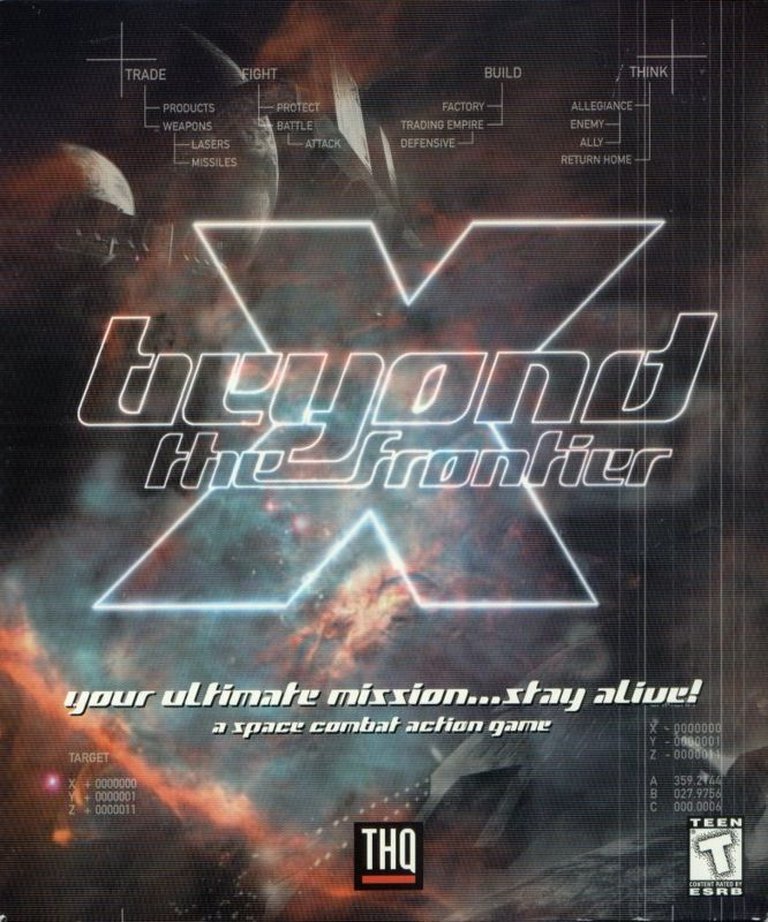
Description
In the year 2912, Earth pilot Kyle Brennan is stranded far from home after a wormhole test goes wrong, finding himself among the mysterious Teladi who repair his X‑Shuttle and offer aid. Navigating a 54‑system X‑Universe, Brennan trades goods, upgrades his vessel, and battles hostile ships while uncovering the looming threat of mechanical Terraformers against the human‑like Argon race.
Gameplay Videos
Where to Buy X: Beyond the Frontier
PC
X: Beyond the Frontier Free Download
Cracks & Fixes
Patches & Updates
Guides & Walkthroughs
Reviews & Reception
gamespot.com : If you miss the days of Elite and Privateer, then chances are you’ll love X: Beyond the Frontier.
ign.com (77/100): Not bad, but it’s still not Elite.
X: Beyond the Frontier: Review
Introduction
X: Beyond the Frontier is a seminal space trading and combat simulation game developed by Egosoft and released in 1999. As the first installment in the X series, it paid homage to the classic Elite series while introducing its own unique mechanics and universe. This review will provide an in-depth analysis of the game’s development history, narrative, gameplay, and reception, ultimately assessing its place in video game history.
Development History & Context
Egosoft, a German studio, developed X: Beyond the Frontier with a passionate team led by Martin Brenner, Bernd J. Lehahn, and Alexander Preuss. The game was published by THQ Inc. and released on July 1, 1999, for Windows. At the time, the gaming landscape was dominated by 3D graphics and immersive storytelling. Egosoft’s vision was to create a game that not only paid tribute to the Elite series but also innovated within the space simulation genre.
The technological constraints of the era influenced the game’s design, with the team utilizing the X TECH 1 engine to create a rich, 3D universe. Despite these limitations, X: Beyond the Frontier boasted detailed graphics and an expansive, open-ended gameplay experience.
Narrative & Thematic Deep Dive
The game follows Kyle Brennan, an Earth test pilot who becomes stranded in an unknown part of space after a catastrophic accident during a test flight of the X-Shuttle. Brennan encounters the Teladi, a highly capitalist alien race, who repair his ship and provide him with initial funding. As Brennan explores the X Universe, he uncovers a complex web of alien politics and histories, eventually becoming embroiled in a conflict against the Xenon, rogue machines threatening the galaxy.
The narrative is rich in themes of exploration, survival, and the consequences of technological advancement. The X Universe is inhabited by diverse alien races, each with their own culture and motivations, adding depth to the game’s story and gameplay.
Gameplay Mechanics & Systems
X: Beyond the Frontier combines space trading, exploration, and combat in a vast, open universe. Players can engage in various activities, including trading goods between stations, exploring new systems, and battling hostile ships. The game’s economy is dynamic, with supply and demand influencing prices.
The combat system, while simplistic compared to modern standards, was praised for its challenge and integration with the game’s trading and exploration mechanics. The ability to upgrade the X-Shuttle with new weapons, shields, and cargo space added a layer of progression and strategy.
World-Building, Art & Sound
The X Universe is a meticulously crafted setting, comprising 54 star systems with diverse installations and alien species. The game’s graphics, while dated by today’s standards, were praised for their detail and atmospheric lighting effects. The soundtrack, composed by Thomas Egeskov Petersen, complemented the game’s atmosphere, enhancing the overall experience.
Reception & Legacy
Upon release, X: Beyond the Frontier received generally positive reviews for its engaging gameplay, rich universe, and open-ended design. Critics praised the game’s depth and replayability, although some noted its slow pace and simplistic combat.
The game has since become a cult classic, with a dedicated fan base and a lasting influence on the space simulation genre. The X series has continued to evolve, with subsequent titles building upon the foundations established by X: Beyond the Frontier.
Conclusion
X: Beyond the Frontier is a landmark game in the space simulation genre, offering a rich, immersive experience that has stood the test of time. Its influence can be seen in later titles, and it remains a beloved classic among fans of the genre. Despite some dated mechanics and graphics, the game’s depth and replayability ensure its continued relevance, making it a definitive title in video game history.