
- Release Year: 2022
- Platforms: Nintendo Switch, PlayStation 4, Windows
- Publisher: Nippon Ichi Software, Inc., NIS America, Inc.
- Developer: Nippon Ichi Software, Inc.
- Genre: Action
- Perspective: Diagonal-down
- Game Mode: Single-player
- Gameplay: Exploration, Puzzles, Stealth, Survival horror
- Setting: Fantasy
- Average Score: 75/100
Description
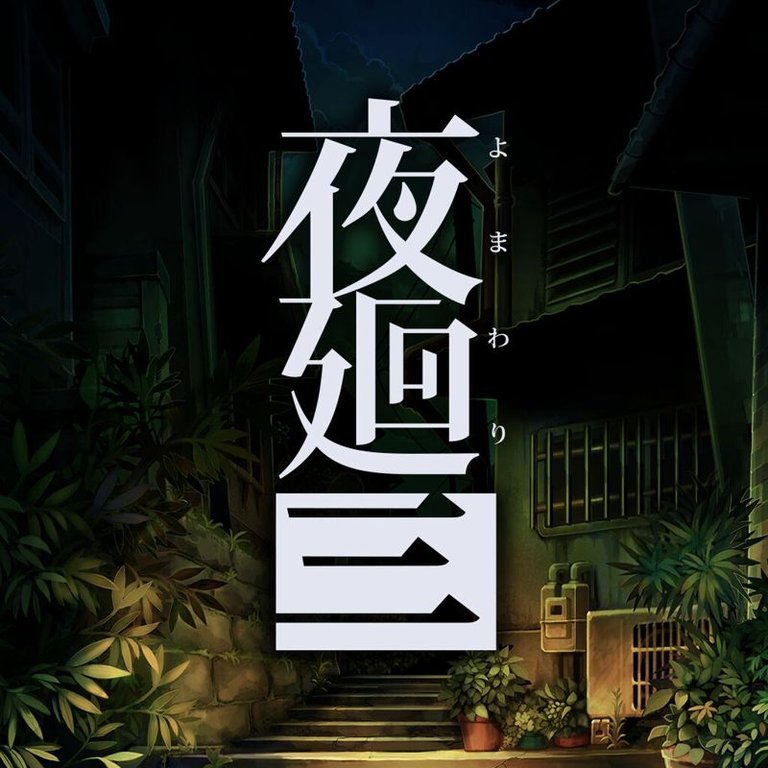
Yomawari: Lost in the Dark is a survival horror game set in a dark, fantasy-inspired world rendered with anime-style 2D scrolling visuals and a diagonal-down perspective. Players must navigate eerie environments, evade hostile spirits, and uncover haunting secrets as they struggle to survive the night in this tense addition to the Yomawari series.
Gameplay Videos
Where to Buy Yomawari: Lost in the Dark
Yomawari: Lost in the Dark Cracks & Fixes
Yomawari: Lost in the Dark Guides & Walkthroughs
Yomawari: Lost in the Dark Reviews & Reception
opencritic.com (75/100): Solid and definitely have an audience. There could be some hard-to-ignore faults, but the experience is fun.
purenintendo.com : Yomawari: Lost In the Dark is definitely a creepy game with a lot of well-placed scares, but itâs also a game that lets you work through at your own pace.
foreverclassicgames.com : Yomawari: Lost in the Dark is soaked in frustration both mechanically and for the vast potential that it has.
vgamingnews.com : The gameplay has hardly changed from the first two titles, to the point that had you told me I was playing bonus material for Night Alone or Midnight Shadows instead of a brand new game, Iâd have believed you without question.
Yomawari: Lost in the Dark: A Haunting Trilogy’s Crescendo or Diminishing Returns?
Introduction: The Quiet Terror of a Cursed Town
Nippon Ichi Software’s Yomawari: Lost in the Dark arrives not with a bang, but with the chilling, silent tread of a small girl navigating a town overrun by the unseen and the unspeakable. As the third main entry in the Yomawari series, following Night Alone (2015) and Midnight Shadows (2017), it carries the weight of expectation and the looming specter of formula fatigue. Yet, it also stands as the most ambitious and narratively complex chapter yet. This review will argue that while Lost in the Dark masterfully refines the series’ signature aesthetic and emotional core, its mechanical stagnation and pacing issues ultimately prevent it from achieving the consistent heights of its predecessor, leaving it a beautiful, unsettling, but occasionally frustrating experience—a game that perfectly captures the series’ “dichotomy” of cute art and profound horror, but sometimes at the cost of player agency and momentum.
Development History & Context: A Quiet Iteration in a Noisy Genre
Developed by Nippon Ichi Software (NIS), a studio with a legacy in niche, stylistically bold JRPGs like Disgaea and Phantom Brave, the Yomawari series represents a deliberate pivot into atmospheric, narrative-driven survival horror. The five-year gap between Midnight Shadows and Lost in the Dark was the longest in the series, suggesting a period of reassessment. The technological constraints of the 2D, hand-drawn aesthetic—a defining feature—remained constant, but the scope expanded. The game was built for PlayStation 4, Nintendo Switch, and PC, targeting the indie and mid-level horror space that was, in 2022, dominated by high-profile remakes (Resident Evil 4) and big-budget experiments (The Callisto Protocol). Lost in the Dark thus positioned itself as an antithesis: a deliberately small, quiet, and artistically cohesive title relying on mood, sound design, and minimalist mechanics rather than graphical fidelity or action. Under Executive Producer Takuro Yamashita and Director/Programmer Hiroki Uchihara, the team (credited with 115 people) chose to iterate on a proven formula rather than reinvent it, a decision that would become both its greatest strength and most cited weakness.
Narrative & Thematic Deep Dive: Amnesia, Abuse, and the Ghosts We Carry
Where Lost in the Dark most clearly surpasses its predecessors is in narrative density and thematic ambition. The game opens with one of the most harrowing prologues in recent memory: a protracted sequence of vicious, realistic bullying culminating in the protagonist’s suicide attempt by jumping from a school roof. This is not mere shock value; it is the foundational trauma that births the supernatural horror. The canonical protagonist, Yuzu (whose name and appearance are customizable—a series first), awakens in a forest with amnesia, cursed and guided by a mysterious girl with a camera. The core quest—recovering lost memories via personal items scattered across an open-world version of her hometown—is a classic amnesia plot, but the game subverts it brilliantly. The memories are not just story fragments; they are clues to breaking a curse that is physically transforming Yuzu and her guide, Kotori, into bird-like spirits.
The relationship between Yuzu and Kotori is the emotional engine. Their dynamic evolves from mysterious helper to deeply bonded friends, with twists that reframe everything. Key tropes are deconstructed: the “mysterious girl” is not a passive guide but a co-sufferer; the “pet” Mugi, who appears throughout, is revealed to be a Dead All Along hallucination, Yuzu’s refusal to accept his death being the catalyst for her initial fall from the roof and the curse’s potency. The narrative structure employs Fission Mailed and Once More, with Clarity, forcing the player to revisit memories with new context, making the amnesia mechanic an interactive gameplay element rather than a lazy plot device. The themes are heavy: school bullying (Kids Are Cruel), suicide (Driven to Suicide, subverted), grief, denial, and sacrificial friendship. The ending is a Bittersweet Ending: Yuzu’s curse is lifted and she gains confidence, but Kotori must remain behind as a spirit, and Yuzu loses both her pet (Mugi, permanently) and her friend. The story’s strength lies in how these personal horrors mirror the folkloric ones, making the town’s ghosts not just obstacles but reflections of human suffering. However, some critics noted a “plot dump” in the final act and a “monotonous” late-game pacing where narrative urgency conflicts with open-world backtracking.
Gameplay Mechanics & Systems: The Prison of Vulnerability
The Yomawari series has always been defined by its tense, avoidance-based gameplay, and Lost in the Dark refines this with one major innovation that paradoxically exacerbates its core issues. The classic “hiding in bushes” mechanic from previous games is replaced by the “See No Evil” mechanic: Yuzu can close her eyes (using shoulder buttons) anywhere, rendering her invisible to most spirits but slowing her movement to a crawl and narrowing her vision to a small circle guided by her heartbeat’s proximity sensor. This successfully removes the sometimes-arbitrary placement of hiding spots, allowing for more open level design. However, as multiple reviews (notably from Forever Classic Games and VGamingNews) lament, the movement speed while covering eyes is “incredibly slow,” turning large sections of the 2D scrolling town into a tedious, glacial affair. The tension of peeking through a keyhole is replaced by the frustration of inching past a stationary spirit for thirty seconds.
The proximity-sensitive stamina gauge returns: sprinting is safe when alone, but exhaustion sets in rapidly near enemies, further slowing escape. There is no combat; victory is purely about evasion, puzzle-solving, and environmental interaction (using a flashlight to stun, feeding a kappa a cucumber). Boss fights are pattern-recognition trials with instant death failures, leading to the oft-cited Kaizo Trap frustration of restarting long sequences. The game’s open-world structure—tackling memory locations in any order—is a step forward, but it is undermined by “Guide Dang It!” moments. Key solutions are obscure (e.g., feeding a ghost whale rocks until it explodes), and the non-linear design can leave players stuck with no clear next step. The new Character Customization (hairstyle, outfit, accessories) is cosmetic only and feels like a missed opportunity to deepen player connection, especially when contrasted with the more defined, emotionally resonant protagonists of the first two games. Collectibles are abundant but often felt like “empty space filled with meaningless collectables,” offering marginal lore tidbits rather than meaningful rewards. Ultimately, the gameplay loop is a “minefield of instant death traps,” where the constant threat of failure and lost progress can make the beautiful world feel like a hostile office rather than a haunting neighborhood. The sound design, which compensates for limited vision, is superb—but the mechanics often force players to mute its effectiveness by closing their eyes.
World-Building, Art & Sound: The Series’ Undeniable Genius
This is where Yomawari: Lost in the Dark is unimpeachable. The 2D scrolling, hand-drawn art style, saturated with a storybook-like quality, is instantly recognizable and deeply effective. The “cute” chibi character models (including customizable Yuzu and her cat Mugi) create a stark, unsettling contrast with the grotesque, often Lovecraftian spirits that populate the world. This is the franchise’s signature “dichotomy”: the “disarmingly cute art style with disturbing suspense-horror sensibilities.” The environments—a sleepy school, a foggy shopping district, a bamboo forest mansion filled with Creepy Dolls—are rendered with palpable texture and detail. They feel like real, mundane places transformed by night and folklore, a hallmark of Japanese urban horror.
The sound design is nothing short of masterful. Following the series’ tradition, there is almost no musical score; the audio landscape is entirely diegetic. Crickets chirp, wind howls, footsteps crunch, and the only indication of danger is an approaching heartbeat or a distorted whisper. This “Reality Has No Soundtrack” approach makes any sudden noise—a screech, a splash, a child’s cry—profoundly jarring. The heartbeat mechanic is integral, turning audio into a primary navigation tool. Critics universally praised this, with PLAY (UK) noting that the times you hear “absolutely nothing… that’s probably even scarier.” Playing with headphones at night, as the developers recommend, is an intensely immersive experience that transforms the game from a visual puzzle into a full-body sensory dread. The few times the iconic main theme plays (during true credits and a post-game tribute) are devastatingly effective emotional payoffs.
Reception & Legacy: A Solid, Safe, and Slightly Stale Entry
Yomawari: Lost in the Dark received a 77% average critic score on MobyGames from 37 reviews, a solid if unspectacular reception. It ranked highest on Switch (#502), followed by PS4 (#794) and PC (#3,553). The critical consensus is a perfect microcosm of the game itself: praise for its atmosphere, art, sound, and emotional story (with LadiesGamers and Digitally Downloaded awarding perfect scores), tempered by criticism of its repetitive, slow, and sometimes unfair gameplay.
Destructoid and Hardcore Gamer felt the story didn’t quite reach the emotional gut-punch of Midnight Shadows. IGN Italia and Spazio Games bluntly stated the formula is “starting to wear thin,” with the latter calling for the next entry to “dare to do more.” The most scathing reviews, like Forever Classic Games‘ 5/10, attacked the core gameplay as “frustrating” and “not fun,” arguing that instant death states and glacial pacing ruin the horror. Conversely, reviews like Reno Gazette Journal and Pure Nintendo highlighted how the narrative’s “bittersweet” and “surprisingly effective” story compels players through the mechanical slog.
Its legacy is that of a cult favorite trilogy-capper. It did not significantly expand the series’ audience, as it offered little to newcomers who disliked the formula and was arguably less groundbreaking than Midnight Shadows for veterans. Its influence on the wider industry is minimal; the niche, 2D horror-puzzle space remains small. However, within its niche, it is respected for its unwavering artistic vision and its willingness to tackle dark themes with subtlety. The “closed eyes” mechanic, while divisive, is a notable design twist that Prioritizes sound over sight in a way few games do.
Conclusion: A Beautiful Failure to Evolve
Yomawari: Lost in the Dark is a game of profound contradictions. It is a narrative achievement that uses its gameplay mechanics to explore themes of memory, trauma, and sacrifice, yet its mechanics often feel like an obstacle to that very exploration. It presents an open town but fills it with guided, repetitive trials. It innovates with the eye-closing mechanic but makes it so slow it negates the benefit of mobility. It tells a heartfelt, complex story about a girl’s inner darkness, but forces the player to trudge through an external darkness that frequently feels arbitrary and punitive.
For series fans, it is a must-play, offering the most cohesive story, the largest world, and the deepest emotional resonance, especially in its final, cleverly structured act. For horror aficionados who value atmosphere over action, its sound design and aesthetic remain unparalleled. However, as a standalone title and as the third iteration of a formula, it exposes the series’ greatest vulnerability: stagnation. The core loop of “walk slowly, close eyes, avoid ghost, die, repeat” has not evolved meaningfully since 2015. An “easy mode” or a health system, as suggested by critics, could have alleviated the frustration without breaking the tension.
In the grand history of video game horror, Yomawari: Lost in the Dark will be remembered not as a landmark, but as the poignant, flawed, and artistically pure third movement in a unique symphony. It proves that horror can be beautiful, quiet, and deeply human, but also reminds us that even the most haunting atmosphere cannot fully compensate for gameplay that too often feels like it is punishing the player for wanting to see the story through. It is a game worth experiencing for its triumphs, but its failures are a crucial part of its—and the series’—story.