
- Release Year: 2008
- Platforms: Macintosh, Windows
- Publisher: Messhof Games
- Developer: Messhof Games
- Genre: Action
- Perspective: Side view
- Game Mode: Single-player
- Gameplay: Grappling hook, Platform
Description
You Found the Grappling Hook is a short skill-based platformer by Mark Essen (messhof) where players control an 8-bit horned boy navigating ten cavernous levels using a limited grappling hook to traverse gaps and avoid deadly spikes. The game features swinging mechanics via arrow keys, immediate level restarts upon death, and no enemies, with a later update adding new levels, spirits, items, endings, and online highscores.
You Found the Grappling Hook Free Download
You Found the Grappling Hook: Review
Introduction
In the pantheon of indie gaming oddities, few titles encapsulate the raw, experimental spirit of the late 2000s quite like You Found the Grappling Hook. Released January 17, 2008, by Messhof Games—a solo venture by designer Mark Essen—this freeware platformer arrived as a cryptic, minimalist artifact. Comprising just ten cavernous levels and framed by a baffling monologue of accusation and exile, the game defies conventional categorization. Its legacy lies not in commercial success or narrative depth, but in its ruthless purity of design and its status as a cult curiosity. This review dissects You Found the Grappling Hook as a product of its time, a mechanical marvel, and a philosophical provocation, arguing that its brevity and obscurity paradoxically cement its enduring relevance in discussions of game artistry.
Development History & Context
Mark Essen, operating under the Messhof banner, emerged as a pivotal figure in the New Wave indie scene, known for unorthodox projects like Nidhogg and Randy Balma: Municipal Abortionist. You Found the Grappling Hook was crafted during a pre-Twitter era where freeware distribution thrived via personal blogs and niche forums, predating the indie boom that would later catapult developers to prominence. The technological constraints of 2008 were minimal—built in Flash or a lightweight engine, the game prioritized accessibility over spectacle, requiring only a keyboard input. Essen’s vision was uncompromising: to distill platforming to its essence, stripping away narratives, enemies, and save states beyond the bare minimum. The gaming landscape of 2008 was dominated by AAA epics like Grand Theft Auto IV, yet Essen’s microgame stood as an antithesis—a deliberate rejection of bloat in favor of concentrated, laser-focused design. Notably, the 1.5 update (2008–2011) expanded content and refined mechanics, including online highscores and collision tweaks, reflecting Essen’s iterative ethos. The game’s bizarre genesis extended to its Pro Edition (March 2008), a complete overhaul where players infiltrate a BusinessWeek building—a cheeky response to the magazine’s unapproved hotlinking to the original file. This duality underscored Messhof’s satirical edge and playful subversion of institutional norms.
Narrative & Thematic Deep Dive
You Found the Grappling Hook offers no traditional plot, yet its opening text—delivered in stark, staccato phrases—functions as a fragmented fable:
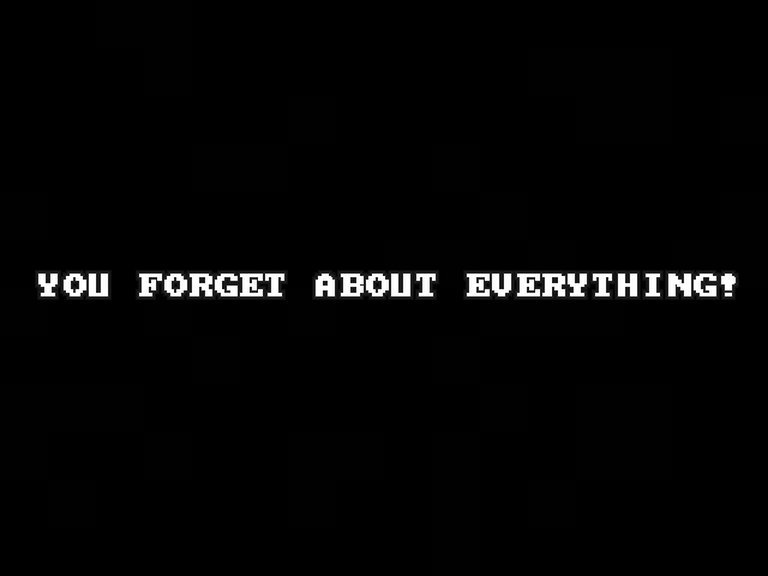
“You found the grappling hook! Hey, that’s my grappling hook! And you didn’t feed my dog! You forget about everything! You can’t stay here anymore!”
This enigmatic pronouncement establishes themes of transgression, displacement, and consequence. The “you” is an interloper, a thief who has trespassed (by appropriating the hook) and neglected duty (by starving the dog). The “you” becomes an existential exile, banished from a space now rendered hostile. The horned protagonist—an 8-bit homage to ICO’s Trico—embodies this alienation, navigating caverns that feel both familiar and hostile. Absurdity underscores the tragedy: the stakes are life-or-death (spikes, instant respawns) yet rooted in mundane domestic failure. The absence of other characters amplifies isolation, transforming the cave into a purgatorial arena where redemption is measured by ten leaps of faith. Version 1.5’s “spirits” and “items” deepen the mystery, suggesting a metaphysical layer to the exile. Ultimately, the narrative’s power lies in its ambiguity, forcing players to project meaning onto void—a bold rejection of ludonarrative harmony in favor of existential unease.
Gameplay Mechanics & Systems
The core loop is a masterclass in constrained design: traverse ten levels using a grappling hook with finite reach and physics-based swinging. Movement is deceptively simple: run, jump, and launch the hook into distant platforms. Depth emerges from mastering the hook’s cord mechanics—extending (Up/Down) and swinging (Left/Right) to navigate gaps. Later levels introduce lethal spikes, demanding precision and momentum control. Death is punitive but fair, respawning players at the level’s start—a stark contrast to modern checkpoint systems. Key systems include:
– Limited Hook Reach: Forces strategic grappling, turning every leap into a calculated risk.
– Swing Physics: Pendulum momentum enables creative traversal, rewarding rhythmic inputs.
– No Enemies or Combat: Pure platforming as puzzle-solving, where level design is the sole antagonist.
– Version 1.5 Enhancements: Added “spirits” (collectibles?), two new items (e.g., extended cord?), and an ending, though specifics remain elusive. The UI is intentionally austere—no HUD, no tutorials—placing trust in player intuition. The grappling hook’s limitations become strengths, transforming movement into a verb of desperate grace. Its elegance lies in how a single mechanic generates infinite complexity through spatial constraints.
World-Building, Art & Sound
The game’s caverns are a study in atmospheric minimalism. Rendered in 2D scrolling, the environment is a monolithic labyrinth of stone and shadow, spiked platforms casting jagged silhouettes. The palette is muted—greys, browns, and the occasional pop of a grappling hook’s neon cord—evoking desolation. The horned protagonist’s ICO-like design (a tiny, horned figure) injects pathos, his pixelated form vulnerable against the void. Sound design is equally sparse but effective: Aaron Kurtz’s soundtrack, altered in 1.5, blends droning ambience with percussive clicks that sync to movement, creating a tension between melancholy and urgency. Absence defines the audio—no voice acting, no enemy sounds—heightening the game’s existential dread. Together, art and sound forge a haunting cohesion, the cave becoming a character itself: indifferent, unforgiving, and vast. It is a world that exists solely for the player’s traversal, its beauty emerging from the friction between fragility and scale.
Reception & Legacy
Upon release, You Found the Grappling Hook garnered minimal attention. MobyGames records no critic reviews, and its single player review (2.2/5) lacks commentary, reflecting its cult status. MyAbandonware lists it as abandonware, underscoring its niche appeal. Yet, its influence is quietly pervasive. The grappling hook mechanic—physics-based, momentum-driven—anticipated later hits like Grappling Hook (2009, Christian Teister) and Hook (1992), though Messhof’s version prioritized precision over spectacle. Essen’s ethos of minimalism and experimental design resonated in the indie renaissance, inspiring devs to embrace constraints. The Pro Edition remains a legendary inside joke, showcasing game development as a dialogue with media and culture. Today, it’s preserved in abandonware archives and referenced in discussions of “anti-game” aesthetics—games that reject traditional goals for pure interaction. Its legacy is not in metrics but in its role as a conceptual touchstone: proof that brilliance can thrive within self-imposed limits.
Conclusion
You Found the Grappling Hook is a masterpiece of omission. In ten punishing levels, Mark Essen stripped gaming to its essence—movement, consequence, and the space between failure and triumph. Its narrative is a ghost, its world a void, its mechanics a poem of physics. While it may never achieve mainstream recognition, its impact endures as a testament to indie games’ capacity for radical innovation. It is a relic of an era where freeware was a frontier, and a grappling hook could be both tool and metaphor. For historians, it’s a vital artifact of game design’s evolution; for players, it’s a brutal, beautiful meditation on exile and motion. In a cluttered gaming landscape, You Found the Grappling Hook remains a beacon of focused genius—a small, unforgettable journey that asks only this: Can you swing your way out of the consequences of your own curiosity? Verdict: An essential, albeit enigmatic, entry in the canon of experimental gaming.