
- Release Year: 2007
- Platforms: Windows
- Genre: Adventure
- Perspective: Diagonal-down
- Game Mode: Single-player
- Gameplay: Collection, Exploration, Minigames, Multiple endings, Open World, Sandbox
- Setting: Dream world
- Average Score: 100/100
Description
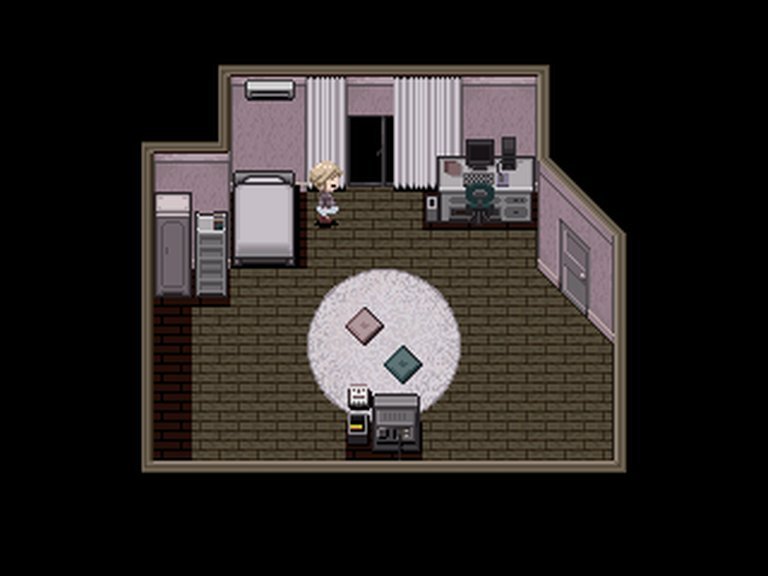
As an unofficial sequel to Yume Nikki, Yume 2kki is a freeware RPG Maker fangame where players control Urotsuki exploring surreal dream worlds to collect ‘effects’ that alter her appearance and over 160 wallpapers awarded for discovering special events. The game features a sandbox, open-world structure with a meditative yet horror-tinged narrative, allowing effect combinations and including a BGM player/minigames accessible from Urotsuki’s bedroom in the waking world.
Gameplay Videos
Where to Buy Yume 2kki
PC
Yume 2kki Free Download
Yume 2kki Mods
Yume 2kki Guides & Walkthroughs
Yume 2kki Reviews & Reception
medium.com : Yume 2kki is an ongoing collaborative Yume Nikki fangame… It is also, in my opinion, a lot better than Yume Nikki!
backloggd.com (100/100): If games are art, Yume 2kki is a canvas the size of the Louvre.
Yume 2kki: Review
1. Introduction
Yume 2kki is not merely a game; it is a sprawling, living monument to collaborative surrealism. Released in 2007 as an unofficial sequel to Kikiyama’s cult classic Yume Nikki, this freeware RPG Maker 2000 project has evolved into a labyrinthine odyssey of unparalleled scale and ambition. At its core, it challenges conventional notions of narrative, gameplay, and authorship, offering players a dreamscape crafted by hundreds of anonymous contributors from Japan’s 2chan community. While Yume Nikki was a solitary exploration of a tormented psyche, Yume 2kki transforms that vision into a communal canvas—one where meaning is both abundant and elusive. This review posits that Yume 2kki stands as a definitive achievement in collaborative game design, a work of digital surrealism that transcends its fangame origins to become a touchstone for experimental indie development. Its legacy lies not in traditional storytelling but in the sheer, overwhelming act of exploration—a testament to the power of collective imagination.
2. Development History & Context
The Genesis of a Collective Vision
Yume 2kki emerged in 2007 from the creative ferment of 2chan, a Japanese anonymous imageboard where users shared ideas for expanding Yume Nikki’s dream-world mechanics. Unlike its predecessor, which was the solo work of Kikiyama, this project was conceived as an open collaboration: the “Yume 2kki Team” aggregated contributions from dozens of anonymous developers, each designing unique dream worlds, effects, and mechanics. The result is a patchwork of artistic voices bound by a shared surreal ethos.
Technological Constraints & Innovation
Built on RPG Maker 2000—a limited engine by 2007 standards—Yume 2kki imposes strict graphical and structural constraints. Pixel art is restricted to a 16-color palette, and gameplay relies on simple sprite-based movement. Yet the team ingeniously subverted these limits: they introduced “effect mixing” (e.g., combining the Wolf and Bike effects to create a werewolf-motorcycle hybrid), expanded the Nexus hub to 17+ doors, and integrated community-sourced content like wallpapers. These innovations turned technical limitations into creative strengths, fostering a distinctive retro-psychedelic aesthetic.
The Gaming Landscape of 2007
When Yume 2kki debuted, the indie game scene was nascent. Platforms like Steam were gaining traction, but freeware and fangames thrived in underground spaces. Yume Nikki’s 2004 release had already cultivated a niche audience drawn to its atmospheric horror and non-linear exploration. Yume 2kki capitalized on this zeitgeist, positioning itself as an evolution of the genre—one that embraced its own impermanence. Its ongoing updates (as of 2024, it remains in development) reflected a shift toward games as living artifacts, a precursor to modern “games-as-service” models in the indie sphere.
3. Narrative & Thematic Deep Dive
The Elusive Story of Urotsuki
The game’s protagonist, Urotsuki, is a silent observer trapped in her bedroom. Her waking world—a spartan space with a computer, console, and bed—serves as a portal to dreams. Unlike Yume Nikki’s Madotsuki, Urotsuki’s backstory is hinted at through environmental storytelling: abandoned toys, a lone teddy bear, and diary entries (in fan translations) suggest parental neglect. However, the narrative remains deliberately fragmented. As one Reddit theorist notes, “Urotsuki being abandoned by her parents” is a recurring motif, but it’s presented through vignettes—a flickering television showing a news report about a missing child, or a decaying schoolhouse—rather than explicit text.
Themes of Isolation and the Subconscious
Yume 2kki explores the subconscious as a space of both wonder and dread. Its dream worlds are not linear journeys but associative jumbles of memory and symbolism. The Cotton Candy World evokes childhood innocence, while the Infinite Library (Backloggd) represents overwhelming knowledge and existential dread. The absence of dialogue forces players to interpret themes through environmental cues: abandoned playgrounds, static-filled televisions, and recurring motifs like eyeballs or clocks. This ambiguity is intentional; the game mirrors the logic of dreams, where meaning is subjective and fleeting.
Collaborative Chaos vs. Coherent Narrative
Critics debate whether Yume 2kki’s lack of a unified narrative is a flaw or a strength. The Medium review argues that the “majority has no cohesive meaning,” which enhances its dreamlike disorientation. Yet others, like the Backloggd reviewer, see it as a “canvas for the surrealist,” where each contributor adds a brushstroke of personal symbolism. The result is a narrative that resists synthesis—a testament to the game’s collaborative nature. As the Yume 2kki Wiki states, “it’s up to the player to interpret it,” making every playthrough a unique act of meaning-making.
4. Gameplay Mechanics & Systems
The Core Loop: Exploration and Collection
Gameplay revolves around two primary objectives in the dream world: collecting “effects” (visual transformations) and “wallpapers” (environmental unlocks). With 35 effects (e.g., Chainsaw, Spacesuit, Fairy), players can alter Urotsuki’s appearance and abilities. Unlike Yume Nikki, effects can be mixed, creating hybrid states like Wolf + Bike (a howling werewolf on a motorcycle) or Haniwa + Cake (a slow-moving gingerbread figure). These mixes often reveal hidden pathways—Glasses unveils secret doors, while Invisible evades chasers—adding tactical depth to exploration.
Wallpapers and the Pursuit of Completion
Wallpapers are the game’s true collectibles, numbering over 160. Unlocked by reaching obscure areas or triggering events (e.g., finding a hidden room or solving a riddle), they are viewed on Urotsuki’s computer in the waking world. Collecting 95% of wallpapers unlocks one of four main endings (nine total), but the journey itself is the reward. The Backloggd reviewer notes that completionism becomes “a treasure hunt,” with the wiki serving as a “map” for obsessive players.
Minigames and Quality of Life
Urotsuki’s bedroom houses two diversions: a console with built-in minigames (e.g., Dream Puzzle) and a BGM player for the game’s soundtrack. These break up the dream exploration, offering moments of respite. The Quick-Select Menu (Shift key) and Mini-Maze Map (Z key) streamline navigation, addressing criticisms of Yume Nikki’s obtuseness. Yet the game’s scale remains daunting; with 1,300+ areas, even veterans get lost, reinforcing the theme of infinite possibility.
5. World-Building, Art & Sound
A Living Dreamscape
Yume 2kki’s world is a hyperlinked network of dreamscapes, each door in the Nexus leading to a distinct micro-universe. Areas range from the whimsical (Cotton Candy World, a pastel-colored maze) to the grotesque (Static Noise Hell, a glitch-filled void). The Spelling Room (a corridor with lettered doorways) exemplifies the game’s surreal ingenuity: spelling words like “DEATH” or “STAR” transports players to themed zones. This structure evokes the associative logic of dreams, where contexts shift abruptly.
Art: A Patchwork of Visions
Art style varies wildly across contributions, unified by RPG Maker 2000’s limitations. Some areas, like qxy’s Lavender Waters, feature breathtaking pixel art with soft gradients and melancholic palettes. Others, like the Dream Park, resemble childlike MS Paint drawings. The Yume 2kki Wiki acknowledges this “quality variance,” framing it as a strength: “even mediocre worlds serve as bonus content.” Striking visuals contrast with disturbing imagery—eyeball bombs, decaying dolls—that amplify the game’s psychological horror.
Sound: Ambiance as Narrative
The soundtrack, composed by dozens of contributors, relies on short, looping ambient tracks (3–10 seconds). While less iconic than Yume Nikki’s, these pieces enhance the dreamlike disorientation: the static of Static Noise Hell or the ethereal chimes of the Fairy effect. The BGM player in the waking world lets players curate their experience, turning the game into a personalized soundscape. As the Medium review notes, music “serves as atmosphere,” not melody—a perfect match for the game’s meditative pacing.
6. Reception & Legacy
Cult Status and Critical Debate
Upon release, Yume 2kki was a niche curiosity within Yume Nikki fandom. Over time, it gained legendary status. The Backloggd reviewer calls it “a canvas the size of the Louvre,” praising its “unmatched ambition.” Critics laud its scale but critique its inconsistency: the Medium review notes “some areas look like a 10-year-old’s MS Paint portfolio.” Its obtuseness sparked debate—some players consider the wiki a “necessary crutch,” while others revel in the mystery.
Commercial Impact and Community Influence
As freeware, Yume 2kki has no commercial sales, but its cultural impact is immense. It inspired the “Yume Nikki fangames” genre, including sequels (Yume III, Yume IV) and spin-offs (Yume Puzzle). The project’s collaborative model influenced community-driven works like B3313 and Flow. Notably, it retains a dedicated fanbase, with the official Discord and wiki serving as hubs for new content. As the Indie Archive states, it “demonstrates the dedication of the Yume Nikki fanbase,” proving that passion projects can rival commercial games in scope.
Legacy in Experimental Gaming
Yume 2kki redefined what a game could be. It championed authorial anonymity, embraced procedural dream logic, and showed that RPG Maker could be a tool for high art. Its legacy endures in modern surreal games like Scorn and Masochisia, which prioritize atmosphere over mechanics. Most importantly, it established that games could be “living texts”—evolving, interpretive, and endlessly rediscoverable.
7. Conclusion
Yume 2kki is a paradox: a game without a story that tells a thousand tales, a collaborative work that feels deeply personal, and a freeware title with more ambition than most AAA games. Its scale is both its greatest strength and its greatest challenge—players may spend 40 hours chasing wallpapers, only to find a 30-second ending. Yet this mirrors the nature of dreams: the journey matters more than the destination.
For its sheer audacity, Yume 2kki deserves a place in gaming history. It is a monument to the collective unconscious, a testament to the idea that dreams—digital or otherwise—are boundless. While not for everyone, its blend of beauty, horror, and infinite exploration makes it a unique masterpiece. As the Backloggd reviewer aptly concludes, “nothing I’ve played comes even close to Yume 2kki.” In an industry obsessed with refinement, it remains gloriously, unapologetically unfinished—and all the more profound for it.
Verdict: A towering achievement in collaborative surrealism, essential for anyone who believes games can be art. ★★★★★