
- Release Year: 2013
- Platforms: Windows
- Publisher: CD Projekt S.A.
- Developer: CD Projekt Red
- Genre: Action RPG
- Perspective: Third-person
- Game Mode: Single-player
- Gameplay: Action RPG, Hack and Slash, Moral choices, Open world exploration
- Setting: Fantasy
- Adult Content: Yes
Description
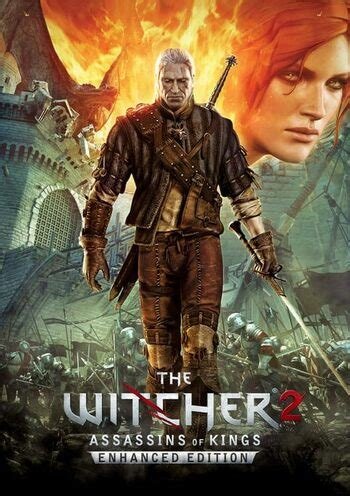
Zaklínač 2: Vrahové Králů is a dark fantasy RPG where players take on the role of Geralt of Rivia, a witcher falsely accused of regicide. Embarking on a quest to clear his name, Geralt confronts political intrigue, mythical beasts, and personal memory loss alongside allies like Triss and Vernon Roche. The game features dynamic combat, deep moral choices leading to 16 possible endings, and was renowned for its groundbreaking visuals and mature storytelling when released.
Gameplay Videos
Where to Buy Zaklínač 2: Vrahové Králů (Platinová Edice)
PC
Zaklínač 2: Vrahové Králů (Platinová Edice): Review
Introduction
In the pantheon of role-playing games, few titles command the reverence and scholarly attention Zaklínač 2: Vrahové Králů (The Witcher 2: Assassins of Kings) does. Released in its Platinová Edice (Platinum Edition) on May 7, 2013, this Czech/Slovak collector’s package represents more than a game—it’s a cultural artifact, a technical marvel of its era, and a narrative masterclass. As a sequel to CD Projekt Red’s cult hit Zaklínač, it elevated the series into the global stratosphere, setting new standards for storytelling, choice-driven design, and dark-fantasy immersion. This review delves into the Platinum Edition’s significance, dissecting its development, narrative depth, mechanical innovation, and enduring legacy. Thesis: While not without technical blemishes, *Vrahové Králů remains a landmark achievement in RPG design, whose Platinum Edition serves as a definitive, regionally curated testament to its artistic and historical impact.*
Development History & Context
The Architects of Ambition
Developed by Poland’s CD Projekt Red (fresh off the critical success of Zaklínač), Vrahové Králů was a bold declaration of creative independence. Unlike its predecessor, which used a modified BioWare Aurora Engine, the studio built REDengine from scratch—a move that enabled unprecedented graphical fidelity and world complexity. Announced in 2009, development was accelerated by a leaked gameplay video that generated immense buzz, forcing the team to pivot and refine quickly.
Technological Constraints and Vision
REDengine’s debut was audacious: it prioritized dynamic lighting, realistic textures, and physics-driven interactions via the Havok engine. This ambition came with trade-offs, however. The game’s high system requirements (a dual-core CPU, 2GB RAM, and a 512MB GPU with Pixel Shader 3.0) limited its accessibility, while early bugs and AI quirks highlighted the challenges of crafting a seamless, choice-heavy experience. Yet, CD Projekt’s vision remained unwavering: to create a mature, morally complex RPG where player decisions reverberated through a politically fractured world.
The Gaming Landscape
Released in 2011 (PC) and 2012 (Xbox 360), Vrahové Králů emerged amid a renaissance for Western RPGs. It stood in stark contrast to the streamlined action of Dragon Age II (2011) and the open-world sandbox of Skyrim (2011), instead offering a tightly scripted, cinematic narrative with 16 branching endings. The Enhanced Edition (2012)—the foundation of the Platinum Edition—addressed launch concerns with free DLC, performance tweaks, and added content, cementing CD Projekt’s player-first ethos.
Narrative & Thematic Deep Dive
A Web of Intrigue
At its core, Vrahové Králů is a political thriller masquerading as a monster hunt. Framed as a fugitive after a failed regicide attempt, Geralt of Rivia navigates a continent teetering on war. The plot unfolds across three acts:
1. Flotsam: A rain-soaked town where Geralt allies with the elf rebel leader Iorveth or the Temerian intelligence chief Vernon Roche, each path unlocking divergent storylines.
2. Vergen: A dwarven siege where Geralt’s choices escalate the human-versus-nonhuman conflict.
3. Loc Muinne: A magical tournament ground converging all factions for a climactic resolution.
Characters and Dialogue
Geralt is reimagined as a cynical pragmatist, his gruff charm balanced by profound loyalty to allies like Triss Merigold and Zoltan Chivay. Dialogue is the game’s lifeblood, featuring branching conversations with nuanced options—aggressive, diplomatic, or even magically influenced via the Axii sign. Czech localization excels, preserving the original’s earthy vulgarity (e.g., trpaslík Zoltan’s profanity-laced rants) while elevating political debates to Shakespearean intensity.
Thematic Resonance
Vrahové Králů dissects racism, nationalism, and the cost of power. The Scoia’tael elves aren’t villains but freedom fighters, while human nobles scheme with equal depravity. Geralt’s quest for truth exposes a world where “good” and “evil” are subjective—a theme underscored by romance subplots that treat intimacy with adult realism, avoiding titillation to explore vulnerability and connection.
Gameplay Mechanics & Systems
Combat: Precision Over Brute Force
The combat system revolutionized the series, replacing the first game’s clunky mechanics with a fluid, timing-based dance. Geralt wields two swords: steel for humans, silver for beasts. Light and heavy attacks are mapped to mouse buttons, complemented by dodges, blocks, and *stealth takedowns. The five Signs (magic spells) are tactical tools—Quen* for defense, Igni for crowd control, Yrden to weaken monsters—rather than spammy damage-dealers.
Character Progression
Geralt grows via four skill trees:
– Swordsmanship: Unlocks combos like “Whirlwind” for decimating groups.
– Alchemy: Enhances potion toxicity and oil effects.
– Magic: Boosts Sign potency and duration.
– Training: Improves vitality and resistance.
Mutagens provide passive bonuses but require careful allocation, adding strategic depth. Crafting is equally robust, with blacksmiths forging unique weapons from blueprints and alchemists brewing potions from foraged herbs.
UI and Innovation
The inventory system, designed for gamepad compatibility, groups items logically but suffers from clutter. Minimaps can be confusing, and NPC pathfinding occasionally glitches (e.g., allies getting stuck). Yet, the game compensates with brilliant design choices: the meditative menu screen for crafting, the “detective mode” using Geralt’s medallion to highlight clues, and Quick-Time Events (QTEs) used sparingly to heighten boss battles.
World-Building, Art & Sound
Atmospheric Worldcraft
The world, inspired by Andrzej Sapkowski’s novels, feels lived-in. Flotsam’s mud-slicked streets pulse with tension, while Vergen’s cavernous mines hum with dwarven engineering. Even minor locales, like a brothel or rebel camp, radiate personality through environmental storytelling—rusted traps, bloodstained ledgers, and overheard conversations.
Visual Mastery
REDengine delivered jaw-dropping visuals for 2011: cloth physics, dynamic weather, and gorgeous lighting that cast long shadows across battlefields. Yet, texture pop-in and occasional clipping mar the experience. Character models, particularly Geralt and Triss, showcase meticulous detail, though some NPCs exhibit stiff animations. The Platinum Edition’s A2 Triss poster (included physically) epitomizes the game’s blend of eroticism and artistry.
Sound Design
Marcin Przybyłowicz’s score is epic and melancholic, blending Slavic folk melodies with orchestral grandeur. Sound effects—sword clashes, bestial roars, and footfalls in mud—immerse players in Geralt’s struggles. Voice acting (Polish/English) is stellar, with Geralt’s gravelly growl and Dandelion’s bardic charm anchoring the experience. The Czech translation preserves the original’s grit, though minor localization quibbles exist.
Reception & Legacy
Critical Acclaim
Vrahové Králů was a triumph, scoring 90+ on Metacritic for its narrative ambition and technical prowess. Critics lauded its branching plot, moral complexity, and “best-in-class” combat. The Platinum Edition, bundled with a 68-page manual, printed map, and DRM-free Enhanced Edition (version 3.0), was praised as a collector’s dream for Czech/Slovak audiences.
Commercial Impact
Over 1.7 million copies sold by 2012, driven by CD Projekt’s anti-DRM stance and post-launch support. The Xbox 360 port sold 500,000 units, proving the game’s cross-platform appeal.
Long-Term Influence
Vrahové Králů redefined RPG choice mechanics, proving that linear narratives could offer profound player agency. Its success enabled Zaklínač 3: Divoký hon (2015), which refined its systems into a global phenomenon. Studio co-founder Marcin Iwiński later cited it as the “turning point” for Polish game development. Today, it remains a benchmark for narrative density, inspiring titles like Cyberpunk 2077.
Conclusion
Zaklínač 2: Vrahové Králů is a flawed masterpiece—a symphony of ambition marred by occasional technical dissonance. Its Platinum Edition crystallizes its significance: a DRM-free, physically curated artifact representing CD Projekt Red’s artistic zenith. While the third act’s rushed pacing and AI hiccups prevent perfection, they are overshadowed by its narrative brilliance, combat ingenuity, and world-building soul.
Verdict: Essential for RPG enthusiasts and historians alike. The Platinum Edition isn’t just a game—it’s a time capsule of a medium coming of age, where a studio dared to ask hard questions about power, prejudice, and the weight of choice. In an era of open-world excess, Vrahové Králů remains a poignant reminder that the most immersive worlds are often the smallest, most intricately crafted ones. Vaesse deireádh aep eigean, vaesse eigh faidhar. (The end is in the beginning, and the beginning is in the end.)