
- Release Year: 2002
- Platforms: Windows
- Publisher: eSofnet
- Developer: MiraSpace Entertainment
- Genre: Adventure
- Perspective: 3rd-person
- Game Mode: Single-player
- Gameplay: Puzzle elements, Survival horror
- Average Score: 63/100
Description
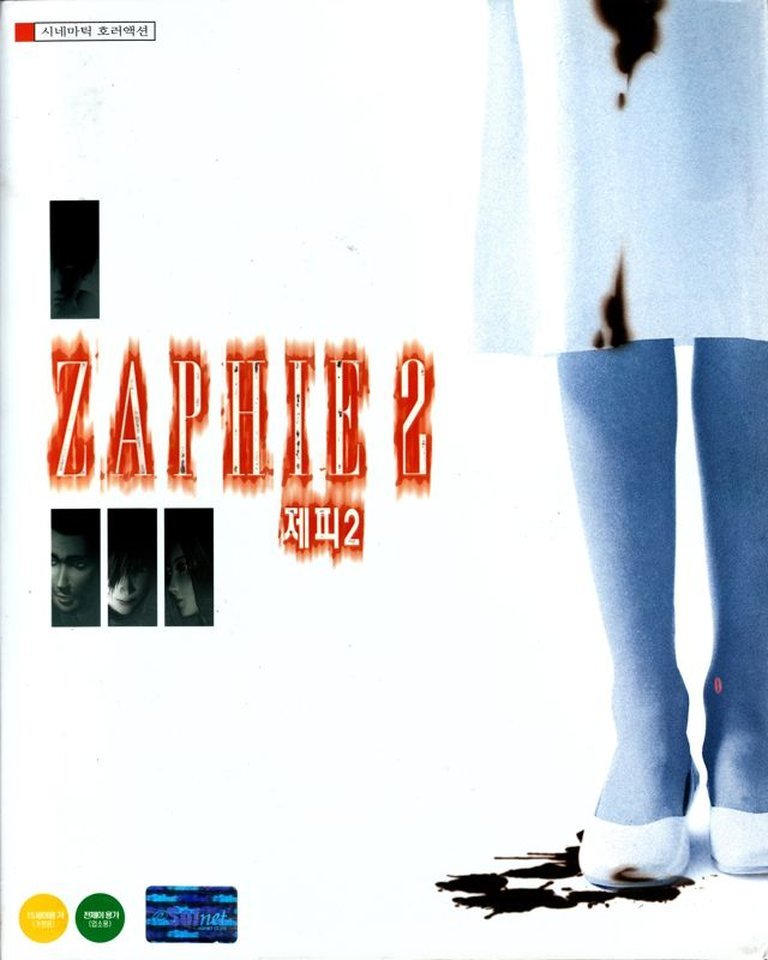
Zaphie 2 is a Korean survival horror adventure game released in 2002, serving as a sequel to the original Zaphie. The story follows Zaphie Cronin, who, after being released from a mental hospital, continues to suffer from disturbing visions where people’s faces transform into demonic images. Following a car accident, he finds himself in the eerie town of Saintless, where he must unravel its mysteries while battling his own sanity. The game features 3D graphics with fixed camera angles, reminiscent of Silent Hill, and emphasizes survival elements such as managing Zaphie’s mental state with medicines. Unlike action-heavy horror games, Zaphie 2 focuses on exploration, item collection, and light puzzle-solving, creating a tense, atmospheric experience.
Gameplay Videos
Zaphie 2 Free Download
Zaphie 2 Reviews & Reception
myabandonware.com (50/100): It’s kind of crap it seems more like a game made by 1 person rather than a real game
justadventure.com (80/100): Zaphie 2 ranked up there with Silent Hill in my book.
mobygames.com (60/100): Average score: 3.0 out of 5
Zaphie 2: A Forgotten Masterpiece of Korean Survival Horror
Introduction: The Haunting Legacy of a Cult Classic
Few games capture the eerie, disorienting essence of psychological horror as Zaphie 2 does. Released in 2002 by South Korean developer MiraSpace Entertainment, this sequel to the 1999 point-and-click adventure Zaphie is a haunting, atmospheric descent into madness, blending survival mechanics with a deeply unsettling narrative. Often overshadowed by its Japanese counterparts like Silent Hill and Resident Evil, Zaphie 2 stands as a unique, if flawed, testament to Korea’s early forays into horror gaming.
This review will dissect Zaphie 2 in exhaustive detail—its development, narrative depth, gameplay mechanics, and lasting influence—arguing that despite its technical shortcomings, it remains a fascinating relic of early 2000s horror gaming.
Development History & Context: A Game Born in Transition
The Studio Behind the Madness: MiraSpace Entertainment
MiraSpace Entertainment, a relatively obscure Korean developer, crafted Zaphie 2 as a follow-up to their 1999 debut, Zaphie, a Myst-inspired horror adventure. The first game was a modest success in Korea, but Zaphie 2 represented a bold shift in direction—abandoning the static, pre-rendered environments of its predecessor in favor of real-time 3D graphics, fixed camera angles, and a more immersive, Silent Hill-esque presentation.
Technological Constraints & the Early 2000s Gaming Landscape
Released in February 2002, Zaphie 2 arrived at a pivotal moment in horror gaming:
– The rise of survival horror: Silent Hill 2 (2001) had just redefined psychological horror, while Resident Evil was transitioning into action-heavy territory.
– Korea’s gaming industry shift: The late 1990s and early 2000s saw Korea’s focus pivot toward online multiplayer games (e.g., Lineage, Mu Online), leaving single-player experiences like Zaphie 2 in a precarious position.
– Hardware limitations: Running on DirectX 8, the game struggled with frequent loading times, clunky controls, and stability issues—problems exacerbated by its niche appeal outside Korea.
A Game Caught Between Two Worlds
Zaphie 2 was an ambitious hybrid:
– A survival horror game with sanity mechanics and limited combat.
– An adventure game with heavy emphasis on puzzle-solving and exploration.
– A psychological thriller where the protagonist’s grip on reality is constantly questioned.
Yet, despite its innovations, it suffered from poor optimization, a lack of English localization, and minimal marketing—factors that relegated it to obscurity outside its home country.
Narrative & Thematic Deep Dive: A Descent Into Madness
Plot Summary: The Nightmares of Zaphie Cronin
Ten years after the events of the first game, Zaphie Cronin—now a young man—is released from a mental institution, still plagued by hallucinations of demonic faces and whispered voices. After a car accident leaves his guardian, Spencer Elliott, missing, Zaphie awakens in the eerie mountain town of Saintless, where the line between reality and delusion blurs.
As he explores, he encounters:
– Lillian Chae, a mysterious Asian woman with supernatural abilities.
– Tracy Matthews, a photojournalist who may or may not be trustworthy.
– Norman Baker, a suspicious detective who traps Zaphie in a police station.
The game’s narrative unfolds through environmental storytelling, cryptic notes, and surreal visions, culminating in a multiple-ending structure that rewards thorough exploration.
Themes: Sanity, Isolation, and the Unreliable Narrator
Zaphie 2 is a masterclass in psychological horror, exploring:
1. The Fragility of the Mind
– Zaphie’s sanity meter deteriorates as he witnesses horrors, forcing players to consume medicine to stabilize him.
– The game gaslights the player—are the monsters real, or figments of Zaphie’s trauma?
-
The Horror of the Unknown
- Saintless is a liminal space, a town frozen in time, where doors lead to impossible places and characters vanish without explanation.
- The game’s fixed camera angles and limited field of view amplify paranoia.
-
Korean Horror Aesthetics
- Unlike Western horror’s reliance on gore, Zaphie 2 leans into subtle, creeping dread—whispers in empty halls, faces melting into grotesque masks, and sudden, unnerving silence.
Characters & Voice Acting: A Mixed Bag
- Zaphie Cronin (voiced by Jinhong Lee) is a compelling protagonist—vulnerable, confused, and deeply human.
- Lillian Chae (voiced by Youngran Lee) serves as both ally and enigma, her supernatural knowledge hinting at deeper lore.
- Spencer Elliott’s fate is one of the game’s most emotionally charged mysteries.
However, the Korean voice acting, while expressive, is not fully localized, leaving non-Korean players reliant on visual cues and subtitles (which are often incomplete).
Gameplay Mechanics & Systems: A Flawed But Fascinating Hybrid
Core Gameplay Loop: Survival Meets Adventure
Zaphie 2 defies easy classification:
– It is not a pure survival horror game—combat is minimal, with most threats avoided rather than fought.
– It is not a pure adventure game—the sanity system and limited resources add tension.
Key Mechanics:
-
Sanity Management
- Zaphie’s mental state degrades over time, distorting visuals and audio.
- Medicine must be found and used to prevent hallucinations from becoming unbearable.
-
Exploration & Puzzle-Solving
- The game employs fixed camera angles (like Resident Evil) but with 3D movement.
- Puzzles range from inventory-based challenges to environmental manipulation.
-
Limited Combat
- Unlike Silent Hill, fighting is rare—most encounters are avoided or resolved through quick-time events.
- When combat does occur, it is clunky and unintuitive, reinforcing the game’s focus on flight over fight.
UI & Controls: A Product of Its Time
- Mouse and keyboard controls are stiff and imprecise, a common issue in early 3D horror games.
- Inventory management is cumbersome, requiring frequent pauses to examine items.
- Save points are sparse, increasing tension but also frustration.
Innovations & Flaws
✅ Strengths:
– Atmospheric tension rivaling Silent Hill.
– Unique sanity mechanics that affect gameplay.
– Multiple endings encouraging replayability.
❌ Weaknesses:
– Frequent loading screens disrupt immersion.
– Unpolished controls hinder exploration.
– Lack of English support limits accessibility.
World-Building, Art & Sound: A Nightmare Made Real
Setting: The Town of Saintless
Saintless is a masterpiece of environmental horror:
– Abandoned buildings with flickering lights.
– Narrow, maze-like streets that loop unnaturally.
– Sudden shifts in architecture, as if the town itself is alive.
Visual Design: A Dark, Stylized Aesthetic
- Pre-rendered backgrounds (in some areas) clash with low-poly 3D models, creating an uncanny, dreamlike effect.
- Character designs are exaggerated and grotesque, reminiscent of Japanese anime influences.
- Lighting is used expertly—shadows stretch unnaturally, and flickering lamps signal danger.
Sound Design: The Silence Before the Scream
- The soundtrack is minimalist, relying on ambient drones and sudden stings to unnerve players.
- Voice acting is emotional but limited—most dialogue is in Korean, adding to the sense of isolation for non-speakers.
- Sound cues (e.g., distant whispers, footsteps) are critical for survival, as they often signal impending threats.
Reception & Legacy: The Game Time Forgot
Critical & Commercial Reception
- In Korea, Zaphie 2 was a cult hit, praised for its atmosphere and storytelling but criticized for technical issues.
- Internationally, it fell into obscurity due to:
- No official English localization.
- Limited marketing outside Asia.
- Competition from Silent Hill 2 and Resident Evil remakes.
Legacy: A Hidden Gem of Korean Horror
Despite its flaws, Zaphie 2 influenced later Korean horror games, such as:
– White Day: A Labyrinth Named School (2001) – Another Korean survival horror with similar themes.
– The Coma series – Modern indie horror games that expand on Zaphie 2’s psychological horror.
Today, it is a sought-after rarity, with fans preserving it through abandonware sites and emulation.
Conclusion: A Flawed Masterpiece Worth Rediscovering
Zaphie 2 is not a perfect game—its clunky controls, frequent loading, and lack of localization hold it back. Yet, its atmosphere, narrative depth, and psychological horror make it a hidden gem of early 2000s gaming.
Final Verdict: 7.5/10 – A Cult Classic Deserving of a Second Life
- For horror fans, it’s a must-play—a unique blend of Silent Hill and Myst.
- For adventure gamers, its puzzles and exploration offer rewarding challenges.
- For historians, it’s a fascinating snapshot of Korean gaming’s evolution.
If you can overlook its technical rough edges, Zaphie 2 delivers an experience that lingers long after the credits roll—a nightmare you won’t soon forget.
Would you dare to step into Saintless? 👻