
- Release Year: 2004
- Platforms: Windows
- Publisher: Alawar Entertainment, Inc.
- Developer: Mama Game
- Genre: Puzzle, Tile matching puzzle
- Perspective: Side view
- Game Mode: Single-player
- Gameplay: Falling block puzzle, Tile matching puzzle
Description
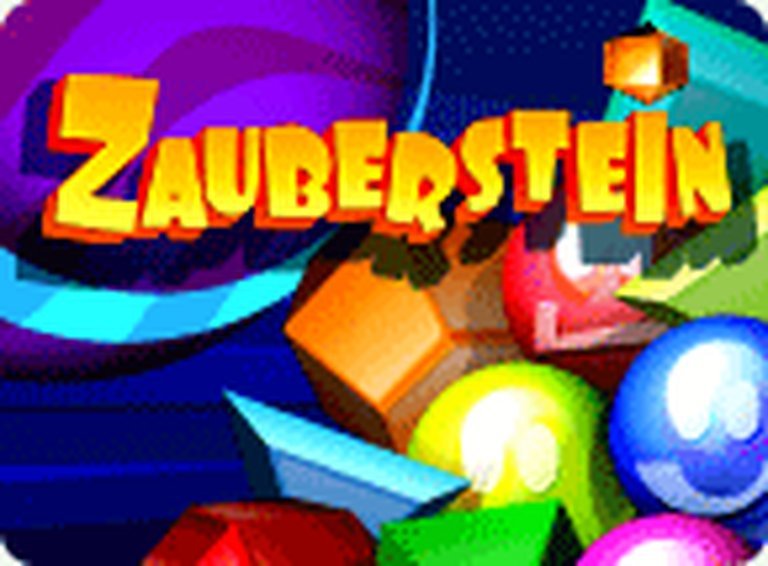
Zauberstein is a 2004 puzzle game where players manipulate items on a grid to create rows of three or more identical tiles. Set in a dynamic playfield ranging from 6×6 to 8×8 grids, the game challenges players to swap adjacent items strategically, while overcoming obstacles like ‘Blockers’ and rotating drop-in directions. With four distinct modes—Classic, Strategy, Arcade, and Action—the gameplay varies between relaxed pattern-matching and timed challenges, complete with bonus levels that test tactical thinking. Developed by Mama Game and published by Alawar Entertainment, it blends tile-matching mechanics with evolving difficulty across its shareware release for Windows.
Zauberstein: A Crystalline Puzzle Gem Lost in Time
Introduction
In the mid-2000s digital shareware boom, Zauberstein emerged as a quiet contender in the crowded tile-matching genre. Developed by Mama Game and published by Alawar Entertainment, this Windows-exclusive puzzler offered a deceptively simple premise layered with strategic nuance. While it never achieved the cultural footprint of Bejeweled or Tetris, Zauberstein’s rotating drop mechanics and escalating challenges carved a niche for tactical puzzle enthusiasts. This review argues that Zauberstein is a forgotten innovator—a game whose mechanical ingenuity outpaced its minimalist presentation, leaving it as a fascinating relic of early casual gaming design.
Development History & Context
Origins in the Shareware Era
Released in July 2004, Zauberstein arrived at a pivotal moment for digital distribution. Alawar Entertainment, known for accessible casual titles like Farm Frenzy, leveraged the shareware model to distribute the game, allowing players to sample limited content before purchasing. Developer Mama Game, a lesser-known studio, focused on streamlined mechanics over visual spectacle, reflecting the technological constraints and budget realities of indie developers at the time.
The Puzzle Game Landscape
The early 2000s saw a surge in tile-matching games following the success of Bejeweled (2001). Zauberstein distinguished itself by emphasizing spatial logic over speed, akin to Dr. Mario but with a twist: rotating drop-in directions. This mechanic forced players to adapt their strategies dynamically—a subtle innovation that anticipated later genre hybrids like Puzzle Quest.
Narrative & Thematic Deep Dive
A Game Without a Story
Zauberstein eschewed narrative entirely, a common choice for puzzle games of its era. Its abstract design—featuring geometric shapes and “Blockers”—prioritized pure gameplay over thematic immersion. While this lack of context might deter modern players accustomed to titles like Tetris Effect, it aligned with contemporary expectations for quick, replayable sessions.
Thematic Abstraction
The game’s German title (“Magic Stone”) hints at an alchemical subtext, but this remains unexplored. Instead, the tension arises from the interplay between order (matching tiles) and chaos (unpredictable drop patterns), creating a meditative loop familiar to fans of abstract strategy games.
Gameplay Mechanics & Systems
Core Loop: Precision Over Panic
At its heart, Zauberstein is a game of constrained agency. Players swap adjacent tiles on a grid (6×6 to 8×8) to form rows of three or more identical items, which then vanish. The catch? Swaps must immediately create a match, preventing aimless shuffling. This rule elevated the game from mindless matching to a cerebral exercise in foresight.
Four Modes, Four Challenges
- Classic Mode: A no-frills endurance test with unlimited time and a single life.
- Strategy Mode: Introduces rotating drop-in directions (top, right, bottom, left), upending traditional gravity-based gameplay.
- Arcade Mode: Progressive levels with time limits, varied blockers, and escalating complexity.
- Action Mode: Combines Arcade’s structure with Strategy’s rotating drops—the ultimate test of adaptability.
Blockers: The Devil in the Details
Immobile tiles called “Blockers” added complexity. Removing them required clever chain reactions, as they could only vanish when adjacent matches caused them to align in rows. This mechanic rewarded players who thought several moves ahead.
UI and Accessibility
The point-and-click interface was functional but utilitarian, typical of early 2000s casual games. While intuitive, the lack of visual feedback for high-scoring chains or combos felt underwhelming compared to contemporaries like Zoo Keeper.
World-Building, Art & Sound
Aesthetic Minimalism
Zauberstein’s visuals were stark, with basic geometric tiles and a static backdrop. The art direction prioritized clarity over flair, ensuring readability during tense matches. However, the absence of thematic consistency (e.g., gemstones, animals) made the experience feel clinical.
Sound Design: Repetition as Ritual
The soundtrack leaned into hypnotic, looped melodies that mirrored the game’s repetitive yet engrossing nature. While not memorable, the audio succeeded in fostering a trance-like focus—a double-edged sword that could either soothe or grate over extended play sessions.
Reception & Legacy
Quiet Launch, Muted Impact
Zauberstein garnered little critical attention at release, with no professional reviews archived. Its sole player rating on MobyGames (4.2/5) suggests modest appreciation among enthusiasts, though the sample size is too small to draw broad conclusions.
Influence and Echoes
The game’s rotating drop-in mechanic has rarely been replicated, but its emphasis on strategic tile-matching resonates in modern titles like Grindstone and Dorfromantik. Its shareware distribution also presaged the free-to-play models dominating mobile puzzle games today.
Conclusion
Zauberstein is neither a masterpiece nor a footnote. It occupies a middle ground—a mechanically solid puzzler overshadowed by its flashier peers. For patient players willing to engage with its tactical depth, it offers a rewarding challenge. Yet its lack of narrative hooks and audiovisual polish limited its appeal in a market increasingly driven by sensory spectacle.
Final Verdict: Zauberstein is a worthy artifact for puzzle historians and a hidden gem for tacticians, but its minimalist design and forgotten status relegate it to the periphery of gaming’s canon. It stands as a testament to an era when innovation often thrived in the margins, unburdened by the expectations of blockbuster success.