
- Release Year: 2002
- Platforms: Windows
- Publisher: Federation X Media Group AB, Schanz Interactive
- Developer: Moloto Productions AB
- Genre: Adventure
- Perspective: First-person
- Game Mode: Single-player
- Gameplay: Graphic adventure, Inventory combination, Point-and-click, Puzzle
- Setting: Fantasy
- Average Score: 56/100
Description
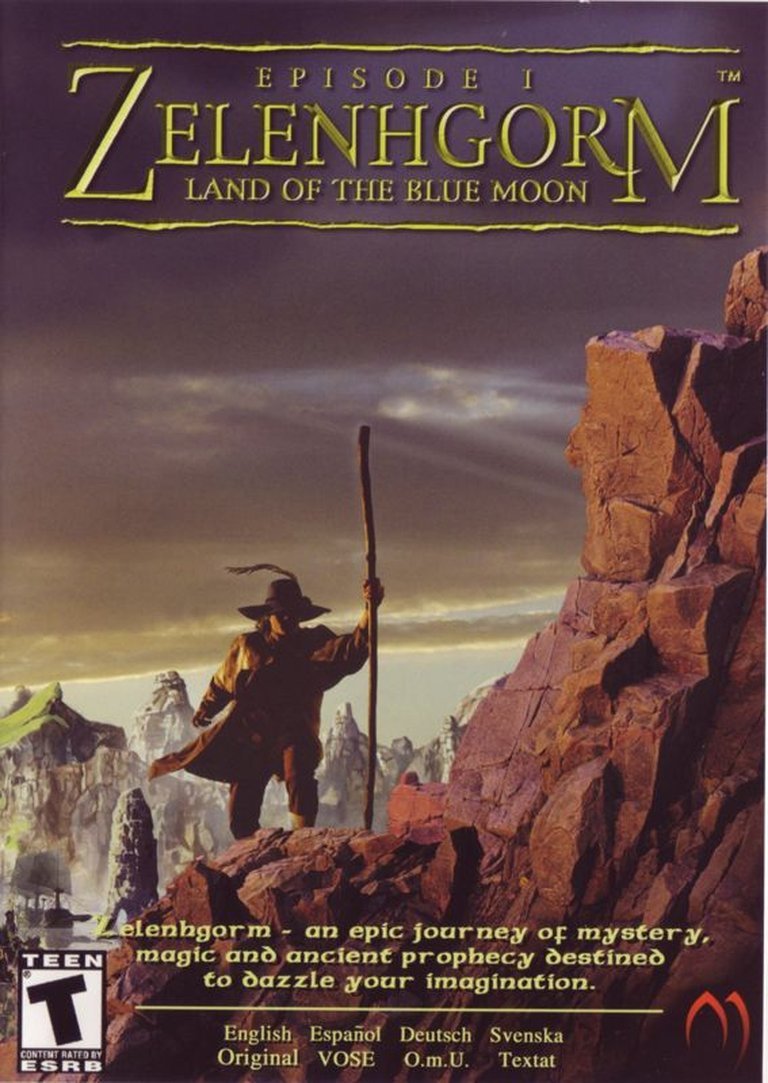
Zelenhgorm: Episode I – Land of the Blue Moon is a first-person fantasy adventure set on a Scandinavian-inspired continent where players control Arrikk Vaheirr, a left-handed inventor in a superstitious fishing village. When a mysterious ship grounds itself near his home and the dormant lighthouse reactivates, Arrikk must uncover the truth behind these events while navigating social prejudice, magical lore, and scientific puzzles. Featuring over 140 live actors and pre-rendered 360° environments, the point-and-click gameplay blends immersive exploration with puzzle-solving through object combination and interactive dialogue.
Gameplay Videos
Zelenhgorm: Episode I – Land of the Blue Moon Guides & Walkthroughs
Zelenhgorm: Episode I – Land of the Blue Moon Reviews & Reception
gameboomers.com : A blue-ribbon job here!
adventuregamers.com : Welcome to the strange and bizarre world of Zelenhgorm, where the actors are Swedish, the dialogue is in English and the characters are… oriental?
Zelenhgorm: Episode I – Land of the Blue Moon
In the annals of adventure gaming, few titles have sparked as much intrigue and disappointment as Zelenhgorm: Episode I – Land of the Blue Moon. Released in 2002 by Moloto Productions AB, this game was envisioned as the inaugural chapter in an ambitious twelve-part series, promising an epic journey through a richly detailed fantasy world. However, the series never materialized beyond this single episode, leaving players with a tantalizing taste of what could have been. This review aims to dissect the game’s development history, narrative depth, gameplay mechanics, and its enduring legacy in the gaming community.
Development History & Context
Studio and Creators’ Vision
Moloto Productions AB, a Swedish development studio, embarked on an ambitious project with Zelenhgorm. The creators envisioned a sprawling epic that would span multiple episodes, each delving deeper into the mysteries of the continent of Zelenhgorm. The game was conceived as a blend of fantasy, folklore, and early Scandinavian culture, with a strong emphasis on storytelling and exploration.
Technological Constraints
Zelenhgorm was developed during a transitional period in gaming technology. The use of full-motion video (FMV) and pre-rendered backgrounds was a bold choice, aiming to create a cinematic experience. However, this approach also came with significant technical challenges. The game required a robust system to run smoothly, and the reliance on CD-ROMs for storage led to frequent disc swapping, a major inconvenience for players.
Gaming Landscape
The early 2000s saw a decline in the popularity of FMV-based adventure games, which had dominated the genre in the 1990s. Titles like Phantasmagoria and The 7th Guest had paved the way, but the genre was waning. Zelenhgorm attempted to revive this style, but it struggled to find an audience in a market that was increasingly favoring 3D graphics and real-time rendering.
Narrative & Thematic Deep Dive
Plot
The story of Zelenhgorm revolves around Arrikk Vaheirr, a young inventor living in the fishing village of Senava. Arrikk’s life takes a dramatic turn when a mysterious giant ship runs aground near his home, and an ancient lighthouse begins to shine again. These events trigger a series of dreams and visions that compel Arrikk to unravel the mysteries of his heritage and the true nature of the ship.
Characters
Arrikk Vaheirr is the protagonist, portrayed as a left-handed inventor, a trait that marks him as an outcast in his superstitious community. His grandmother, Raga Fyrli, serves as a mentor and a source of wisdom, guiding Arrikk through his journey. The supporting cast includes a variety of villagers, each with their own quirks and secrets, contributing to the rich tapestry of the game’s world.
Dialogue and Themes
The dialogue in Zelenhgorm is a mix of English and Swedish, with actors delivering lines in various accents. This linguistic diversity adds a layer of authenticity but can sometimes be confusing. The game explores themes of superstition, folklore, and the struggle between tradition and progress. Arrikk’s journey is one of self-discovery and redemption, as he seeks to understand his place in a world that fears and misunderstands him.
Gameplay Mechanics & Systems
Core Gameplay Loops
Zelenhgorm is a first-person adventure game with a strong emphasis on exploration and puzzle-solving. Players navigate pre-rendered environments, interacting with characters and objects to progress the story. The game features a point-and-click interface, with all actions controlled via the mouse, except for the ESC key, which brings up the main menu.
Combat and Character Progression
Combat in Zelenhgorm is minimal and largely avoidable. Players can engage in fights with guards, but this usually leads to punishment, such as being placed in the stocks or drowned. Character progression is tied to the narrative, with Arrikk gaining new insights and abilities as he unravels the mysteries of the game world.
User Interface
The user interface is clean and intuitive, with a bottom-screen inventory window that can be opened and closed with right and left mouse clicks. Objects in the inventory can be combined to solve puzzles, adding a layer of complexity to the gameplay. The lack of a consistent cursor can be disconcerting, as it only appears when hovering over hotspots, but this design choice aims to enhance immersion.
World-Building, Art & Sound
Setting and Atmosphere
Zelenhgorm is a fantasy continent with earth-like qualities, drawing heavily from early Scandinavian culture. The game’s setting is rich in detail, with a blend of superstition, folklore, magic, and science. The village of Senava, where the story begins, is a bustling community with a distinct old-world charm.
Visual Direction
The visual style of Zelenhgorm is a blend of pre-rendered backgrounds and full-motion video. The environments are beautifully crafted, with 360-degree panoramic views that allow players to explore every nook and cranny. The use of live actors adds a layer of realism, but the graphics can feel dated by modern standards.
Sound Design
The soundtrack is original and well-orchestrated, though it doesn’t play continuously throughout the game. Special music cues are used to highlight important events, while sound effects are kept to a minimum, allowing the game’s atmosphere to shine. The voice acting is a mixed bag, with some standout performances but also noticeable inconsistencies in accents and delivery.
Reception & Legacy
Critical and Commercial Reception
Zelenhgorm received a mixed reception upon its release. Critics praised the game’s ambitious scope and beautiful visuals but criticized its short length and technical issues. The game’s Moby Score is 6.1, reflecting its polarizing reception. Players, too, had mixed feelings, appreciating the game’s potential but frustrated by its shortcomings.
Influence on Subsequent Games
Despite its flaws, Zelenhgorm left a mark on the adventure gaming genre. Its use of FMV and pre-rendered backgrounds was a bold experiment that, while not entirely successful, showcased the potential of cinematic storytelling in games. The game’s legacy lies in its ambition and the rich world it created, even if that world was never fully explored.
Conclusion
Zelenhgorm: Episode I – Land of the Blue Moon is a game of missed opportunities. Its ambitious scope and rich world-building are overshadowed by technical issues and a lack of follow-through. The game’s legacy is that of a promising start to an epic series that never was. For adventure gaming enthusiasts, Zelenhgorm serves as a reminder of a bygone era, a time when games dared to dream big and push the boundaries of what was possible. Despite its flaws, Zelenhgorm remains a fascinating artifact of gaming history, a testament to the power of storytelling and the enduring appeal of adventure.