
- Release Year: 2010
- Platforms: Android, Browser, iPad, iPhone, Macintosh, Nintendo Switch, Windows
- Publisher: Secret Exit Ltd.
- Developer: Secret Exit Ltd.
- Genre: Puzzle
- Perspective: Third-person
- Game Mode: Single-player
- Gameplay: Bomb mechanics, Painting, Rope wrapping
- Average Score: 82/100
Description
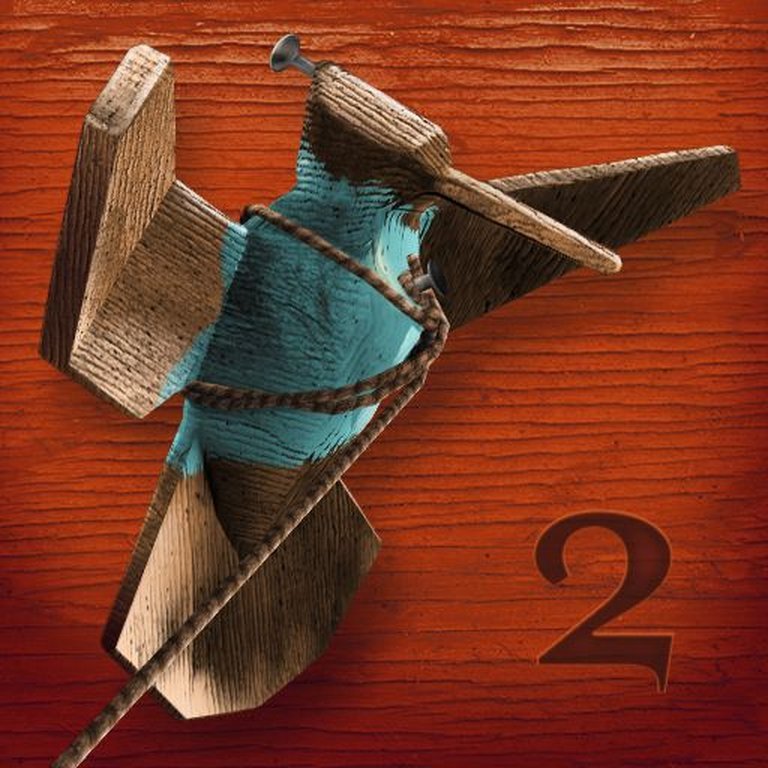
Zen Bound 2 is a meditative puzzle game where players wrap a rope around intricately shaped wooden blocks to spread paint and cover their surfaces completely. Building on the original, it introduces new elements like Nail Bombs and Rope Bombs, enhancing the serene, artistic gameplay with creative challenges across multiple platforms.
Gameplay Videos
Where to Buy Zen Bound 2
PC
Zen Bound 2 Free Download
Zen Bound 2 Cracks & Fixes
Zen Bound 2 Guides & Walkthroughs
Zen Bound 2 Reviews & Reception
metacritic.com (80/100): The relaxed atmosphere, wealth of ornaments, and near-perfect controls make Zen Bound 2 easy to recommend.
opencritic.com (85/100): Zen Bound 2 is the ideal way to experience the full capabilities of the Joy-Con’s gyro sensor.
Zen Bound 2: The Art of Quiet Mastery – A Comprehensive Review
Introduction: The Unassuming Masterpiece
In an industry perpetually chasing spectacle, graphical fidelity, and narrative complexity, Zen Bound 2 arrives as a profound and deliberate counterpoint. Released in 2010 by the Finnish indie studio Secret Exit, this sequel did not seek to redefine its genre with revolutionary mechanics or a cinematic story. Instead, it perfected a singular, meditative vision: the tactile, almost spiritual act of wrapping rope around wooden sculptures. Its legacy is not one of blockbuster sales or mainstream cultural saturation, but of critical reverence and a cult following that speaks to a deeper yearning in gaming—for experiences that prioritize mindfulness, aesthetic harmony, and elegant problem-solving over frenzy and repetition. This review will argue that Zen Bound 2 is a landmark title in the “slow gaming” movement, a masterclass in iterative design that expanded upon its near-flawless predecessor not through radical change, but through thoughtful refinement and subtle augmentation. It represents a pinnacle of how a game can be both a pure puzzle and a profound sensory experience, securing its place as a touchstone for contemplative game design.
Development History & Context: The Finnish Quiet Revolution
The Studio and Vision: Secret Exit Ltd., a small developer based in Helsinki, Finland, emerged from the vibrant but niche independent scene of the late 2000s. The core team, led by original game concept creator Mikko Mononen and a dedicated group of programmers (Jani Kahrama, Jetro Lauha, Mikko Lehtonen) and artists (Nea Kähkönen, Annariikka Lönnberg), operated with a philosophy that valued purity of experience over feature bloat. Their first game, Zen Bound (2009), was a surprise hit on iOS, celebrated for its unique gameplay and serene atmosphere. The sequel, Zen Bound 2, was not born from corporate mandate but from a desire to return to and expand that same creative wellspring, armed with slightly more resources and the confidence of a proven concept.
Technological and Market Context: The game’s initial release on iPad in April 2010 placed it at the forefront of the tablet gaming revolution. The iPad’s large, multi-touch capacitive screen was a revelation for tactile games, and Zen Bound 2 was arguably its perfect match. The development leveraged middleware like Irrlicht (Irrklang) for rendering and SDL for cross-platform compatibility, tools common in indie development for their flexibility and low overhead. The era was marked by the rise of “casual” and “core” as false binaries; Zen Bound 2 transcended this by offering a “core” puzzle experience with “casual” presentation. Its subsequent ports to Windows/Mac (2010), Android (2012), Browser (2014), and finally Nintendo Switch (2018) demonstrate a remarkably long lifecycle and adaptability. The Switch port, in particular, was a smart reinvention, utilizing the Joy-Con’s gyro and HD Rumble to recreate the tactile rotation of the sculptures, proving the core mechanic had a timelessness beyond touchscreens.
Creative Constraints as Strengths: The team’s small size and focused vision were not limitations but the very source of the game’s coherence. Every element—from the 3D art by Lauri Mäki and PixelCrust to the ambient soundtrack by electronic artist Ghost Monkey—served the central goal of creating a “down-tempo” experience. There were no demands for leaderboards, social features, or aggressive monetization (it was a straightforward premium purchase). This allowed for an obsessive attention to detail in the feel of the rope, the grain of the wood, and the subtle soundscape, elements that would have been diluted in a larger project.
Narrative & Thematic Deep Dive: The Story in the Silence
Zen Bound 2 famously has no traditional narrative. There are no characters, no dialogue, no plot. To dismiss this as a lack would be to fundamentally misunderstand the game’s artistic intent. Its “narrative” is one of pure experience, rhythm, and thematic resonance expressed entirely through gameplay, visuals, and audio.
The Sculptures as Text: The game presents the player with over 100 wooden sculptures. These are not random; they are carefully crafted forms—stylized animals (birds, turtles, owls), abstract geometric shapes, and symbolic objects like trees and lanterns. Each sculpture is a silent entity. The act of painting it is not one of Conquest, but of Connection and Completion. You are not destroying the object; you are adorning it, wrapping it in a cocoon of colored string. The glowing nails you must tie off to complete a level act as focal points, anchors in the process. This transforms the goal from a mechanical task (“paint 80%”) into a ritualistic one: you are binding and beautifying the form.
Themes of Mindfulness and Imperfection: The game is a digital mandala. The finite rope length forces careful planning and acceptance of imperfect coverage. You cannot achieve 100% perfect paint on every level without excessive rope, but the game rewards efficiency and elegance of path. This mirrors Zen principles of wabi-sabi (finding beauty in imperfection) and mindful focus. The challenge is not against a boss or a timer (in the main mode), but against one’s own impatience and lack of spatial foresight. The “Challenge Mode” with time limits explicitly contrasts this, creating a secondary, more stressful narrative of urgency, which only highlights the primary mode’s intended peace.
Thematic Evolution from the Original: Where the original Zen Bound established this vocabulary, Zen Bound 2 refines it. The new “Nail Bombs” and “Rope Bombs” are not just gameplay additions; they are thematic enhancers. The Nail Bomb—a pin that, when hooked, explodes paint in a radius—introduces the concept of catalytic action. A single, precise touch yields a sprawling reward, suggesting the power of a small, mindful intervention. The Rope Bomb—a floating paint blob that colors upon contact—is a gift, a moment of grace that can solve troublesome nooks. These elements deepen the game’s philosophy: sometimes progress comes from strategic patience and using the tools provided, not from brute-force rope application.
World-Building Through Absence: The “world” is a void—a soft, out-of-focus, neutral background that does nothing to distract. This is a radical design choice. There is no “level select screen” with a story; there is a simple, branching tree-like structure of puzzles. The world is the tactile sensation of the rope, the visual texture of the wood, the sound of the creak. It builds its atmosphere through what it excludes: no scores for speed, no penalties for mistakes, no intrusive UI. The world is the headspace you enter when you play.
Gameplay Mechanics & Systems: Elegance in the Grasp
Core Loop Deconstructed: The loop is beautifully simple: 1) Observe the sculpture, its shape, protruding nails, and available rope length. 2) Rotate the object using intuitive controls. 3) “Paint” by dragging the rope tip across surfaces. 4) Strategically use the rope’s finite length to cover the required percentage (minimum, medium, maximum). 5) Tie off on the designated nail. The genius lies in the translation of this simple act into deep spatial reasoning.
Control Schemes as a Design Bible: The control system is the game’s most critical innovation and its greatest challenge in porting.
* iOS/Touch (Original Intent): The player uses one or two fingers to directly rotate the sculpture on the screen. This creates a 1:1 tactile relationship—you are literally turning the object in your hands. The multi-touch implementation was praised as “near-perfect” (IGN) and a benchmark for tactile control.
* PC/Mac (Mouse): The port ingeniously mapped rotation to two mouse buttons: left-click drag rotates on one axis, right-click drag on the other. While functional, reviews noted it could feel “fussy” (IGN PC) compared to the fluidity of touch, lacking the direct physical connection.
* Nintendo Switch (Motion): The 2018 port was a revelation, using the Joy-Con’s gyro to rotate the controller itself to rotate the on-screen sculpture, with HD Rumble providing subtle haptic feedback as the rope tightened or hit obstacles. As OpenCritic’s top critic noted, this made it “the ideal way to experience the full capabilities of the Joy-Con’s gyro sensor,” potentially even surpassing the original iPad controls in physical immersion.
Puzzle Progression and the “Bomb” Mechanics: The 100+ levels are divided into “chapters” or “trees,” often with thematic groupings (all birds, all abstracts). The difficulty curve is famously smooth yet substantial. Early levels teach rope management on simple shapes. Mid-game introduces complex concavities and multiple disconnected objects that must be wrapped with a single rope, demanding intricate weaving. The introduction of Nail Bombs and Rope Bombs in Zen Bound 2 is not a gimmick; it’s a necessary evolution. They provide new strategic tools:
* Nail Bombs reward exploration and precision hooking, offering a “area-of-effect” paint solution that can be a game-changer on intricate sculptures.
* Rope Bombs offer relief and tactical options, allowing you to paint hard-to-reach spots without wasting precious rope length.
These elements prevent the gameplay from becoming purely about rope optimization and reintroduce moments of discovery and “aha!” problem-solving.
UI and Feedback: The UI is minimalist to the point of invisibility. The rope length is indicated by a subtle meter. The paint coverage percentage is a clear number. The glowing nail is the only explicit objective marker. Feedback is entirely diegetic: the thump of the rope on wood, the creak as tension increases, the satisfying snap if you pull too hard and the rope recoils (a gentle failure state), and the glorious splash when paint spreads. There is no intrusive music during play; the soundtrack is ambient beds that swell and recede, never dictating emotion.
Innovation vs. Iteration: The most common critical refrain was that Zen Bound 2 was “just more of the same” (IGN, Eurogamer). This is both a fair critique and a profound compliment. The innovation was in the curation and refinement: more sculptures, higher polygon counts and texture detail for the HD/PC era, the introduction of the bomb mechanics, and crucially, the expansion of the original’s levels with updated visuals. The game’s bold statement was that its core mechanic was so perfect it required no grand overhaul. This philosophy of “sequel as definitive edition” is rare and, in this case, successful.
World-Building, Art & Sound: The Sensory Embrace
Visual Direction: Tactile Minimalism: The art style is a masterclass in making the digital feel physical. The wooden sculptures are not smooth, plastic-looking models; they are grainy, dusty, and weighty. The paint application is not a simple texture swap; it spreads organically from the rope’s contact point, with a slight transparency and bleed that mimics real stain. Shadows are soft, backgrounds are non-distracting blurred gradients or simple nature scenes (a leaf, a branch). This “tactile” aesthetic, as repeatedly noted in reviews and the official site, is fundamental. You are not manipulating an icon; you are interacting with a virtual object that feels like it has mass and texture. The color palette is subdued, earthy, and calming, avoiding visual noise.
Sound Design: The Invisible Hand: The soundtrack by Ghost Monkey (45 minutes of original music) is not a collection of tunes but a continuous, enveloping soundscape. It’s downtempo, ambient electronica with organic_samples—the creak of rope, distant wind, subtle chimes. It never imposes; it supports. More important are the in-game sound effects, which are the feedback system. The variable-pitch creak of the rope under tension tells you how tight you are pulling. The thwack of rope hitting a concave surface. The sharp crack and recoil of a snapped rope. The wet splatter of paint from a bomb. These sounds are crisp, satisfying, and carry immense informational weight. The game is arguably as much an auditory experience as a visual one.
Atmosphere as the Primary Goal: All these systems converge to create a singular atmosphere: one of profound calm and focused attention. The combination of finite rope (a resource to manage), beautiful but challenging forms, and the sensory feedback creates a flow state. Frustrations of daily life, as Eurogamer noted, “will just melt away in a pleasant haze.” This is not a game you Play; it is a game you Enter. The world-building is the construction of this headspace, and it is impeccably executed.
Reception & Legacy: A Cult Classic’s Journey
Contemporary Reception (2010-2012): Zen Bound 2 was met with widespread critical acclaim, though slightly more muted than its predecessor’s near-universal perfect scores. Its Metacritic/Moby scores hover in the high 80s (87% on Moby, 80 on Metacritic iOS). Praise was consistent: ” contemplative” (Pocket Gamer), “near-perfect controls” (IGN), “beautifully realised” (Abby’s Gaming Blog). The primary criticism, echoed from TouchGen to Slide to Play, was its lack of substantial innovation. It was seen as an superb expansion pack, but one that risked feeling like “rehashed content” if you had mastery of the original. The PC port, while competent, was noted to lose some of the magic of the touch interface.
Player Reception and the “Cult” Status: This divergence is telling. While critics celebrated its artistry, player scores on platforms like MobyGames and early Steam data were middling (around 2.8/5). This speaks to a fundamental tension: Zen Bound 2 asks for a specific mindset. As 148apps astutely observed, it sits “in between something passive… and something active,” and that liminal space is not for everyone. Its player base is devoted but niche—those seeking a “chill-out” experience (Jeuxvideo.com) or a “meditative pace” (Abby’s Blog). Its later inclusion in bundles like The Humble Bundle for Android 2 introduced it to a wider, value-conscious audience, but its core identity remained that of a connoisseur’s puzzle.
Legacy and Influence:
1. Defining the “Zen Game”: Alongside titles like flOw or Journey, Zen Bound 2 became a prime example of games designed for relaxation and mindfulness. It demonstrated that “casual” did not mean “shallow,” and that profound engagement could come from simplicity and beauty, not complexity and violence.
2. A Benchmark for Tactile Design: Its control schemes, especially the Switch port’s motion controls, are frequently cited in discussions of how to translate tactile experiences to different interfaces. It showed that the core feeling of “wrapping” could survive and even thrive across multiple platforms.
3. The Perils and Promise of Iteration: It stands as a case study in a “safe” sequel done right. By refusing to “fix” what wasn’t broken and instead focusing on polish and subtle additions, it preserved the original’s magic. Conversely, its reception also shows the market’s expectation for more obvious “new” features in sequels.
4. A Curio of Platform Abandonment: Its disappearance from the App Store (like its predecessor) is a sad footnote in mobile gaming preservation. Yet, its continued availability on Steam and the Nintendo eShop, coupled with a “Very Positive” Steam rating (86% from ~580 reviews as of 2026), proves its durability. The Switch port, in particular, garnered strong reviews (8.5/10 from Nintendo World Report) and found a new audience on a platform ideal for its control scheme.
Conclusion: A Definitive Verdict on a Quiet Giant
Zen Bound 2 is not a game that announces itself with a cinematic trailer or a gameplay loop designed for viral clips. Its greatness is quiet, cumulative, and deeply personal. It is a game you discover when you are tired, when you need to think without pressure, when you want to feel the heft of a virtual object in your mind’s hands.
Its historical significance lies in its unwavering commitment to a singular, anti-trend vision. In 2010, as mobile games raced toward freemium and social hooks, Zen Bound 2 was a premium product of pure, unadulterated design integrity. It proved that a game could be about nothing but the experience of its own mechanics and still be considered a work of art. The addition of Nail Bombs and Rope Bombs was not a desperate grab for novelty, but a careful expansion of the puzzle language, providing new tools for an already deep toolbox.
Visually, it is a lesson in aesthetic cohesion. Aurally, it is a masterclass in diegetic sound. Mechanically, it is a seemingly simple system that reveals near-infinite spatial complexity. It asks for your attention, not your adrenaline.
The final verdict is this: Zen Bound 2 is an essential, foundational title for anyone interested in the expressive potential of games as meditative or experiential media. It may not be for everyone, and its lack of a traditional “gamey” hook will leave some cold. But for those willing to engage with it on its own terms, it offers something rare and valuable: a perfect storm of gameplay, audiovisual design, and thematic intent that coalesces into a state of interactive tranquility. It is not the most important game of its era, but it is one of the most perfectly realized. In a medium often obsessed with shouting, Zen Bound 2 is a masterpiece of the whisper—and its message of quiet, tactile problem-solving has never been more relevant.