
- Release Year: 2005
- Platforms: Windows
- Publisher: KryptKoderz
- Developer: KryptKoderz
- Genre: Action
- Perspective: Top-down
- Game Mode: Single-player
- Gameplay: Armor upgrade, Experience points, Shooter, Weapon upgrade
- Setting: Horror, Zombies
- Average Score: 67/100
Description
Zombietron 1 – Cemetery Guy is a top-down action shooter where players take on the role of Lord Belial, a doomed warrior cursed to fight endless hordes of monsters in a desperate bid for survival. Set across 15 randomly generated levels, the game features 28 types of enemies, a cartoonish art style, and an RPG-like progression system that allows players to upgrade their character’s stats, weapons, and armor. Inspired by classics like Robotron 2084, this shareware title blends fast-paced combat with a darkly humorous premise, as the protagonist embraces his fate by taking down as many foes as possible before his inevitable demise.
Zombietron 1 – Cemetery Guy Guides & Walkthroughs
Zombietron 1 – Cemetery Guy Reviews & Reception
retro-replay.com : Zombietron 1 – Cemetery Guy delivers pure, old-school shooter thrills in crisp top-down 3D.
metacritic.com (67/100): A really nice surprise for me. I enjoy platformer games with nice graphics like Oddworld New and Tasty or Hollow Knight, and there are too few of them!
Zombietron 1 – Cemetery Guy Cheats & Codes
Hacked Version
Press the following keys during gameplay.
| Code | Effect |
|---|---|
| Y | Add money |
| U | Toggle invulnerability |
| I | Toggle infinite ammo clips |
| O | Toggle rapid fire |
Zombietron 1 – Cemetery Guy: A Retrospective on a Forgotten Gem of the Mid-2000s
Introduction: The Last Stand of Lord Belial
In the vast, often overlooked annals of early 2000s indie gaming, Zombietron 1 – Cemetery Guy stands as a curious artifact—a game that embraced its limitations and carved out a niche for itself in the crowded shooter landscape. Released in 2005 by the obscure studio KryptKoderz, this top-down horror shooter is a study in minimalism, blending arcade-style action with a grim, nihilistic narrative. It’s a game that doesn’t just ask you to survive; it asks you to embrace your inevitable doom and take as many monsters with you as possible.
At its core, Zombietron 1 is a love letter to the golden age of arcade shooters, drawing direct inspiration from classics like Robotron 2084. Yet, it’s also a product of its time, reflecting the early 2000s indie scene’s fascination with shareware models, procedural generation, and the burgeoning horror aesthetic. This review will dissect the game’s development, narrative, mechanics, and legacy, arguing that while Zombietron 1 may not be a masterpiece, it is a fascinating time capsule of an era when indie developers were just beginning to explore the possibilities of digital distribution and niche gameplay experiences.
Development History & Context: The Birth of a Shareware Shooter
The Studio Behind the Game: KryptKoderz
KryptKoderz, the studio behind Zombietron 1 – Cemetery Guy, remains one of the more enigmatic developers of the mid-2000s indie scene. Little is known about the team behind the name, but their output suggests a small, passionate group of developers working within the constraints of early 2000s technology. The studio’s focus on shareware distribution—where players could download a portion of the game for free and pay to unlock the full experience—was a common business model at the time, particularly for indie developers lacking the resources for traditional retail distribution.
The shareware model was particularly prevalent in the early 2000s, as digital distribution platforms like Steam were still in their infancy. Games like Zombietron 1 relied on word-of-mouth, niche gaming forums, and shareware directories to find an audience. This approach allowed KryptKoderz to bypass the gatekeepers of the gaming industry, but it also meant that Zombietron 1 remained relatively obscure, never achieving the mainstream recognition of its contemporaries.
Technological Constraints and Design Philosophy
Zombietron 1 was developed at a time when indie games were often limited by the hardware of the average PC. The game’s system requirements—an Intel Pentium III processor, 256 MB of RAM, and 64 MB of VRAM—reflect the modest specifications of mid-2000s computers. These constraints shaped the game’s design in several key ways:
- Top-Down Perspective: The choice of a top-down 3D perspective was both a nod to classic arcade shooters and a practical decision. This viewpoint allowed the developers to render large numbers of enemies on-screen without overwhelming the hardware, a necessity given the game’s focus on hordes of monsters.
- Procedural Level Design: The game’s 15 levels are “randomly modified,” a feature that added replayability without requiring the developers to handcraft dozens of unique environments. This procedural approach was a common solution for indie developers looking to maximize content with limited resources.
- Cartoonish Aesthetic: The game’s “slight cartoon-like edge” was likely a deliberate stylistic choice to mask the limitations of low-polygon models and simple textures. By embracing a more abstract, exaggerated art style, KryptKoderz could create a visually distinct game that didn’t rely on cutting-edge graphics.
The Gaming Landscape of 2005
To understand Zombietron 1’s place in gaming history, it’s essential to consider the broader context of 2005. This was a transitional year for the industry, marked by the rise of digital distribution, the decline of shareware, and the growing influence of indie developers.
- The Rise of Digital Distribution: While Steam had launched in 2003, it wasn’t until the mid-2000s that digital distribution began to gain significant traction. Many indie developers, including KryptKoderz, still relied on shareware models or direct downloads from their websites.
- The Indie Renaissance: Games like Cave Story (2004) and Overture (2005) were beginning to demonstrate the potential of indie development, but the indie scene was still fragmented. Zombietron 1 emerged during this period of experimentation, offering a unique blend of arcade action and horror that set it apart from more traditional indie fare.
- The Horror Boom: The early 2000s saw a resurgence of interest in horror games, driven in part by the success of titles like Resident Evil 4 (2005) and F.E.A.R. (2005). Zombietron 1 tapped into this trend, albeit in a more simplistic and arcade-like fashion.
Inspirations and Influences
The developers of Zombietron 1 have cited Robotron 2084 (1982) as a primary inspiration, and the influence is evident in the game’s twin-stick shooter mechanics and relentless enemy waves. However, Zombietron 1 also draws from other sources:
– Survival Horror: The game’s emphasis on desperate, last-stand combat aligns it with survival horror tropes, even if its top-down perspective and arcade mechanics set it apart from more traditional entries in the genre.
– Roguelike Elements: The procedural level design and permadeath mechanics (implied by the narrative’s focus on inevitability) foreshadow the roguelike revival that would gain momentum in the late 2000s and early 2010s.
– Nihilistic Narratives: The story of Lord Belial, a doomed warrior fighting against insurmountable odds, reflects a broader trend in early 2000s gaming toward darker, more existential themes. Games like Max Payne 2 (2003) and Half-Life 2 (2004) explored similar ideas of despair and defiance, albeit with far greater narrative depth.
Narrative & Thematic Deep Dive: The Tragedy of Lord Belial
The Premise: A Hero’s Last Stand
Zombietron 1 – Cemetery Guy opens with a premise that is both simple and compelling: the player controls Lord Belial, a warrior condemned by an evil demon to an eternity of combat. Knowing that death is inevitable, Belial chooses to embrace his fate, fighting not for survival but for vengeance. The game’s narrative is minimalist, delivered through brief interludes between levels rather than elaborate cutscenes or dialogue trees. This approach keeps the focus squarely on the gameplay while still providing enough context to make Belial’s struggle feel meaningful.
The narrative’s strength lies in its thematic coherence. Every aspect of the game—from the procedural levels to the upgrade system—reinforces the idea that Belial is fighting a losing battle. The randomness of the levels mirrors the unpredictability of his fate, while the ability to upgrade weapons and armor suggests a desperate attempt to delay the inevitable. This thematic consistency is one of the game’s most impressive achievements, particularly given its modest scope.
Characters and Dialogue: The Silence of the Doomed
Zombietron 1 features a cast of characters that is, by design, sparse. Lord Belial is the sole playable character, and his interactions with the world are limited to brief, cryptic messages and the occasional taunt from unseen demonic forces. The lack of traditional dialogue or character development is a deliberate choice, one that serves to heighten the game’s atmosphere of isolation and despair.
The few narrative beats that do exist are delivered through environmental storytelling. Cryptic inscriptions on tombstones, spectral whispers, and fleeting visions of Belial’s past all contribute to a sense of a man haunted by his own mortality. These moments are subtle but effective, providing just enough backstory to make the player invested in Belial’s struggle without distracting from the core gameplay.
Themes: Despair, Defiance, and the Illusion of Control
At its heart, Zombietron 1 is a meditation on the human condition, exploring themes of despair, defiance, and the illusion of control. The game’s central premise—that Belial is doomed to die but chooses to fight anyway—is a powerful metaphor for the human struggle against mortality. This theme is reinforced by several key mechanics:
– Permadeath and Progression: While the game allows players to upgrade Belial’s stats and equipment, these upgrades are ultimately temporary. Each death resets the player’s progress, reinforcing the idea that Belial’s fate is sealed.
– Endless Hordes: The game’s relentless enemy waves serve as a constant reminder of the futility of Belial’s struggle. No matter how many monsters he slays, more will always take their place.
– Randomness and Unpredictability: The procedural level design ensures that no two playthroughs are alike, mirroring the unpredictability of life and death.
These themes are not unique to Zombietron 1, but the game’s minimalist approach allows them to resonate more deeply than they might in a more narrative-driven title. By stripping away unnecessary complexity, KryptKoderz created a game that is both mechanically satisfying and thematically rich.
The Horror of the Cemetery
The game’s setting—a sprawling, procedurally generated cemetery—is more than just a backdrop; it’s a character in its own right. The cemetery is a liminal space, a place where the living and the dead coexist in uneasy tension. This setting is perfectly suited to the game’s themes, as it reinforces the idea that Belial is already dead, fighting in a realm that exists between life and the afterlife.
The cemetery’s design also plays a crucial role in the gameplay. The maze-like layout of tombstones, mausoleums, and foggy clearings forces players to constantly navigate tight spaces, adding a layer of tactical depth to the combat. The randomness of the level design ensures that players can never fully master the environment, further emphasizing the game’s themes of unpredictability and chaos.
Gameplay Mechanics & Systems: The Art of the Last Stand
Core Gameplay Loop: Survival Through Slaughter
Zombietron 1’s gameplay is built around a simple but addictive core loop: survive waves of enemies, earn experience points, and upgrade your character. This loop is reminiscent of classic arcade shooters, but with a few key twists that set it apart.
- Combat: The game’s combat is fast-paced and chaotic, with players facing off against 28 different types of enemies, each with unique behaviors and attack patterns. The top-down perspective allows for precise movement and aiming, but the sheer number of enemies on-screen can quickly become overwhelming.
- Progression: As players defeat enemies, they earn experience points that can be used to upgrade Belial’s stats (health, damage, reload speed) or purchase new weapons and armor. This progression system adds a layer of strategy to the gameplay, as players must decide whether to invest in offense, defense, or utility.
- Boss Encounters: Periodically, players will face off against boss enemies, which require more tactical thinking than the standard fodder. These encounters often involve managing multiple threats at once, such as weaker minions that can flank the player while the boss unleashes devastating attacks.
Weapon and Armor Systems: Customizing Your Doom
One of the game’s most engaging features is its weapon and armor upgrade system. Players can purchase and upgrade a variety of firearms, melee weapons, and defensive gear, each with its own strengths and weaknesses. This system encourages experimentation, as players can tailor their loadout to suit their playstyle.
- Weapons: The game features a mix of ranged and melee weapons, from shotguns and assault rifles to swords and axes. Each weapon has a distinct feel, with different firing rates, damage outputs, and reload times.
- Armor: Armor upgrades provide passive bonuses, such as increased health or damage resistance. These upgrades are essential for surviving the later levels, where enemy hordes become increasingly deadly.
- Upgrades: The ability to upgrade weapons and armor adds a sense of progression, but it also reinforces the game’s themes of futility. No matter how powerful Belial becomes, the enemies will always adapt, ensuring that the struggle remains challenging.
Level Design: The Randomness of Fate
The game’s 15 levels are procedurally generated, with random modifications that ensure no two playthroughs are alike. This randomness is both a strength and a weakness:
– Strengths: The procedural design adds replayability, as players can never fully memorize the layout of a level. It also reinforces the game’s themes of unpredictability, as players must constantly adapt to new challenges.
– Weaknesses: The randomness can sometimes lead to frustrating situations, such as levels that are overly cramped or enemies that spawn in unfair positions. Additionally, the lack of handcrafted set pieces means that the game occasionally feels repetitive.
UI and Controls: Simplicity in the Face of Chaos
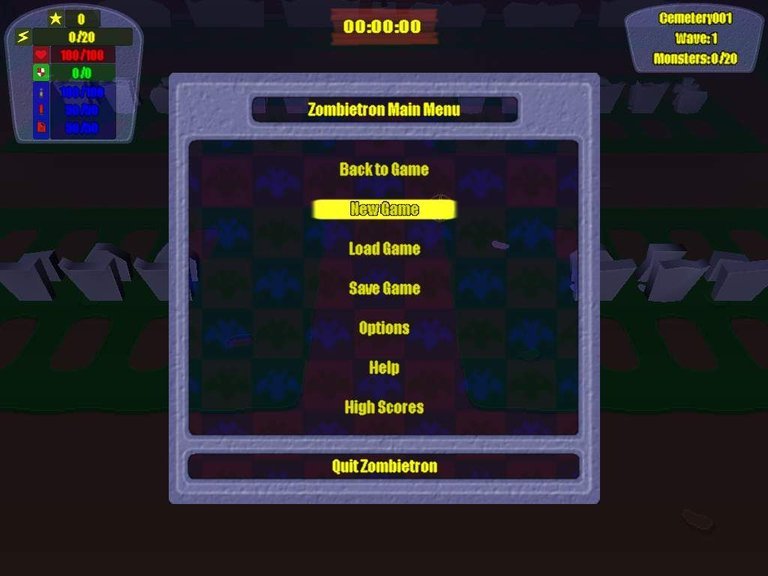
The game’s UI is minimalist, with a focus on clarity and functionality. Health, ammo, and experience points are displayed prominently, ensuring that players can quickly assess their status in the heat of battle. The controls are similarly straightforward, with keyboard and mouse inputs that are easy to learn but difficult to master.
One of the game’s few shortcomings is its lack of controller support, a limitation that reflects the technological constraints of the era. While the keyboard and mouse controls are responsive, they can feel clunky during particularly intense moments, such as boss fights or large enemy waves.
Innovations and Flaws: A Mixed Legacy
Zombietron 1 is not without its flaws, but its innovations are worth noting:
– Innovations:
– Procedural Level Design: While not unique to Zombietron 1, the game’s approach to procedural generation was ahead of its time, particularly for an indie title.
– Narrative Integration: The game’s themes are seamlessly integrated into its mechanics, creating a cohesive experience that is greater than the sum of its parts.
– Upgrade System: The ability to customize Belial’s loadout adds depth to the gameplay, encouraging players to experiment with different strategies.
– Flaws:
– Repetition: The game’s randomness can sometimes lead to repetitive gameplay, particularly in the later levels.
– Lack of Polish: The game’s minimalist aesthetic and simple mechanics are part of its charm, but they also mean that it lacks the polish of more mainstream titles.
– Limited Replayability: While the procedural design adds replayability, the game’s lack of a true ending or narrative resolution can make it feel incomplete.
World-Building, Art & Sound: Crafting a Cemetery of Despair
Setting and Atmosphere: A Graveyard of the Damned
Zombietron 1’s setting—a sprawling, procedurally generated cemetery—is one of its most distinctive features. The cemetery is not just a backdrop but a character in its own right, a place where the living and the dead coexist in uneasy tension. The game’s art style, which blends cartoonish exaggeration with gritty realism, perfectly captures the eerie, oppressive atmosphere of the setting.
The cemetery’s design is both functional and thematic. The maze-like layout of tombstones, mausoleums, and foggy clearings forces players to navigate tight spaces, adding a layer of tactical depth to the combat. The randomness of the level design ensures that players can never fully master the environment, further emphasizing the game’s themes of unpredictability and chaos.
Visual Design: The Beauty of Simplicity
The game’s visual design is a study in minimalism, with a focus on clarity and readability. Character models are chunky and exaggerated, allowing players to instantly recognize different enemy types even in the heat of battle. The textures are simple but effective, with a muted color palette that reinforces the game’s grim tone.
One of the most impressive aspects of the visual design is the lighting. Swaying torches cast flickering shadows across tombstones, while spectral glows emanate from haunted crypts, lending each environment a distinct atmosphere. These subtle effects create a cohesive world that complements the undead theme, even if the game’s technical limitations prevent it from achieving true photorealism.
Sound Design: The Symphony of the Damned
The game’s sound design is equally minimalist, with a focus on atmospheric immersion. The soundtrack is sparse, consisting mostly of ambient noises—howling wind, creaking gates, and the distant moans of the undead. These sounds are effective in creating a sense of dread, but they can also feel repetitive over time.
The game’s sound effects are more varied, with distinct audio cues for different enemy types, weapons, and environmental interactions. These cues are essential for gameplay, as they allow players to identify threats even when they’re off-screen. The lack of voice acting is a deliberate choice, one that reinforces the game’s themes of isolation and despair.
The Role of Randomness in World-Building
The game’s procedural level design plays a crucial role in its world-building. By randomly modifying levels, the developers ensure that no two playthroughs are alike, creating a sense of unpredictability that mirrors the game’s themes. This randomness also adds replayability, as players can never fully master the environment.
However, the procedural design is not without its flaws. The lack of handcrafted set pieces means that the game occasionally feels repetitive, particularly in the later levels. Additionally, the randomness can sometimes lead to frustrating situations, such as levels that are overly cramped or enemies that spawn in unfair positions.
Reception & Legacy: The Forgotten Gem of the Indie Scene
Critical and Commercial Reception: A Niche Success
Zombietron 1 – Cemetery Guy was released to little fanfare in 2005, a time when indie games were still struggling to find a mainstream audience. The game’s shareware distribution model and lack of marketing meant that it remained relatively obscure, never achieving the commercial success of more high-profile titles.
Critical reception was similarly muted. While the game was praised for its innovative mechanics and atmospheric setting, it was also criticized for its repetitive gameplay and lack of polish. Many reviewers noted that the game’s minimalist approach, while effective in creating a cohesive experience, also meant that it lacked the depth and complexity of more mainstream titles.
The Evolution of Its Reputation
In the years since its release, Zombietron 1 has gained a small but dedicated following among fans of retro shooters and horror games. Its reputation has evolved from that of a forgotten indie title to a cult classic, a game that is appreciated for its unique blend of arcade action and existential themes.
This shift in reputation is due in part to the growing interest in retro gaming and the preservation of obscure titles. Websites like MobyGames and Retro Replay have played a crucial role in documenting Zombietron 1’s history, ensuring that it is not lost to time. Additionally, the game’s themes of despair and defiance have resonated with a new generation of players, who see in Belial’s struggle a reflection of their own struggles in an increasingly chaotic world.
Influence on Subsequent Games
While Zombietron 1 may not have directly inspired any major titles, its influence can be seen in the broader trends of indie game development. The game’s blend of procedural generation, minimalist storytelling, and arcade-style action foreshadowed the rise of roguelike shooters like The Binding of Isaac (2011) and Enter the Gungeon (2016).
Additionally, the game’s focus on existential themes and nihilistic narratives has become increasingly common in indie games, particularly in the horror genre. Titles like Darkwood (2017) and Signalis (2022) explore similar ideas of despair and defiance, albeit with more complex narratives and deeper mechanical systems.
The Legacy of KryptKoderz
KryptKoderz’s legacy is somewhat harder to pin down. The studio’s output was limited, and Zombietron 1 remains its most well-known title. However, the game’s success (however modest) demonstrates the potential of indie development in the mid-2000s, a time when digital distribution was still in its infancy.
The studio’s focus on shareware distribution and niche gameplay experiences also reflects a broader trend in indie game development. By bypassing traditional retail channels, KryptKoderz was able to create a game that was unapologetically weird and experimental, a quality that has become increasingly rare in the modern gaming landscape.
Conclusion: A Game Worth Remembering
Zombietron 1 – Cemetery Guy is not a perfect game. Its repetitive gameplay, lack of polish, and minimalist narrative may not appeal to everyone. But what it lacks in depth, it makes up for in atmosphere, innovation, and thematic coherence. It is a game that embraces its limitations and turns them into strengths, creating an experience that is both mechanically satisfying and emotionally resonant.
In the grand tapestry of video game history, Zombietron 1 may be a minor thread, but it is one worth pulling. The game’s blend of arcade action, horror themes, and existential storytelling makes it a unique and compelling experience, one that deserves to be remembered alongside the more high-profile titles of its era.
For fans of retro shooters, horror games, or existential narratives, Zombietron 1 – Cemetery Guy is a hidden gem waiting to be discovered. It may not be a masterpiece, but it is a testament to the power of indie development and the enduring appeal of games that dare to be different.
Final Verdict: 7.5/10 – A flawed but fascinating cult classic that deserves a place in the annals of indie gaming history.