
- Release Year: 2008
- Platforms: Windows
- Publisher: Paralela
- Developer: Paralela
- Genre: Action
- Perspective: Isometric
- Game Mode: Single-player
- Gameplay: Arcade, Bomb-throwing, Power-ups
- Setting: Space Arena
- Average Score: 55/100
Description
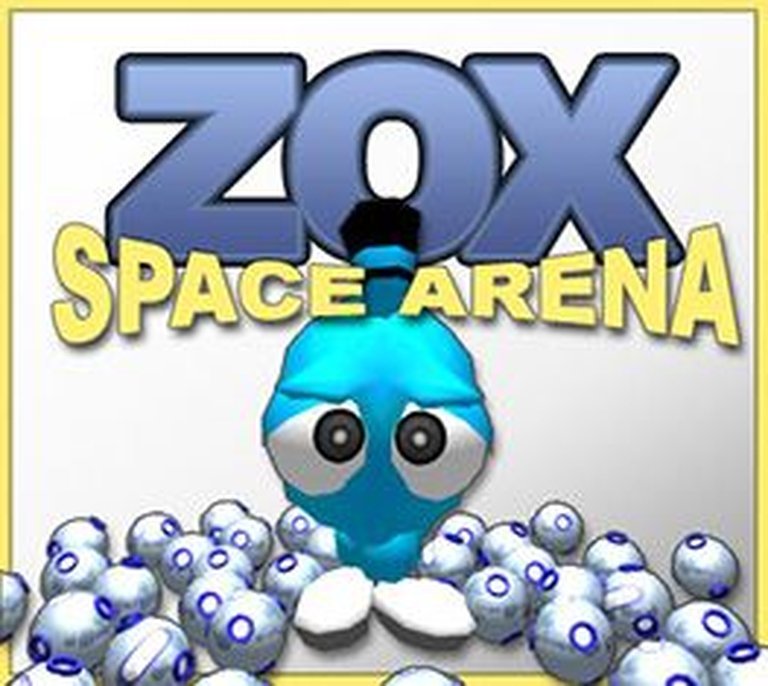
ZoX Universe: Space Arena is a fast-paced, isometric arcade game released in 2008, designed for group play. Players navigate a 3D arena, reminiscent of classic games like Bomberman or Poy Poy, where they must strategically place bombs, avoid obstacles, and collect power-ups while engaging in quick, competitive action. The game supports 2 to 5 players, allowing for customizable settings such as the number of obstacles and sound control.
ZoX Universe: Space Arena Reviews & Reception
retro-replay.com : ZoX Universe: Space Arena delivers a straightforward yet addictive multiplayer experience that slots neatly into the party game roster.
vgtimes.com (55/100): ZoX Universe: Space Arena is an arcade game with an isometric view with a touch of action from the masters from the Paralela studio.
ZoX Universe: Space Arena: A Microcosm of Chaotic Fun in a Forgotten Arena
Introduction
In an era dominated by sprawling open worlds and cinematic storytelling, ZoX Universe: Space Arena (2008) stands as a defiantly small-scale relic—a multiplayer-focused bomb-laying brawler that channels the spirit of Bomberman and Poy Poy into a messy, vibrant interstellar skirmish. Developed by Serbian studio Paralela, this forgotten gem (and its barely noticed sequel) offers a distilled dose of couch-competitive mayhem, wrapped in a whimsical alien aesthetic. While its aspirations were modest and its legacy fleeting, Space Arena captures a quintessential truth: sometimes, all you need are friends, explosions, and a timer counting down to the next round.
Development History & Context
Studio Vision & Constraints
Paralela, a little-documented Serbian developer, envisioned ZoX Universe: Space Arena as a local multiplayer party game for up to five players—a logistical challenge in 2008, when online connectivity was becoming standard. The decision to prioritize offline play reflected both resource limitations (no need for costly netcode) and a nostalgic nod to ’90s-era couch competition. The game’s “3D Bomberman” pitch was pragmatic: leverage simple mechanics and a low-poly art style to minimize development complexity.
The 2008 Gaming Landscape
Released on January 8, 2008, Space Arena arrived alongside titans like Grand Theft Auto IV and LittleBigPlanet. Its niche appeal—local multiplayer chaos—struggled to compete in a market increasingly focused on narrative-driven single-player experiences and online ecosystems. The isometric perspective and arcade leanings felt decidedly retro, a throwback to early-2000s PC titles. Yet, for small groups seeking uncomplicated fun, Space Arena delivered a budget-friendly alternative.
Narrative & Thematic Deep Dive
Lore Lite
Space Arena sidesteps narrative depth in favor of playful flavor text. The ZoX creatures—colorful, minimalist aliens—hail from undefined star systems, implied to be drawn to the arena for zero-gravity combat. Unlockable character bios and themed stages (e.g., “metal” or “ice” arenas) suggest a broader universe, but these details serve as seasoning rather than substance. As Retro Replay’s review notes, the story functions as “light seasoning,” adding just enough context to justify the carnage.
Absent Character, Emergent Drama
The lack of defined characters shifts focus to player-driven rivalries. Matches become micro-stories: alliances form, betrayals erupt, and underdogs clutch victory with a well-timed bazooka blast. The game’s thematic void becomes a canvas for players’ improvisations.
Gameplay Mechanics & Systems
Core Loop: Plant, Evade, Detonate
The gameplay hinges on a familiar formula:
1. Match Setup: Choose player count (2–5), select a ZoX character, and customize arena density.
2. Combat: Drop bombs to destroy destructible blocks, trap opponents, and collect power-ups (jetpacks, shields, machine guns).
3. Victory: Be the last ZoX standing.
Innovations & Flaws
– Dynamic Arenas: Destroying blocks reshapes the battlefield, creating new pathways and hazards.
– Power-Up Variety: Sticky bombs and jetpacks add strategic nuance, while “poisonous wild plants” introduce environmental threats.
– AI Limitations: Retro Replay critiqued the “three modes for AI opponents” as rudimentary, offering little challenge for solo players.
– No Online Play: A missed opportunity in 2008, relegating the game to local gatherings.
UI & Controls
The UI is minimalist, prioritizing readability during frenetic matches. Keyboard controls are intuitive (move, bomb, interact), though support for “other input devices” (likely gamepads) is noted without elaboration.
World-Building, Art & Sound
Visual Direction
Space Arena embraces a cartoonish, low-poly aesthetic. Characters resemble plasticky alien toys, while arenas—ranging from sandy deserts to icy tundras—pop with vibrant color blocking. The art design’s simplicity ensures clarity: players never lose track of their ZoX amid the chaos.
Atmosphere & Sound
Each arena features original, upbeat electronic tracks that complement the frantic pace. Sound effects—explosions, power-up jingles, and ZoX yelps—are punchy but repetitive. The overall presentation feels like a Saturday morning cartoon: bright, loud, and unapologetically silly.
Reception & Legacy
Critical & Commercial Performance
Reviews were sparse and mixed:
– VG Times averaged 5.5/10 across categories, praising accessibility but noting shallow depth.
– Retro Replay lauded its “pick-up-and-play design” but lamented the lack of a single-player campaign.
– No Metacritic or major coverage exists, reflecting its obscurity.
Commercial success is unclear, though Paralela’s rapid release of Space Arena 2 (June 2008) suggests modest traction.
Industry Influence
Space Arena left no discernible legacy, but its DNA persists in indie multiplayer titles like TowerFall and Duck Game. Its true impact lies in proving that even small teams could create memorable local multiplayer experiences.
Conclusion
ZoX Universe: Space Arena is neither groundbreaking nor polished. Its AI is lackluster, its visuals dated, and its lack of online play a glaring omission. Yet, in the right context—a dorm room, a family game night—it shines. The game’s brevity becomes a strength: rounds are quick, laughter is guaranteed, and the chaos feels refreshingly uncomplicated.
In video game history, Space Arena is a footnote. But as a testament to the enduring joy of couch competition, it’s a footnote worth revisiting—a reminder that sometimes, the simplest explosions leave the biggest impressions.
Final Verdict: A flawed yet charming party title best enjoyed with friends, pizza, and zero expectations.